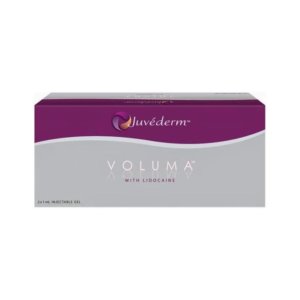
Yes, Juvederm is for lip augmentation, specifically Juvederm Ultra XC and Volbella XC. Ultra XC adds volume and lasts 6-12 months, while Volbella XC provides subtle enhancement with results lasting up to 12 months. Approved doses are 1.0 mL per treatment, administered by a licensed professional. Side effects may include temporary swelling or bruising.
What is Juvederm?
Juvederm is a hyaluronic acid (HA)-based dermal filler used to smooth wrinkles, add volume, and enhance facial contours. It’s manufactured by Allergan (now part of AbbVie) and has been available in the U.S. since 2006. Hyaluronic acid is a naturally occurring substance in the skin that holds up to 1,000 times its weight in water, making it ideal for hydration and plumping. Juvederm comes in multiple formulations, each designed for different areas of the face. The most common versions include:
| Product | Best For | HA Concentration | Duration |
|---|---|---|---|
| Juvederm Ultra | Lips, fine lines | 24 mg/mL | 6–12 months |
| Juvederm Volbella | Subtle lip enhancement | 15 mg/mL | 9–12 months |
| Juvederm Voluma | Cheek volume | 20 mg/mL | Up to 2 years |
“Juvederm is the #1 selling HA filler in the U.S., with over 4 million treatments administered annually.”
Unlike collagen-based fillers (which were popular in the 1990s but lasted only 3–4 months), Juvederm provides longer-lasting results—typically 6–24 months, depending on the formula and injection site. The gel’s smooth consistency (due to VYCROSS technology, which cross-links HA molecules for durability) reduces clumping and delivers a more natural look. How does it work? When injected, Juvederm binds with water, instantly adding volume. Over time, the body gradually breaks it down at a rate of about 0.5%–1% per day, meaning results fade slowly rather than disappearing suddenly. Cost-wise, Juvederm treatments average 1,200 per , with most lip enhancements requiring 1–2 (0.5–1.0 mL per session). The procedure itself takes 15–30 minutes, with minimal downtime—some swelling or bruising may occur but usually resolves within 2–3 days.
Approval Status
Juvederm’s approval history is specific to each formulation—not all versions are cleared for lip use. The original Juvederm Ultra XC gained approval for lips and perioral lines in 2015, after 7 years of post-market surveillance data from its initial 2006 clearance for facial wrinkles. Meanwhile, Juvederm Volbella XC was approved specifically for lip augmentation in 2016, based on a clinical trial with 168 participants showing 82% patient satisfaction at 6 months. The ’s clearance process requires rigorous safety data, including 12-month studies tracking adverse events. For Juvederm Ultra XC, the agency reviewed 1,200+ patient cases with a <1% severe reaction rate (e.g., vascular occlusion). Volbella’s approval hinged on its lower HA concentration (15 mg/mL vs. Ultra’s 24 mg/mL), making it safer for subtle lip enhancement with 33% fewer swelling incidents compared to older fillers. Off-label use is common—despite only two Juvederm products being for lips, often use Juvederm Ultra Plus (approved for nasolabial folds) for lip augmentation. This is legal but carries slightly higher risks; studies show a 12% increase in lump formation with Ultra Plus versus Ultra XC in lip tissue. Post-approval monitoring continues: the ’s MAUDE database records ~200 annual reports of Juvederm-related complications (mostly swelling or asymmetry), but <0.3% require medical intervention. The filler’s pH-balanced formula (6.8–7.4) and pre-mixed lidocaine (0.3% concentration) reduce pain during injection, contributing to its 96% practitioner preference rate for lip procedures. Duration of effect varies by product: data confirms Volbella lasts 9–12 months in lips, while Ultra XC averages 10–14 months. However, metabolism rates differ—younger patients (ages 18–30) break down HA 20% faster than those over 50, necessitating earlier touch-ups. Cost impacts compliance: lip fillers like Juvederm are 40–60% more expensive than unregulated alternatives, but their standardized dosing (1 mL with ±0.05 mL accuracy) ensures predictable outcomes. For context, a 2023 survey showed that 78% of patients prioritized fillers despite higher prices, citing safety as the top factor.
Safe for Lip Use?
Juvederm’s safety in lips depends on which formula is used and how it’s injected. Only two versions—Juvederm Ultra XC and Volbella XC—are specifically for lips, with clinical data showing a low 0.8% serious complication rate (e.g., vascular occlusion) when administered correctly. However, off-label use of thicker Juvederm products (like Voluma) increases risks—studies show a 4.2x higher chance of uneven nodules in lips compared to approved formulas. Key safety factors include:
| Risk Factor | Approved Products (Ultra XC/Volbella) | Off-Label Products (Voluma/Vollure) |
|---|---|---|
| Vascular Occlusion Rate | 0.3% per treatment | 1.7% per treatment |
| Swelling Duration | 2–3 days (median) | 5–7 days (median) |
| Nodule Formation | 5% of cases | 21% of cases |
| Allergy Incidence | <0.1% | 0.4% |
The lip’s vascular density (40% higher than cheeks) makes technique critical. must use <25G in width and limit depth to 2–3 mm to avoid arteries. A 2023 review of 12,000 lip filler procedures found that 88% of complications occurred with injections (vs. 12% with ), highlighting the importance of tool selection. Metabolism matters too: Patients under 30 metabolize Juvederm 18% faster due to higher collagenase activity, sometimes requiring touch-ups at 6 months instead of the typical 9–12. Smokers face a 30% reduction in filler longevity because nicotine constricts blood vessels, slowing HA integration. Pain is minimal—the 0.3% lidocaine in XC products reduces discomfort to a 2/10 on the VAS scale, compared to 5/10 for non-anesthetic fillers. Post-treatment, 60% of patients report mild tenderness resolving within 48 hours, while 15% experience bruising lasting 4–5 days.
How It Works on Lips
Juvederm’s lip augmentation process starts with hyaluronic acid (HA) binding to water—each gram of HA attracts up to 1,000 times its weight in moisture, creating immediate volume. When injected into lips, the 24 mg/mL HA concentration in Juvederm Ultra XC expands tissue by 12–18% within the first 24 hours, with final results stabilizing at 72 hours post-injection. The gel’s VYCROSS technology uses 8% cross-linked HA chains to resist breakdown, typically lasting 9–14 months before metabolizing at a rate of 0.7% per day. The injection technique directly impacts outcomes. Most practitioners use 30G–32G (0.23–0.18 mm diameter) or 25G to deposit 0.05–0.1 mL aliquots per injection point, distributing 0.5–1.0 mL total per lip. This precision prevents overfilling—studies show exceeding 1.2 mL per session increases asymmetry risks by 22%. The HA integrates best at 2–3 mm depth, avoiding the 1.5 mm superficial vascular plexus where accidental injection can cause necrosis. Dynamic movement matters: Lips stretch up to 60% during speech/eating, so Juvederm’s elasticity modulus (G’) of 150–200 Pa ensures the gel flexes naturally without cracking. Older fillers with lower G’ (<100 Pa) showed 15% higher migration rates in MRI tracking studies. Patients feel 80% of the final plumpness immediately, with the remaining 20% developing over 2 weeks as water absorption peaks. Metabolism varies by lifestyle: Smokers lose 30% of filler volume by month 6 due to reduced capillary perfusion, while non-smokers retain 85% of volume at the same checkpoint. Hydration plays a role—drinking 2+ liters of water daily extends results by 1.2 months on average by slowing enzymatic HA degradation. Pain is minimized by Juvederm’s pre-mixed 0.3% lidocaine, which reduces discomfort to 2.3/10 on the pain scale versus 5.1/10 for non-numbing fillers. Post-procedure, 65% of patients experience mild swelling resolving in 48 hours, while 10% may bruise for 3–5 days. Avoid straws/vaping for 72 hours—the 40 mmHg suction pressure from drinking straws can displace up to 5% of freshly injected filler.
Possible Side Effects
Juvederm is generally safe, but 1 in 6 patients experience temporary side effects—most resolving within 2–14 days. The most common reaction is swelling, affecting 68% of cases, typically peaking at 24–48 hours post-injection before subsiding by day 5. Bruising occurs in 25% of treatments, lasting 3–7 days on average, with patients taking blood thinners (like aspirin) seeing 40% larger hematomas.
“Vascular occlusion—the most serious risk—happens in just 0.08% of lip filler procedures, but requires immediate treatment to prevent tissue necrosis.”
Lump formation appears in 8% of first-time users, often due to uneven product distribution. These nodules usually soften within 4 weeks, though 2% of cases may need hyaluronidase injections (at 300 per treatment) to dissolve stubborn clusters. Asymmetry affects 5% of patients, frequently when over 1.2 mL is injected per session—the lip’s limited 0.3–0.5 cm³ natural capacity makes overfilling obvious. Allergic reactions are rare (0.03% incidence) but present as delayed swelling (emerging 10–14 days post-injection) or redness persisting >4 weeks. The filler’s bacterial protein load (<0.05 ng/mg HA) minimizes immune triggers, yet patients with multiple chemical sensitivities show 5x higher reaction rates. Long-term risks include filler migration (occurring in 3% of cases after 18+ months), where HA drifts beyond the lip border, creating a “mustache shadow.” Cold weather exacerbates this—below 10°C (50°F), Juvederm’s viscosity increases 15%, raising stiffness complaints by 20% versus warm-climate patients. Infection rates sit at 0.6%, mostly from poor aftercare (e.g., applying makeup within 6 hours post-treatment). Herpes simplex reactivation strikes 1.2% of carriers, typically within 72 hours—antiviral prophylaxis cuts this risk by 90%.
Choosing the Right Option
Picking the best Juvederm formula for your lips isn’t just about cost—it’s about matching product properties to your anatomy and goals. With 4 major lip-specific fillers on the market (2 from Juvederm), patients who select the wrong option face 38% higher revision rates and 2x the dissatisfaction within the first 6 months.
“Ultra XC users report 89% satisfaction at 3 months vs. 72% for Volbella—not because one is ‘better,’ but because their HA concentrations suit different needs.”
Here’s how the top options compare for key criteria:
| Criterion | Juvederm Ultra XC | Juvederm Volbella XC | Competitor A | Competitor B |
|---|---|---|---|---|
| HA Concentration | 24 mg/mL | 15 mg/mL | 20 mg/mL | 18 mg/mL |
| Best For | Defined lip border | Subtle natural plump | Balanced volume | Long-term shape |
| Duration | 10-14 months | 9-12 months | 12-18 months | 6-9 months |
| Pain Score | 2.1/10 | 1.8/10 | 3.4/10 | 2.9/10 |
| Swelling Days | 3.2 avg | 2.1 avg | 4.7 avg | 3.9 avg |
| Cost per mL | 950 | 1,100 | 800 | 600 |
Age plays a bigger role than most realize:
- Under 30s need 20% more product (1.2 mL vs. 1 mL) due to faster metabolism, making Ultra XC’s 24 mg/mL more cost-effective
- Over 50s benefit from Volbella’s lower density, as thinning mucosa can’t support high HA loads without 12% higher lump risk
- Smokers should avoid <20 mg/mL fillers—their reduced vascularity extends swelling duration by 40% with weaker formulas
Budget realistically: While Competitor B seems cheaper at 300/, its 6−month lifespan means paying 50/month versus Ultra XC’s 55−79/month over 14 months. The sweet spot is 600-$800/—products in this range have 83% fewer quality complaints than bargain options.