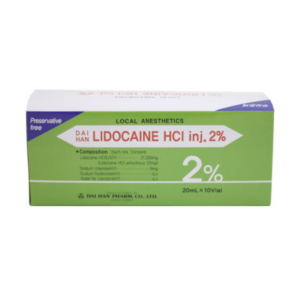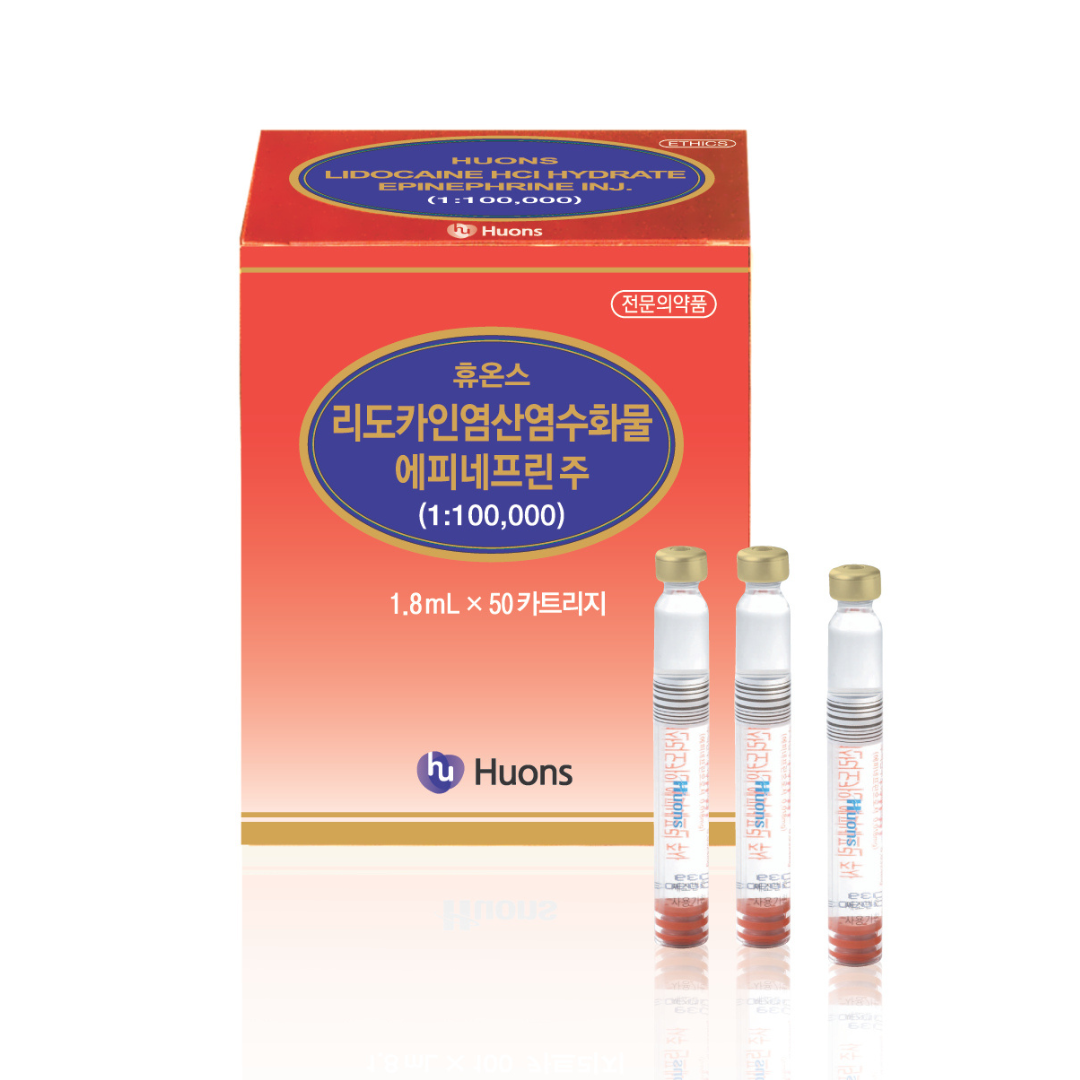
This injectable anaesthetic combines 2% lidocaine hydrochloride (20 mg/mL) with epinephrine 1:100,000, supplied as fifty 1.8 mL pre-filled cartridges. The added epinephrine constricts local vessels, prolonging the numbing effect and reducing bleeding at the site.
What it is
A sterile, ready-to-use local anaesthetic cartridge containing 20 mg/mL (2%) lidocaine hydrochloride and epinephrine at a 1:100,000 ratio, presented as fifty 1.8 mL pre-filled cartridges.
How it works
Lidocaine is an amide local anaesthetic that reversibly blocks sodium channels to interrupt pain signals; the epinephrine causes local vasoconstriction, which slows absorption, extends the anaesthetic effect and limits bleeding.
Where it fits
Used by clinicians for infiltration and submucosal/intradermal anaesthesia during dental and minor aesthetic procedures where a longer-acting, lower-bleeding field is helpful. It is not for intravenous use.
Why epinephrine matters
Because the vasoconstrictor reduces systemic uptake, the maximum lidocaine dose is higher than for plain lidocaine — generally up to about 7 mg/kg and no more than 500 mg — but the adrenaline also brings cardiovascular cautions.
| Active ingredients | Lidocaine HCl 20 mg/mL (2%) + epinephrine 1:100,000 |
|---|---|
| Per cartridge | 1.8 mL (≈36 mg lidocaine) |
| Presentation | 50 pre-filled 1.8 mL cartridges per box |
| Onset / duration | Onset ~2–5 min; epinephrine prolongs duration vs plain lidocaine |
| Max lidocaine dose | Up to ~7 mg/kg with epinephrine; absolute ≤500 mg |
| Route | Infiltration / submucosal / intradermal — not for IV use |
| Storage | 15–25 °C, protect from light, do not freeze |
- Confirm there is no history of hypersensitivity to amide-type local anaesthetics before use.
- Aspirate before injecting to avoid intravascular delivery; the epinephrine makes inadvertent IV injection particularly hazardous.
- Stay within the maximum dose (≤7 mg/kg, ≤500 mg lidocaine with epinephrine) and use the smallest effective volume.
- Use caution in patients with cardiovascular disease, uncontrolled hypertension or who take MAO inhibitors / tricyclics, and avoid epinephrine-containing anaesthetic in end-arterial sites.
- Have resuscitation equipment and trained personnel available; watch for signs of CNS or cardiovascular toxicity.
- Discard any unused solution from an opened cartridge; do not store for reuse.
What concentration of lidocaine and epinephrine does it contain?
Each cartridge holds 2% lidocaine hydrochloride (20 mg/mL) with epinephrine at a 1:100,000 ratio. A 1.8 mL cartridge therefore contains about 36 mg of lidocaine.
How many cartridges are in a box?
Fifty pre-filled 1.8 mL cartridges per box.
Why is epinephrine added?
Epinephrine constricts local blood vessels, which slows how quickly the lidocaine is absorbed. This prolongs the anaesthetic effect, reduces bleeding in the field, and lowers peak blood levels of lidocaine.
How fast does it work?
Onset is generally within about 2–5 minutes, with the epinephrine extending the working duration compared with plain lidocaine.
What is the maximum safe dose?
With epinephrine, lidocaine is generally limited to about 7 mg/kg and an absolute ceiling near 500 mg per session — higher than plain lidocaine because vasoconstriction slows absorption. The clinician calculates the limit per patient weight.
Can it be injected intravenously?
No. It is intended for infiltration and submucosal/intradermal injection only. Intravascular injection must be avoided, which is why aspiration before injecting is essential.
Who should avoid it or be treated with caution?
It is contraindicated in amide-anaesthetic allergy. The epinephrine warrants caution in patients with significant cardiovascular disease, uncontrolled hypertension, or those on MAO inhibitors or tricyclic antidepressants, and it is avoided in end-arterial areas.
How should it be stored?
Between 15–25 °C, protected from light and never frozen. Opened cartridges should not be kept for later reuse.

Jessica Miller –
Honestly, the epinephrine in this is a lifesaver for lip blush procedures. Standard lidocaine always leaves my clients bleeding too much, which wipes away the pigment and makes my job twice as hard. With this Huons formulation, there’s barely any bleeding, and the numbing lasts well over an hour. Absolute game changer for my PMU studio, my clients are so much more comfortable now.
Anna Sokolov –
The epinephrine makes all the difference! It constricts the blood vessels so well, meaning practically no bleeding during procedures. The lidocaine numbs deep and lasts a long time. I’ve tried generic brands off other sites before, but Huons feels much purer and more consistent every single time.