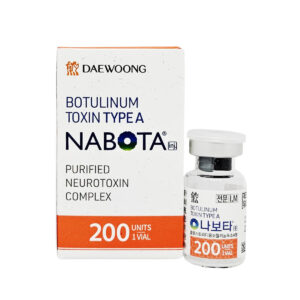
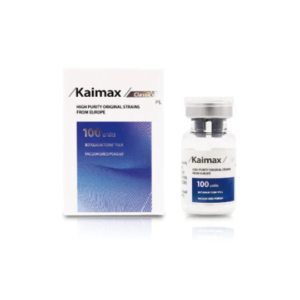
Innotox is not necessarily the “best,” but its advantages are clear: as a pre-mixed liquid botulinum toxin type A, it does not require reconstitution. Common specifications include 25U, 50U, and 100U, making it more convenient to use and more consistent in dosage. The official indication is mainly for improving moderate to severe glabellar lines in adults aged 20–65. Prices usually vary depending on the number of units, the doctor’s experience, and the region. In the United States, botulinum toxin treatments commonly cost about $10–15 per unit. It is recommended to prioritize licensed clinics and qualified physicians.
Top Benefits
Published studies comparing the liquid formulation for moderate to severe glabellar lines with onabotulinumtoxinA show comparable effectiveness and safety. Manufacturer information also states that it is a clear liquid stored at 2–8 °C with a shelf life of 36 months, intended for moderate to severe glabellar lines in adults aged 20–65. For users, the noticeable differences usually lie in preparation steps, onset timing, follow-up frequency, and the overall treatment experience.
Procedure
Like most botulinum toxin procedures, the use process of Innotox generally follows the sequence of consultation, confirming suitable treatment areas, injection, observation, and follow-up. The difference is that it is ready-to-use liquid. Official materials state it is a colorless transparent injectable solution, stored at 2–8 °C with a shelf life of 36 months, and indicated for moderate to severe glabellar lines in adults aged 20–65.
| Stage | What the Patient Does | What the Doctor Usually Evaluates | Information You Receive |
|---|---|---|---|
| Before consultation | Explain past aesthetic treatments, medications, and allergies | Whether the patient is suitable for expression-line treatments | Whether treatment can be performed and which area |
| During consultation | Make expressions such as frowning, raising brows, or squinting | Muscle movement range, wrinkle depth, and symmetry | Injection points and expected changes |
| Injection day | Clean the skin and take baseline photos | Marking sites, injection depth, and total dose planning | How to observe results in 1–14 days |
| First 24 hours after treatment | Observe local reactions as instructed | Check for abnormal swelling, obvious drooping, or vision discomfort | Whether early follow-up is needed |
| 7–14 days after treatment | Review changes in facial expressions | Whether the planned level of relaxation is achieved | Whether touch-up is needed and when the next maintenance session is |
Once the consultation begins, the first question is not “how much to inject today,” but “whether today is suitable for injection.” Public information limits the indication of Innotox to glabellar lines—the set of wrinkles that become more obvious when frowning. This step requires distinguishing static lines from expression lines, because botulinum toxin works by reducing muscle contraction rather than filling existing volume loss. During consultation, a common practice is to ask the patient to repeatedly frown and relax while the doctor observes the involvement of the corrugator and procerus muscles, then determines injection points and treatment range. Product preparation Both published studies and official pages emphasize the “liquid” feature of Innotox, because most similar products require reconstitution first. With one preparation step removed, waiting time in clinic is usually shorter. Concentration differences caused by varying dilution ratios are also avoided, making it easier for doctors to draw and distribute the planned dosage. Background discussions in studies mention that most botulinum toxin type A products require reconstitution, and liquid formulations aim to eliminate this step from the workflow. Before the actual injection begins, standard steps usually include cleaning the skin, marking injection points, and recording baseline facial expressions. This record is useful because post-treatment evaluation should not rely only on static photos; doctors compare whether the pulling of the brow during frowning weakens, whether vertical wrinkles become lighter, and whether asymmetry appears at rest. Clinical labeling clearly describes the timeline: chemical denervation usually begins 1–2 days after injection, strengthens during the first week, and full results are more reliably assessed at 7–14 days. The common duration of effect is about 3–4 months. Doctors first confirm the main treatment area, then distribute injection points according to the strongest expression zones, balance both sides of the face, and finally record the treated areas and date for review after about two weeks. For glabellar lines, injection point design often centers on the vertical contraction area most obvious during frowning. If the frontalis muscle compensates strongly, the doctor may also assess whether treating only the glabellar area is sufficient, to avoid unnatural brow height differences after relaxation. To make post-treatment instructions easier to follow, many clinics summarize them into a few points:
- Do not judge the result immediately on the same day
- Look for early changes after 1–2 days
- Assess full expression changes at 7–14 days
- 3–4 months is a common duration of effect
- Seek medical advice if obvious drooping or visual abnormalities occur
These points are not slogans—they are based on timelines and adverse-event observation sequences in official labeling. Viewing them as a calendar schedule is more practical than repeatedly checking the mirror. Post-treatment observation and follow-up Within the first 24 hours, people usually watch for local red spots, mild swelling, or tenderness. Around one week, attention shifts to whether frowning strength has decreased and whether facial movement appears balanced. At about day 14, it becomes more appropriate to decide whether touch-up injections or future treatment plans are needed. Public references note that peak effects for cosmetic botulinum toxin usually develop gradually over several days. Some studies place the observation point within 30 days, but in clinical practice, the most common follow-up window remains around two weeks, when facial expression changes are relatively stable. Source and compliance In August 2025, the UK MHRA publicly cracked down on the trade of unlicensed botulinum toxin products after multiple hospitalizations linked to illegal injections that summer. Before consultation, confirm the clinic’s credentials. Before injection, confirm product source and batch number. After treatment, confirm the follow-up pathway. Whether the product is liquid or powder does not change this sequence. You may focus on whether the result lasts 3 months or 4 months, but regulators focus on whether the product entered medical use through compliant channels—both matter. Before booking, review medical history; during consultation, assess wrinkle type; before injection, check points and product source; after injection, observe initial changes at 1–2 days, evaluate full results at 7–14 days, and consider maintenance after 3–4 months. Within this process, Innotox mainly shortens the “preparation” step by removing reconstitution variables. It does not change the biological timeline of botulinum toxin or make results appear instantly instead of forming over 7–14 days.
Results
Published studies comparing liquid botulinum toxin type A for moderate to severe glabellar lines with onabotulinumtoxinA show comparable effectiveness and safety. Medytox’s public information states a narrower indication focused on moderate to severe glabellar lines in adults aged 20–65. From the user experience perspective, the most common observation sequence is: slight changes at days 1–2, reduced pulling sensation by day 7, and more complete results visible around days 10–14. labeling for BOTOX Cosmetic clearly states that initial chemical denervation usually occurs 1–2 days after injection, increases within the first week, and glabellar line improvement lasts about 3–4 months. Although this timeline comes from onabotulinumtoxinA, it helps illustrate the typical rhythm of similar botulinum toxin treatments: wrinkles do not disappear immediately after leaving the clinic; within the first 72 hours, only mild relaxation is usually noticeable, and full evaluation is more appropriate after about two weeks.
The time when results are most easily misjudged is within the first 24 hours after injection. Not seeing obvious changes in the mirror does not mean the treatment failed.
By treatment area The most consistently documented indication in public sources is the glabellar area, which is also the official indication for Innotox. The two main muscles involved are the corrugator and procerus. Wrinkles become more visible when frowning, squinting, or in bright light. Therefore, results should not be judged only from static photos but by observing whether vertical lines lighten and whether the inward compression between the brows decreases. For most users, by day 7 they feel that frowning is “less tight”, and by day 14 it becomes easier to see that the lines are not as deep. Results can also be viewed in two layers: first, “reduced expression strength,” and second, “visual softening of wrinkles.” If the original glabellar lines were moderate to severe, muscle relaxation may reduce contraction first, while static creases formed over time may not fade simultaneously within 7 days. A 2010 review explained that botulinum toxin treatment for glabellar lines usually lasts at least 3 months. Some people experience longer effects, but age, gender, baseline severity, and previous treatments can all influence outcomes. To evaluate results more clearly, they can be broken down into five observation points:
- Whether the inward movement of the brows during frowning decreases
- Whether vertical lines change from “deep grooves” to “lighter lines”
- How much residual crease remains at rest
- Whether both brows move symmetrically
- Whether strong contraction still appears after day 14
Duration Public labeling gives a typical range of 3–4 months. Flynn’s 2010 review summarized different studies, showing women often fall within 3–5 months and men within 4–6 months, with some individuals lasting longer. Differences depend on muscle strength, facial expression frequency, treatment area, dose, and whether treatments are repeated regularly. Therefore, with the same glabellar treatment, some people see recurrence around week 12, while others retain partial results until week 20.
The duration of results does not follow the same timeline for everyone. Stronger muscles and more frequent expressions usually mean earlier recurrence.
From a user perspective, another reality is that what you see is “smoother,” while what doctors evaluate is “whether the muscles relaxed enough.” Clinical literature evaluates glabellar lines both at maximum frown and at repose. Many clinical trials define responders based on improvement during maximum frown, because that best reflects the intended mechanism of botulinum toxin. If deep static lines already exist, reducing muscle activity alone may still leave a faint crease at rest. This does not mean the treatment failed; it reflects a different treatment goal. Some people feel dramatic change after the first treatment but less surprise in later sessions. This is usually not product failure—the reference point simply changed. The first treatment moves from strong contraction to noticeable smoothing, creating the largest visual contrast. Later sessions mainly maintain the improved baseline, so the contrast appears smaller. Some studies and clinical experience suggest that regular treatments may lead to more stable maintenance patterns because the muscles remain in a lower-activity state. However, reviews do not state that this occurs for everyone, only that prior treatment history may influence duration. Influence of gender and expression habits In published reviews, men sometimes show slightly longer duration than women, partly due to study design differences and possibly muscle characteristics. However, from the user perspective, the more noticeable factor is that people with stronger facial expressions tend to experience earlier recurrence. If you frequently frown, spend long hours on screens, or squint in bright light, seeing return of movement by the third month is not unusual. In contrast, individuals with naturally smaller expression amplitude and mild baseline wrinkles often appear to maintain smoother results. Another point that can cause confusion is that treatment results do not automatically cover all upper-face concerns. Glabellar lines are the official indication in Innotox documentation, but areas such as forehead lines, crow’s feet, jawline, masseter, and platysma vary across countries, brands, and regulatory frameworks. Seeing someone online who receives injections across the entire face does not mean the same plan will be used in a regulated medical setting. Many wide-range results reflect individualized medical planning rather than a single approved indication.
A more practical question is not “Can it treat the entire face?” but “What is my target area this time, and what changes should I observe after two weeks?”
Impact of adverse effects Even when effective, early bruising, swelling, or mild asymmetry can affect how results appear in the first few days. Official labeling and clinical data recommend avoiding evaluation during the earliest reaction window. The symptoms that truly require attention are eyelid drooping, obvious brow asymmetry, double vision, or difficulties with swallowing or speech. If these occur, waiting “a few more days” is not appropriate. From a results perspective, normal evaluation focuses on expression changes at 7–14 days, not on marks within 24 hours. 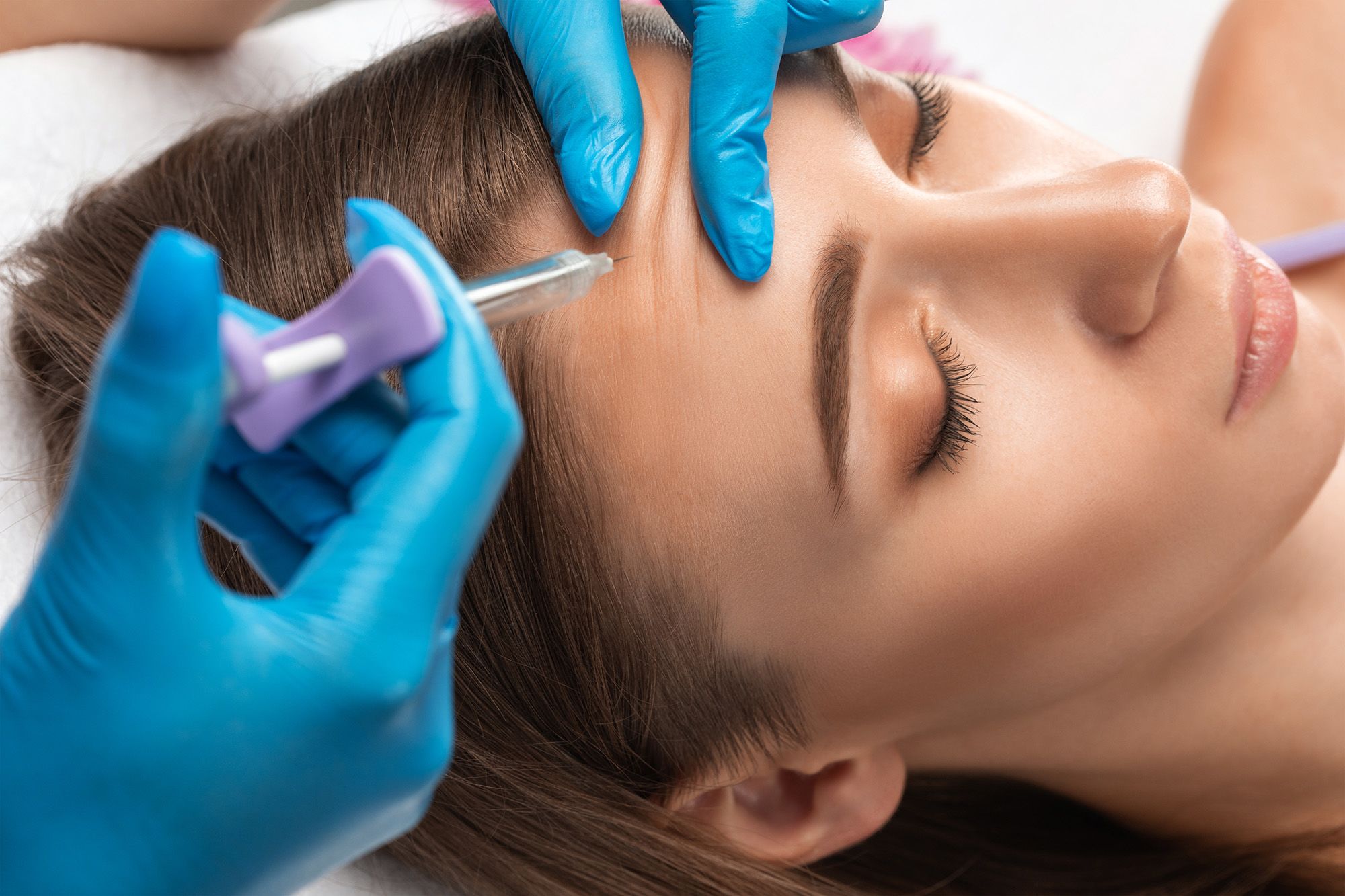
Safety Experience
The safety experience of Innotox is often perceived not through academic terminology but through the body’s feedback during the first week after injection. Official materials describe it as a liquid botulinum toxin type A indicated for moderate to severe glabellar lines in adults aged 20–65, stored at 2–8 °C with a shelf life of 36 months. In real experiences, safety perception often comes from three aspects: whether the product source can be verified, whether the has proper qualifications, and whether post-treatment reactions fall within normal ranges. Most common reactions after cosmetic botulinum toxin injections occur within 1 week. labeling specifically lists local pain, tenderness, swelling, redness, bleeding, or bruising around the injection site. The injection itself may also trigger vasovagal reactions such as temporary fainting or low blood pressure. In double-blind placebo-controlled studies for glabellar treatments, the most common adverse events occurring more often than placebo include facial pain 1%, facial paresis 1%, eyelid ptosis 3%, and muscle weakness 1%. These numbers are low but show two things: mild reactions are not uncommon, and eyelid drooping, although rare, is something patients should know about beforehand.
Within the first 24 hours after injection, seeing marks, mild redness, or slight swelling does not mean something went wrong. The more appropriate time to judge results and tolerance is usually around day 7–14.
Reviews group common mild reactions together: redness, mild edema, bruising, tenderness, and short-term sensory changes. Most of these relate to the injection process rather than the toxin itself. They usually remain localized near injection points and do not progressively spread or worsen day by day. In other words, if during days 1–3 you notice small bruises, mild swelling to the touch, or tightness around injection points during expressions, these are generally short-term reactions rather than serious drug problems. You can understand early sensations using the following pattern:
- Mild red spots: usually on the same day
- Tenderness or soreness: common in the first 24–72 hours
- Small bruises: some people experience them
- Tight expression feeling: more noticeable days 2–7
- Mild headache: somewhat more common in forehead treatments
Within these sensations, it is important to distinguish between “injection-site reactions” and “toxin diffusion effects.” The former stay local, while the latter may affect nearby muscles. labeling states that weakness of the injected muscle is an expected pharmacologic effect, but nearby muscles may also experience weakness due to toxin spread, which explains figures such as 3% eyelid ptosis in glabellar treatments. UKHSA warnings in July and August 2025 clearly listed symptoms of iatrogenic botulism related to botulinum toxin: difficulty swallowing, slurred speech, and breathing problems, sometimes requiring respiratory support. As of August 6, 2025, the UK reported 41 cases of clinically confirmed botulism. During the same period, the MHRA stated that since May 2023 authorities had seized more than 4,700 of unlicensed botulinum toxin products, including several brands such as Innotox that were not approved for sale in the UK. For users, this information is practical because many safety concerns arise not from the product itself but from gray-market distribution and non-medical environments.
Some symptoms should never be handled by simply “waiting a few days”: increasing difficulty swallowing, slurred speech, breathing problems, double vision, or generalized weakness.
UKHSA reminders state that botulism symptoms may appear up to 4 weeks after injection. This means symptoms such as swallowing difficulty or breathing problems appearing on day 10, day 14, or even later can still be temporally related. Many people assume that once the first 72 hours pass, everything is safe, but public health guidance gives a longer observation window. A safer understanding is not “everything is fine after day 3,” but “within the first 4 weeks, any progressive neuromuscular symptoms should be reported to a doctor and the injection history disclosed.”
Cost
The officially listed specifications are 25U, 50U, and 100U, and the formulation is a pre-mixed liquid. Some public retail pages show 50U commonly around $35 or about 2,000 Philippine pesos, while 100U commonly appears around $52. Many public sources list the duration as 3 to 6 months, so yearly budgeting is often calculated as 2 to 3 treatments. Even when both are 100U, what you see is the wholesale cost, while what you pay at the clinic is the full treatment price.
Product Price
Medytox’s official information lists Innotox specifications as 25U, 50U, and 100U, packaged as 1. The product form is not the common freeze-dried powder but a pre-mixed transparent liquid. This characteristic changes how the “product price” is interpreted, because the cost represents a finished formulation rather than powder requiring dilution. The official page also states storage at 2–8 °C and a visible shelf life of 36 months for 25U and 100U. On currently visible pages, 50U appears at about $35 on some sites and $40 or $55 on others. For 100U, prices such as $52, $70, and $93 can be found. Looking only at these numbers, the difference between the lowest and higher price can reach $41, close to a 79% gap. If specifications are compared on the same scale, the price of 50U and 100U is not simply doubled. Based on currently available retail pages, 50U commonly ranges from $35 to $55, while 100U ranges from about $52 to $93. Converted into “price per unit,” 50U is roughly $0.70 to $1.10/U, while 100U is roughly $0.52 to $0.93/U. Larger unit packages often show lower per-unit page costs, which is why many users first notice the 100U version rather than 25U. To make this price layer easier to understand, the product itself can be broken into several components:
- 25U: official specification suitable for minimum-unit comparison
- 50U: the most common retail listing
- 100U: usually shows lower per-unit page cost
- Liquid formulation: not powder, already prepared at manufacturing
- 1 packaging: not a standard multi-set
- 2–8 °C storage: transportation and storage enter the cost
- 36-month shelf life: affects wholesale and inventory turnover
Because the product is a liquid formulation, many pages emphasize phrases such as ready-to-use or ready-made liquid solution. This indicates it is not an ordinary consumer product stored at room temperature. Cold-chain shipping, sealed storage, and temperature control can all raise the price from “factory number” to “delivered cost.” Therefore, the same 50U listed by a supplier with stable cold-chain logistics and one on a general cross-border retail page should not be expected to show identical prices. Some pages list 50U at 2,000 Philippine pesos, with bulk discounts such as 1,900 pesos for three units and 1,800 pesos for five units. On the same site, the 100U page shows 2,700 pesos. In that pricing system, 100U costs only 700 pesos more than 50U despite doubling the units, making the per-unit cost significantly lower. Expressing this difference more directly makes it easier to evaluate:
| Specification | Visible Page Price | Approximate Price per Unit |
|---|---|---|
| 50U | $35 | $0.70/U |
| 50U | $55 | $1.10/U |
| 100U | $52 | $0.52/U |
| 100U | $70 | $0.70/U |
| 100U | $93 | $0.93/U |
This table only shows one point: even for the same Innotox product, the “product price” visible to users does not follow a single standard. The difference across pages is large enough that one site’s number cannot represent the entire market. Some B2B pages show quantity discounts, for example 50U at $24.74 for 5–9 units, $24.23 for 10–19 units, and $23.46 for 20 or more. Other pages list minimum orders of five units and prices such as $4.5 that differ entirely from retail listings. These pages are not suitable for ordinary consumers as “typical purchase prices,” but they illustrate the large markup space between wholesale procurement cost and retail listing price. Breaking down the channel structure helps readers understand why the visible prices vary so widely:
- Brand official pages: provide specifications, formulation, storage, and shelf life
- Retail pages: show single-item prices suitable for consumer reference
- Regional e-commerce pages: show local currency and purchase thresholds
- Wholesale pages: display tiered pricing for 5, 10, or 20 units
- Clinic supply pages: often describe products as professional-use inventory
- Cross-border pages: prices may reflect shipping cost, delivery speed, and cold-chain requirements
Official materials specify storage at 2–8 °C, sealed conditions, and a 36-month shelf life, but these numbers only apply if the product remains under compliant storage conditions. For ordinary users, seeing that the 100U page price per unit appears lower does not necessarily mean buying larger specifications personally is more economical. You are purchasing a refrigerated injectable medication, not a room-temperature cosmetic product. The more clearly defined the storage requirements, the less product price and usability can be separated. From a practical purchasing perspective, the product price can be divided into three layers: the listing price on the first page, the final delivered product price after shipping, and the per-unit cost once specification size is considered. At first glance, $35 for 50U may seem cheaper than $52 for 100U. But when calculated per unit, the $52 100U option may actually be lower, and once cold-chain logistics, shipping origin, and purchase quantity are included, the numbers change again. 
Treatment Price
The American Society of Plastic Surgeons reports an average physician fee of $435 for botulinum toxin injections, which includes only the doctor’s fee and not facility or operational costs. In clinics, Botox Cosmetic is still commonly priced per unit, with many clinics listing $12–15 per unit and broader market ranges of $10–20 per unit. Official Botox Cosmetic guidance lists standard upper-face dosage as 20U for glabellar lines, 24U for crow’s feet, and 40U for combined forehead and glabellar treatment. If all three areas are treated together, the total reaches 64U. At roughly $12–15 per unit, 20U costs about $240–$300, 24U about $288–$360, 40U about $480–$600, and 64U about $768–$960. When users hear “forehead treatment costs several hundred dollars,” it usually reflects higher unit counts rather than arbitrary pricing by treatment area. Innotox’s official specifications are 25U, 50U, and 100U, and the product itself is a ready-to-use liquid formulation. However, clinics do not price treatments based on whether you purchase 50U or 100U; instead, they calculate based on the actual units used, muscle strength, and whether follow-up adjustments are needed. Therefore, the lower visible price of a 100U compared with some Western brands does not mean your treatment bill will decrease in the same proportion. Treatment cost is a combination of product and professional injection service, not the bottle price applied directly to the face. Using 20U for glabellar lines as an example, at $10–20 per unit the cost is roughly $200–$400. For crow’s feet at 24U, about $240–$480; for forehead plus glabellar lines at 40U, about $400–$800. A plastic surgery clinic in Charlotte lists typical Botox treatment totals around $400–$750 in 2025, consistent with 30–60U upper-face treatments. When clinics advertise “Full Upper Face,” the bill usually reflects two or three combined treatment areas rather than a single area. The following table helps readers quickly estimate treatment bills:
| Common Area | Typical Units | Approx. at $12/U | Approx. at $15/U |
|---|---|---|---|
| Glabellar lines | 20U | $240 | $300 |
| Crow’s feet | 24U | $288 | $360 |
| Forehead + glabellar | 40U | $480 | $600 |
| Full upper face (three areas) | 64U | $768 | $960 |
This table does not mean every clinic charges exactly $12 or $15 per unit, but it explains how treatment costs are formed: the treatment area is only the starting point, while the total unit count is what truly determines the price. Doctor experience and city location can also significantly affect treatment price. A 2025 pricing article from a New Jersey clinic reported Botox commonly priced at $15–25 per unit locally, with at least 40U used for standard upper-face treatment. At that level, a 40U treatment would cost $600–$1,000. Compared with Charlotte’s $400–$750 range, the difference already exceeds $250. If users compare one clinic’s “$400 Botox session” with another clinic’s $800 quote, they may misinterpret the numbers because the treatments may not be in the same city or use the same number of units. Official Botox Cosmetic guidance states that 20U for glabellar lines is usually distributed across five injection points, 24U for crow’s feet across six points, and combined forehead and glabellar treatment may involve more than ten points. However, seeing five or ten injection points does not determine the price, because the billing unit is the number of Units rather than the number of injections. Two clinics may both inject five points in the forehead, but if one uses 20U and the other uses a higher dose based on muscle strength, the final bill will differ. The most common components of treatment pricing can be summarized as follows:
- Charged per unit: commonly about $10–20 per unit in the United States
- Package by area: appears simpler but still calculated based on units
- Unit counts vary between people: stronger muscles often require higher doses
- Combined treatments cost more: 20U, 24U, and 40U together quickly exceed 60U
- City differences are significant: the same 40U may differ by $200–$400 between locations
- Follow-up adjustments may add cost: sometimes included in packages, sometimes charged separately
When placing Innotox within treatment pricing, another practical difference appears: it is not an mainstream cosmetic injection brand in the United States. Therefore, the publicly visible treatment prices in the U.S. market are usually based on brands widely used in clinics such as Botox, Xeomin, Jeuveau, and Dysport. Some public pages describe Innotox as about 20%–30% cheaper than Botox or roughly $7–12 per unit. However, these numbers often come from sales or comparison pages rather than the mainstream clinical pricing structure in the United States.
Annual Cost
The American Society of Plastic Surgeons reports an average physician fee of $435 for botulinum toxin injections, which does not include many additional clinic charges. Botox Cosmetic’s official information states that cosmetic results may last up to 4 months, while Cleveland Clinic lists an average duration of about 3–4 months before retreatment. The cost calculation usually begins with the price per session, then the frequency of follow-up treatments, and finally the annual total. If someone undergoes treatment three times per year, even using the ASPS average physician fee of $435, the annual physician cost alone reaches about $1,305. If treatments occur twice per year, the total is about $870. This does not yet include city price differences, per-unit increases, follow-up adjustments, or consultation fees, so the real annual budget is usually somewhat higher than “single-session price × 2 or × 3.” Medytox officially lists Innotox in 25U, 50U, and 100U liquid formulations. Some public sources describe cosmetic maintenance intervals as 3 to 6 months. For budgeting purposes, estimating 2 to 3 sessions per year is usually more realistic: every 3 months is a dense schedule, every 6 months is more economical, and about every 4 months matches common patient experiences.
Botox Cosmetic’s official page states “may last up to 4 months,” while Cleveland Clinic lists an average of 3–4 months. For annual budgeting, assuming 2–3 sessions per year is more realistic.
The factor that most affects yearly spending is not the brand name but the number of treatment areas. Botox Cosmetic’s official guidance lists 20U for glabellar lines, 24U for crow’s feet, and 40U for combined forehead and glabellar treatment, with three upper-face areas totaling 64U. At $12–15 per unit, 20U costs about $240–$300, 40U about $480–$600, and 64U about $768–$960. Multiplying by 2 or 3 treatments per year quickly expands the annual cost by several hundred dollars. If only glabellar lines are treated, two sessions per year cost about $480–$600, and three sessions about $720–$900. If forehead and glabellar lines are treated together, two sessions cost about $960–$1,200 and three sessions about $1,440–$1,800. If all three upper-face areas are treated, two sessions cost about $1,536–$1,920 and three sessions about $2,304–$2,880. For most users, these numbers better reflect real expenses than seeing a product page listing “100U for $52,” because clinics charge based on the number of units used rather than the bottle price. The following summary conversions are useful to include in the article:
- Only a 20U area: 2 sessions/year about $480–$600; 3 sessions/year about $720–$900
- 40U area: 2 sessions/year about $960–$1,200; 3 sessions/year about $1,440–$1,800
- 64U full upper face: 2 sessions/year about $1,536–$1,920; 3 sessions/year about $2,304–$2,880
- Estimated using ASPS average physician fee: 2 sessions/year about $870; 3 sessions/year about $1,305
- Shorter intervals: annual spending increases accordingly
ASPS educational materials mention that some first-time injection users find the duration shorter during the initial treatment. Some may notice return of movement after 2 months, while others maintain results for 4–6 months. In annual spending terms, this means first-time users are more likely to have 3 sessions in the first year rather than 2. For readers, the difference is practical: the same 40U treatment done 2 times versus 3 times per year differs by about $480–$600.
Some first-time injection users experience shorter duration initially, and treatment intervals may gradually lengthen later. As a result, the first year’s total spending is often slightly higher than the second year’s.
Public clinic pages show typical Botox totals around $400–$750 in Charlotte, while clinics in New Jersey list $15–$25 per unit, making a 40U treatment $600–$1,000. When these numbers are calculated annually, a person receiving 40U three times per year could see a difference of more than $600 depending on the city. Therefore, seeing someone online say “I only spend $900 per year” may not apply to everyone. Many people also overlook follow-up adjustments. Cleveland Clinic notes that retreatment timing depends on individual needs. In practice, some clinics include small touch-ups within two weeks in the original package, while others charge additional units. Even adding only 4U–8U per visit at $12–15 per unit means an extra $48–$120. If this occurs twice per year, the annual cost increases by $96–$240. Retail pages may list 50U around $35 and 100U around $52, but these represent product listing prices rather than the total cost of a medical injection procedure. If someone sees a 100U listed at $52, they may mistakenly assume their yearly expense is only a few hundred dollars. However, once actual treatment volumes of 40U–64U, 2–3 sessions per year, physician services, and follow-up adjustments are considered, the annual total usually reaches four-digit amounts in U.S. dollars.