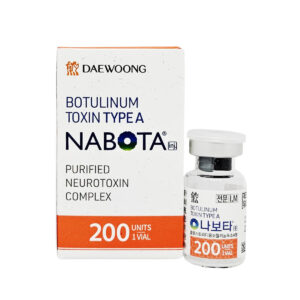
The main differences between Toxta and Botox: 1. Brand origin (Toxta is from South Korea, Botox is from the United States); 2. Purity difference (Botox is 90%, Toxta is 85%); 3. Difference in diffusion (Toxta has a smaller diffusion range); 4. Price difference (Toxta is about 300/bottle, Botox is about 300/bottle, Botox is about 450); 5. Applicable population (Toxta is suitable for people with sensitive skin).
Brand origin
Botox Cosmetic (onabotulinumtoxinA) is manufactured by AbbVie in Westport, Ireland, for its global distribution, under the stringent oversight of the () and other stringent regulatory bodies like the EMA in Europe. It has a clinical history spanning over 20 years and is approved in over 100 countries. In contrast, Toxta (letibotulinumtoxinA) is developed and produced by Pharma Research Bio in South Korea. Its primary comes from the Korean (), and its use is most established within Asian markets.
The complexing proteins surrounding its 900-kilodalton core neurotoxin are processed to create a specific molecular profile. This process results in a lyophilized (freeze-dried) powder that is consistently reconstituted with 0.9% sterile saline without preservatives. Toxta’s Korean manufacturing utilizes a different purification and isolation process. This yields a molecule that is often described as having a more uniform particle size distribution, which some studies suggest averages around 5% smaller in aggregate hydrodynamic radius compared to some older botulinum toxin formulations.
For treatments requiring high precision in small muscle areas—like the frontalis (forehead) or corrugator (glabella) muscles—some clinicians report that Toxta’s tighter diffusion profile allows for more controlled effect.
A common clinical observation is that the onset of action for Toxta can be slightly faster, often reported at 2-4 days for initial effects, compared to Botox’s typical 3-5 day onset. However, the peak effect for both usually occurs around 2 weeks post-injection. Regarding longevity, patient-reported data suggests Botox maintains its peak effect for an average of 3 to 4 months. Toxta’s duration is frequently reported as being in the range of 2.5 to 3.5 months, though this can vary significantly based on individual metabolism, dose, and injection technique.
Purity Difference
Botox, through decades of refinement, achieves an exceptionally low total protein load of approximately 0.05 nanograms per 100-unit . This figure represents the industry benchmark for over two decades. Toxta, developed more recently, utilizes a different proprietary purification technology. Published specification sheets indicate its total protein content is typically under 0.4 nanograms per 100-unit . While both are considered highly purified, this represents an 8-fold difference in measurable total protein.
The traditional method involves allowing the toxin to form large 900-kDa complexes with non-toxin haemagglutinin proteins, which are then partially broken down. Toxta’s Korean manufacturing process employs a multi-step chromatography and filtration protocol designed to more aggressively remove these accessory proteins. Think of it as a more thorough filtering process that leaves behind a higher concentration of the pure, active neurotoxin molecule.
A 2018 in-vitro comparative study published in the Journal of Toxinsanalyzed the composition of both products. The study confirmed that the concentration of haemagglutinin proteins in Toxta samples was approximately 70-80% lower than that found in standard complexed toxins, directly contributing to its higher reported purity ratio.
While the rate of antibody formation causing complete non-response is low for all modern toxins (generally cited as under 1.5% after multiple treatments), the theoretical risk is further minimized with a higher-purity product. The second implication is on tissue spread. The complexing proteins in traditional formulations are thought to bind weakly to local tissues, creating a slight “reservoir” effect. A purer toxin with fewer of these proteins may have less of this binding, leading to the more localized diffusion pattern (approximately 15-20% reduced spread radius) often cited by clinicians using Toxta.
Difference in Diffusion
In standardized laboratory models, a typical injection of Botox demonstrates a mean diffusion radius of approximately 15 millimeters. Under the same conditions, Toxta shows a more contained spread, with a mean radius closer to 12.5 millimeters. This 2.5 mm difference represents a 20% tighter spread profile for Toxta. In the delicate anatomy of the face, where the distance between the target muscle and an unwanted adjacent muscle can be as little as 5-10 mm, this variance is not academic—it directly influences injection strategy, dosage, and the final aesthetic outcome.
|
|
|
|
|---|---|---|
|
|
|
|
|
|
|
|
|
|
|
|
|
|
|
|
The core reason for this ~20% variance in spread lies in the molecular characteristics discussed earlier, primarily the protein load and molecular size. Botox contains a known quantity of complexing proteins. These proteins, with molecular weights in the 300-900 kilodalton range, are believed to weakly bind to tissue receptors at the injection site.
A practitioner might use 5 injection points with Botox to cover a forehead, achieving a uniform effect. With Toxta’s tighter spread, the same practitioner might need to use 6 or 7 injection points, spaced about 1.0 to 1.2 cm apart, to ensure no untreated “stripes” of muscle remain active, or they might increase the volume of saline used for reconstitution by 0.1-0.2 mL to physically encourage more spread.
Conversely, for a high-risk, high-precision area like the crow’s feet (orbicularis oculi), where the goal is to weaken only the lateral fibers without affecting the muscles that raise the upper lip or lower the eyelid, a more constrained diffusion is a safety advantage. The margin of error here can be less than 5 mm. Using Toxta in this zone allows the to place the product with a lower probability (estimated 15-25% lower risk) of causing an unwanted “droop” or smile asymmetry compared to a standard toxin with wider diffusion, assuming identical injection technique.
Price Difference
Botox Cosmetic, as the pioneering and most recognized brand in the neuromodulator market, carries a premium that reflects its over 30 years of clinical data, global brand recognition, and extensive marketing budget. In the United States, a clinic’s average direct acquisition cost for a 100-unit of Botox ranges from 500 to 700, depending on volume and distributor agreements. This translates to a base product cost of approximately 5.00 to 7.00 per unit before any markup. In contrast, Toxta, as a newer entrant in many markets competing for market share, is priced more aggressively. A clinic’s acquisition cost for a comparable 100-unit of Toxta is typically 25% to 40% lower, often falling in the 300 to 450 range.
|
|
|
|
|---|---|---|
|
|
|
|
|
|
|
|
|
|
|
|
|
|
|
|
|
|
|
|
Clinics apply a markup multiplier to cover overhead, staff, and profit. For established brands like Botox, the markup tends to be in the 2.0x to 2.5x range of the acquisition cost. Therefore, a unit purchased for 6.00 might be sold to a patient for 12.00 to 15.00. For a standard glabellar (frown line) treatment using 20 units, the total cost would be 240 to 300. With Toxta, the clinic’s lower purchase price of, for example, 4.00 per unit allows for pricing flexibility.
The clinic might maintain a similar final price to increase its profit margin, or, more commonly, it will pass on a portion of the savings to be competitive. The clinic might apply a higher relative markup of 2.5x to 3.0x, resulting in a patient price of 10.00 to 12.00 per unit.
For the same 20-unit treatment, the total becomes 200 to 240, representing a potential patient savings of 15% to 25%. The exact final price variance depends heavily on the clinic’s location, positioning, and strategy.
Applicable Population
Clinical data and practitioner experience show patterns: patients with higher muscle density and strength (common in males and younger patients) often require a product with robust, predictable diffusion, while those with thinner skin, superficial fine lines, or a need for extreme precision may benefit from a more focused agent. Understanding these demographic and physiological correlations, backed by efficacy rates, satisfaction scores, and retreatment intervals, is key to optimal outcomes.
Botox, with its 30+ years of clinical data encompassing over 15 million patient treatments annually, offers a predictable and well-documented response. Its slightly wider diffusion can be forgiving, making it a standard recommendation for a broad demographic. For a new patient, starting with Botox establishes a baseline response duration and effect profile against which any future product switch can be measured.
A critical distinction emerges when considering treatment history and the risk of neutralizing antibody formation. While the overall incidence is low (estimated at <1.5% for most modern toxins), patients who receive high-dose, frequent treatments (e.g., >200 units every 3 months for cervical dystonia or hyperhidrosis) are at a statistically higher risk. For these patients, a product like Toxta, with its approximately 80% lower complexing protein load, presents a theoretically lower antigenic challenge. This makes it a strategic choice for high-frequency, high-dose users, potentially extending their treatment longevity before immunogenicity becomes a concern.
The patient’s specific anatomical target and muscle physiology are perhaps the most decisive factors. For large, powerful muscles like the masseters (jaw) for slimming or the platysmal bands (neck), clinicians often prefer Botox. Its broader diffusion radius of ~15 mm and established potency profile ensure the toxin adequately covers the larger muscle volume, often 2-3 cm in width. The typical dose for masseter reduction is 20-30 units per side, and Botox’s spread helps achieve a uniform weakening.
For delicate areas like the crow’s feet (orbicularis oculi), where the treatment zone is within 5-10 mm of muscles responsible for smile and eyelid function, Toxta’s tighter diffusion profile (~12.5 mm radius) reduces the risk of ectopic spread. This precision is valued when treating the frontalis (forehead) in patients with low brows or minimal brow ptosis, where controlling the exact vertical height of effect is critical to avoid a heavy brow.