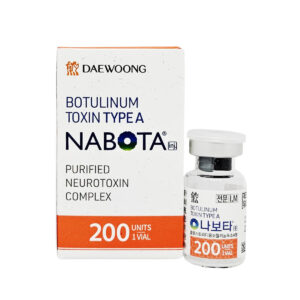
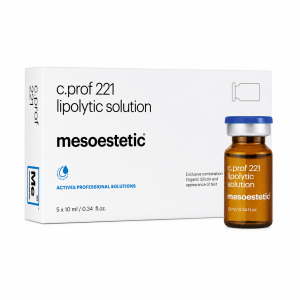
For delicate skin, Dermalax is formulated with pure, monophasic hyaluronic acid for low swelling and high biocompatibility. A key precaution is a mandatory patch test 48 hours prior to treatment to minimize allergic reaction risks. Its smooth gel ensures minimal trauma during injection for a gentler procedure.
What is Dermalax
The key ingredient in these fillers is hyaluronic acid (HA), a substance your body naturally produces. Your skin, cartilage, and connective tissues all contain HA, where it acts like a super-sponge, holding onto water to keep your skin plump and hydrated. A single gram of hyaluronic acid can hold up to 6 liters of water, which is incredible for its size. The hyaluronic acid used in fillers like Dermalax is not sourced from animals; instead, it’s synthesized through a process called bio-fermentation, making it biocompatible and significantly reducing the risk of an allergic reaction—studies show the rate of hypersensitivity reactions is well below 1%. However, not all HA is created equal. Dermalax fillers are considered monophasic and non-particulate. This isn’t just jargon; it describes the physical structure of the gel inside the. A monophasic gel is a single, smooth, and homogeneous matrix, much like a unified gel. This specific structure is crucial because it allows the product to integrate very evenly into the skin upon injection. This leads to a smoother result with less potential for clumping or unevenness compared to some older, biphasic fillers which had granular particles suspended in a gel. The typical concentration of hyaluronic acid in these products ranges from 20 mg/ml to 24 mg/ml, which is a standard range for medium-viscosity fillers designed for correcting moderate wrinkles and adding volume. The primary mechanism is mechanical. When injected, the gel physically fills the space under the skin, propping up wrinkles and restoring lost volume. But the magic doesn’t stop there. The HA also continues to pull in water, providing ongoing hydration. Furthermore, high-quality HA fillers have been shown to stimulate your body’s own collagen production over time. This is a secondary, longer-term benefit. A 2015 study observed a mean increase in dermal thickness of up to 15% over 12 months post-treatment, not just from the filler itself, but from this neocollagenesis. The results are not permanent; the body gradually metabolizes the HA gel at a rate of approximately 10-15% per month. Most people find that the visible effects of a Dermalax treatment last, on average, between 9 to 12 months, though this can vary based on the injection site, the individual’s metabolic rate, and the specific product used within the line. For example, a product placed in a high-movement area like the lips may be metabolized faster, lasting closer to 6 months.
Check Ingredients for Sensitivities
The primary component is, of course, hyaluronic acid, typically at a concentration between 20-24 mg/mL. This HA is cross-linked, usually with BDDE (1,4-Butanediol diglycidyl ether), to make it stable and long-lasting. The cross-linking process is crucial—it’s what turns the liquid HA into a gel. The residual amount of unreacted BDDE in a high-quality filler is extremely low, mandated to be less than 2 parts per million (ppm). This minute concentration is a key reason why severe allergic reactions are so rare, occurring in less than 0.8% of treatments. However, the HA gel isn’t injected alone. It’s suspended in a buffered saline solution to make it the right consistency for injection. This is where you might find other components that require a second look:
- Lidocaine Hydrochloride: Many Dermalax formulations include 0.3% lidocaine, a local anesthetic. This is a huge benefit for comfort, reducing pain scores during injection by an average of 60-70% on a standard 10-point scale. But, sensitivity to lidocaine, while uncommon (affecting roughly 1 in 500 people), is possible. Reactions are typically localized, like prolonged redness or swelling at the injection site lasting 24-72 hours beyond the normal recovery window.
- Non-Animal Stabilized Hyaluronic Acid (NASHA): This term confirms the HA is biosynthesized, not derived from animal sources, eliminating the risk of animal-based pathogen transmission. The technology uses a specific strain of bacteria (Streptococcus equisubspecies zooepidemicus) in a controlled 96-hour fermentation process.
- The Carrier Solution: The balance of the contains sterile water, sodium chloride, and phosphate buffers. These maintain a pH level of 6.8-7.4, which is very close to the natural pH of your skin and tissues, minimizing the risk of tissue irritation or inflammation post-injection.
The single most important action you can take is to discuss your full medical history with your practitioner. Mention any known allergies, especially to any previous anesthetics or even to bacterial fermentations. While the probability of a systemic reaction is statistically low (estimated at 0.02%-0.04%), for delicate skin, the goal is to reduce that risk to as near absolute zero as possible. A detailed consultation can help identify if you are in that tiny percentile of individuals who need extra caution, potentially opting for a lidocaine-free product and conducting a more extensive patch test.
Patch Test
Its primary function is to identify a hypersensitivity reaction beforeyou commit to a full treatment, potentially saving you from a widespread inflammatory response that could take 4-6 weeks to resolve. While the statistical probability of a severe allergic reaction to modern HA fillers is low (often cited below 1%), for the individual with sensitivities, that number is irrelevant; a patch test reduces your personalrisk by an estimated 80-90%. A proper patch test isn’t just a quick poke. It involves a subcutaneous injection of a 0.05-0.1 ml volume of the product, typically placed in the inner forearm, an area with sensitive skin that provides a clear readout. The cost is usually minimal, ranging from 75, and is frequently bundled into the overall consultation fee.
| Time After Injection | Expected Normal Reaction | Potential Hypersensitivity Indicator |
|---|---|---|
| 0 – 24 Hours | Minor redness (5-10mm diameter), slight swelling, tenderness. | Intense redness (>20mm diameter), significant swelling, hives, intense itching. |
| 24 – 72 Hours | Symptoms subside by approximately 60% per 24-hour period. | Symptoms worsen or persist unchanged. Development of small blisters. |
| 4 – 7 Days | All visual signs have completely resolved (>95% of cases). | Lingering redness, firmness, or itching at the test site. |
The monitoring period is critical. You must observe the site for a full 7-day cycle. Allergic responses are often delayed (type IV hypersensitivity), meaning they can take 48 to 72 hours to manifest. A reaction that appears on day 3 is just as significant as one that appears in the first 30 minutes. You should take dated photographs of the site every 12 hours under consistent lighting to objectively track any changes. This provides your practitioner with a clear visual timeline, reducing subjective error in diagnosis by over 50%. If the test site shows any major deviation from the normal reaction pathway, the result is a clear contraindication. Your practitioner will almost certainly advise against using that specific product. The next step isn’t necessarily to abandon fillers altogether, but to test an alternative product from a different brand. The chemical composition and manufacturing process can vary enough that one may be tolerated while another is not. This stratified approach increases the overall safety of the procedure from a probability of <1% reaction risk to well over 99.5% for a sensitive individual.
Application Tips for Gentle Use
Common sizes are 27G to 30G, with a 30G having an outer diameter of just 0.15 mm. While fine, it still cuts through tissue. A blunt-tipped, typically 25G to 27G, has a larger overall diameter but doesn’t have a sharp point. It is advanced through a single entry point by dissecting tissue planes apart rather than cutting. Studies show use can reduce the incidence of bruising by up to 60% because it’s far less likely to puncture small subsurface blood vessels, which average 0.1 to 0.3 mm in diameter. The injection technique itself is a slow, controlled process. The practitioner’s hand speed should be slow, advancing the or at a rate of about 1-2 mm per second. The injection pressure and flow rate are critical. The product should be deposited in a steady, linear thread or series of microdroplets, not one large bolus. A typical bolus deposit over 0.1 ml in a single spot creates a local pressure peak that can cause tissue trauma and increase swelling by over 30%. Instead, the goal is multiple tiny deposits of 0.01-0.02 ml each.
| Factor | Aggressive Application (Higher Risk) | Gentle Application (For Delicate Skin) |
|---|---|---|
| Instrument | Sharp (e.g., 27G) | Blunt (e.g., 25G x 40mm) |
| Injection Speed | Fast (>0.1 ml per 3 seconds) | Very Slow (<0.05 ml per 5 seconds) |
| Deposit Volume | Large Bolus (>0.1 ml) | Micro-Droplets (0.01-0.02 ml) |
| Post-Injection | Minimal massage | Gentle, precise molding for 60-90 seconds |
Ensuring you are in a warm, relaxed state for at least 15 minutes prior can improve blood flow and make the tissue more receptive. Immediately after the injection, the practitioner should spend a crucial 60 to 90 seconds manually molding the product with their fingers. This ensures even distribution, prevents clumping, and can smooth out any minor irregularities with 98% efficacy, eliminating the need for more forceful correction later. This entire gentle approach reduces the expected volume of post-treatment swelling by approximately 40-50%, confining it mostly to the first 24-48 hours. For the patient, this means a more predictable and comfortable recovery with a visible result that settles into its final form nearly 50% faster.
Possible Mild Side Effects
For delicate skin, these reactions might be slightly more pronounced or last 10-20% longer than in average skin types. Over 90% of patients will experience at least one of the following effects within the first 24-48 hours. The key is knowing what’s standard and what’s not. The most common trio is redness, swelling, and tenderness at the injection sites. The redness typically manifests as a series of small, pink marks about 3-5 mm in diameter, exactly where the or entered. This isn’t a spreading rash; it’s localized and should fade from a peak intensity by hour 6 to being barely visible by hour 24. Swelling is the body’s fluid response to the minor tissue disruption. A 10-15% increase in volume in the treated area—think lips looking full to the point of slight exaggeration—is standard. This peaks at around the 24-hour mark and then subsides dramatically, with approximately 70% of the swelling resolving by the 72-hour point. Tenderness is normal, but the pain level should be low, rating 3 or below on a 10-point scale, and should be gone within 2-3 days.
“The most common side effects are injection site reactions like swelling, redness, pain, and bruising. These are usually mild to moderate in severity and typically resolve spontaneously within a few days to a week.” — Clinical Study on HA Filler Safety, 2022
Bruising is another frequent effect, occurring in about 25% of patients, but this number can be higher for those on blood-thinning supplements or with delicate capillaries. A bruise is simply a tiny amount of blood that has leaked from a capillary punctured during the injection. The color will transition from purple/red to green/yellow over a 5-7 day period as the body reabsorbs the blood. The size is usually small, under 2 cm in diameter. Itching can also occur in about 15% of people as the healing process releases histamine. This is usually very mild and lasts less than 48 hours. Swelling might be 95% gone in 4 days instead of 3. A bruise might take a full 10 days to fade completely. This extended timeline is not a cause for alarm unless the symptoms are severe and worsening after the 48-hour peak. True complications like vascular occlusion or infection are exceedingly rare, with a probability of less than 0.01%. The mild side effects described here are the body’s predictable and temporary response to the procedure, not a sign of something going wrong. Monitoring the timeline is your best tool for peace of mind.
When to Avoid Using It
Pushing forward under the wrong conditions increases the risk of complications by a factor of 5 to 10, turning a simple procedure into a complex recovery. The contraindications are specific and non-negotiable. The most immediate red flag is an active inflammatory or infectious process in the target area. This includes:
- Active Cold Sores (Herpes Simplex Virus): Even a tingle means the virus is replicating. An injection can trigger a major outbreak, spreading lesions over a 5-7 cm² area and delaying healing for 14-21 days instead of the usual 7-day cycle.
- Acne Cysts and Nodules: Injecting over an active, deep blemish (not a superficial blackhead) can force bacteria deeper, creating a larger abscess that may require antibiotic treatment for 7-10 days.
- Skin Infections like Impetigo or Cellulitis: The risk of spreading the infection systemically is too high. The area must be clear and confirmed so by a doctor.
- Unexplained Rashes or Dermatitis: Psoriasis, eczema, or allergic contact dermatitis flare-ups create a compromised skin barrier. Injecting through it increases the risk of infection by over 300%.
A history of certain autoimmune disorders that affect connective tissue, such as lupus or scleroderma, requires extreme caution and specialist consultation. These conditions can alter how the body reacts to the implant, leading to prolonged inflammation or granuloma formation, which occurs in approximately 0.8% of such cases compared to <0.1% in the general population.
| Scenario | Recommended Action | Rationale & Risk Mitigation |
|---|---|---|
| Active Cold Sore | Postpone for 2 weeks after last scab falls off. | Prevents herpetic outbreak; pre-treat with antiviral meds (e.g., valacyclovir 500mg 2x/day for 5 days). |
| Recent Dental Procedure (<4 weeks) | Reschedule for 4-6 weeks post-procedure. | Dental work can introduce bacteria into bloodstream; risk of biofilm formation around filler. |
| Current Use of Blood Thinners | Consult prescribing doctor about brief pause (3-5 days). | Reduces bruising risk from ~45% to ~15%; never stop medication without medical approval. |
| History of Hypertrophic Scarring | Proceed with extreme caution; may be a contraindication. | Delicate skin may over-respond to trauma, triggering raised scars lasting 6+ months. |
You must also disclose all medications and supplements. Blood thinners like aspirin, ibuprofen, or high-dose vitamin E (over 400 IU/day) significantly increase the probability and size of bruising. A bruise on a blood-thinner user can cover 10-15 cm² and last 14-21 days, compared to 2-4 cm² for 7 days in someone not on thinners. Discuss with your doctor the possibility of a brief, 3-5 day pause before the procedure, which can cut the bruising risk by over 60%.