Quick answer: how much does Saxenda cost monthly?
Current U.S. list-price benchmark: $1,349.02 per package
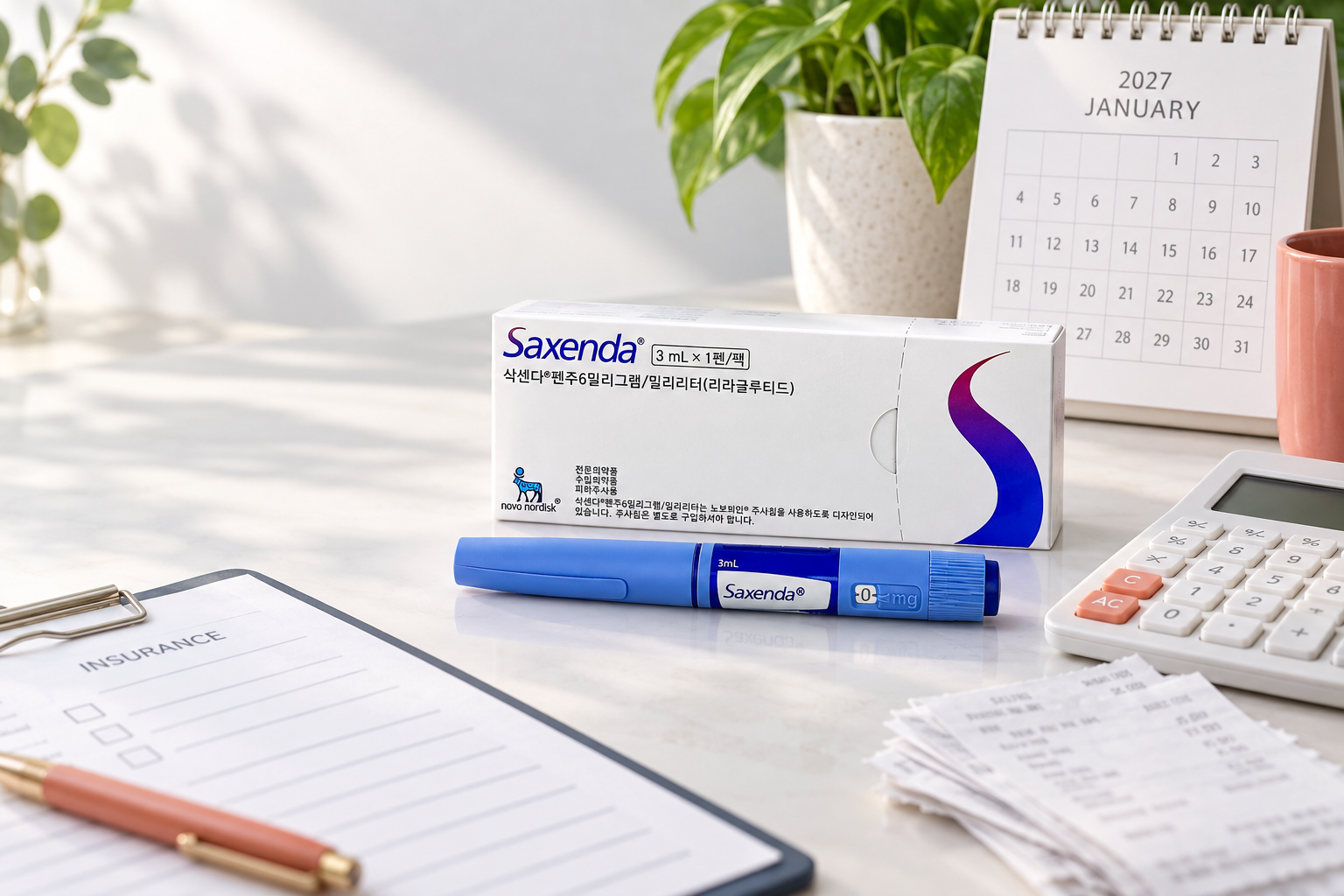
Novo Nordisk currently lists Saxenda at $1,349.02 per package in the United States before discounts or rebates, but that is not a universal monthly bill. A person’s monthly out-of-pocket cost depends on the prescribed supply, insurance benefits, pharmacy quote, savings eligibility and any consultation or delivery charges; compare a complete written quote rather than a headline price.
Novo Nordisk has also announced that final wholesaler shipments are planned for late January 2027, so availability and continuity should be checked before starting or reordering. The practical question in 2026 is therefore not only “What is the lowest price?” but “What will my complete, lawful and clinically supported supply cost, and can it continue?”
Start with the price label you are actually comparing
“Saxenda price” can refer to several different numbers. The manufacturer list price is the amount set before discounts or rebates. A cash price is what a pharmacy quotes without an insurance benefit. A copay or coinsurance amount is the patient’s share under a particular plan. A telehealth or weight-management program may combine medication with consultation and service fees. An online product page may show one item price without representing a complete prescribed monthly supply.
Those figures cannot be compared until they describe the same thing. The current manufacturer benchmark is useful because it gives U.S. readers a consistent reference point. It does not predict what an insured patient, an uninsured cash buyer or a customer outside the United States will actually pay.
If insurance approval is the main problem, use the separate Saxenda insurance-coverage guide. This page focuses on building a comparable total-cost quote.
Why two Saxenda quotes can be far apart
A large price gap is not automatically evidence that one seller is overcharging or that another is offering the same purchase at a bargain. First check whether the quotes cover the same product, package, prescribed quantity and service level. Then look at who is paying which part of the bill.
- Insurance benefits: coverage, deductibles, copays, coinsurance and prior-authorization rules vary by plan.
- Savings eligibility: manufacturer offers can have location, insurance and program restrictions and may change.
- Dispensing route: retail pharmacy, hospital pharmacy, telehealth program and international seller quotes may include different services and obligations.
- Prescribed supply: the responsible prescriber and dispenser determine what quantity is lawful and appropriate; a product-page item is not automatically one month’s supply.
- Additional charges: consultation, follow-up, membership, pharmacy, cold-chain handling, shipping or customs costs can sit outside the headline medication price.
A fair comparison puts all of those items on one page. If a quote cannot state what is included, what is excluded and who is responsible for prescribing and dispensing, it is not ready to compare.
What to include in a true monthly-cost comparison
| Quote component | Question to ask | Why it changes the decision |
|---|---|---|
| Medication and quantity | What exact product and prescribed supply does this price cover? | Prevents a single-item price from being mistaken for a complete month. |
| Insurance contribution | Is this before or after deductible, copay and coinsurance? | Separates the plan’s share from the patient’s share. |
| Savings program | Am I eligible, what is the maximum benefit and when can terms change? | A promotional minimum is not a guaranteed long-term payment. |
| Clinical service | Are assessment and required follow-up included? | Low medication pricing may exclude professional care. |
| Delivery and handling | Are pharmacy, shipping, temperature-control or customs charges included? | These can turn a low listing into a higher delivered total. |
| Continuity | Can the dispensing route support the next prescribed order? | The announced discontinuation makes a one-off quote less useful. |
Keep the comparison in the same currency and note the date of every quote. Prices, insurance terms and stock can change, so an old screenshot should not be treated as a current offer.
How to read a much lower online listing
A lower online price can be a legitimate item listing, but it still needs context. The current FillersFairy Saxenda product record, for example, should be read as a current product listing—not as a promise that the displayed item equals every reader’s monthly prescription cost.
Before treating any lower listing as the better choice, confirm the exact package, prescribed quantity, product origin, expiry, storage and shipping conditions, local prescription requirements, taxes and customs exposure. Also confirm whether the seller is supplying a product only or a clinical program. These questions protect the comparison from looking cheaper simply because important components are missing.
Useful rule: never compare a U.S. manufacturer list price, an insurance copay and an international product-page price as if they were the same type of number. Normalize the product, prescribed supply and included services first.
What the 2027 discontinuation changes now
Novo Nordisk says the Saxenda brand will be discontinued, with final shipments to wholesalers planned for late January 2027. The company states that this portfolio decision is not the result of a safety or quality concern. That distinction matters: the notice changes availability planning, not the product’s safety record by itself.
For a person considering Saxenda now, the prescriber should be able to discuss continuity and appropriate alternatives if future supply becomes uncertain. For a buyer, a current in-stock label does not guarantee that later orders will be available. A one-off low quote is therefore less valuable than a transparent route that can explain stock, dispensing and transition planning.
Do not switch, restart or replace prescription treatment from an article. Questions about outcomes belong in the Saxenda results-timing guide, while risk-specific concerns such as pancreatitis belong in the Saxenda pancreatitis guide and a conversation with the responsible healthcare professional.
A six-question quote checklist
- What exact Saxenda product and prescribed quantity does the quoted price cover?
- Is the number a manufacturer list price, cash pharmacy price, insured out-of-pocket amount or product-only listing?
- Which insurance or savings conditions have already been applied, and which can change?
- Are assessment, follow-up, pharmacy, shipping, handling, tax and customs charges included?
- Does the route meet prescription and dispensing requirements in the buyer’s location?
- What is the documented plan if Saxenda supply becomes unavailable before the next prescribed order?
If a seller, program or pharmacy cannot answer these questions in writing, the quote is incomplete. Ask for a revised total before deciding.
Final recommendation
Use the current U.S. list price only as a benchmark. Compare complete written quotes that cover the prescribed supply, coverage, savings, fees, shipping and continuity, then confirm availability and alternatives with the prescribing professional before starting or reordering.
Review the current Saxenda product record only after confirming the exact package, prescription requirements, local eligibility, total delivered price and continuity with the responsible healthcare professional.
Frequently asked questions
What is the current Saxenda list price in the United States?
Novo Nordisk currently lists Saxenda at $1,349.02 per package before discounts or rebates. This is a benchmark, not every patient’s monthly out-of-pocket payment.
Is the Saxenda list price the same as the monthly cost?
No. Monthly cost depends on the prescribed supply, insurance benefits, pharmacy quote, savings eligibility and any clinical, delivery or handling fees.
How much is Saxenda without insurance?
There is no single cash price for every pharmacy or country. Ask for a dated written quote that identifies the exact product, prescribed quantity, pharmacy charges and total delivered cost.
Can a savings offer guarantee a low Saxenda copay?
No. Savings offers have eligibility rules, maximum benefits and terms that can change. Confirm current eligibility and the remaining out-of-pocket amount before relying on an advertised minimum.
Why can an online Saxenda listing be much lower?
It may be a product-only or market-specific listing rather than a complete monthly prescription quote. Confirm package, quantity, prescription requirements, shipping, taxes and included services before comparing it.
Is Saxenda being discontinued?
Yes. Novo Nordisk has announced final wholesaler shipments for late January 2027 and says the decision is not due to a safety or quality concern. Discuss continuity and alternatives with the prescriber.
Sources
Evidence checked on September 9, 2026: NovoCare’s Saxenda list-price page; Novo Nordisk’s official Saxenda discontinuation notice; FillersFairy Store API for current product availability. Prices, benefits and inventory remain time-sensitive and should be reconfirmed at purchase.