Choose the variant · verify the pathway · do not copy a map
Searches for Lipo Lab injection areas often lead straight to body maps, amounts and technique. That skips the decisions that come first: which product variant is being discussed, whether it is lawful in the buyer’s market, and who is clinically responsible for patient assessment and complications.
Table of contents
Quick Answer: Where can Lipo Lab be used?
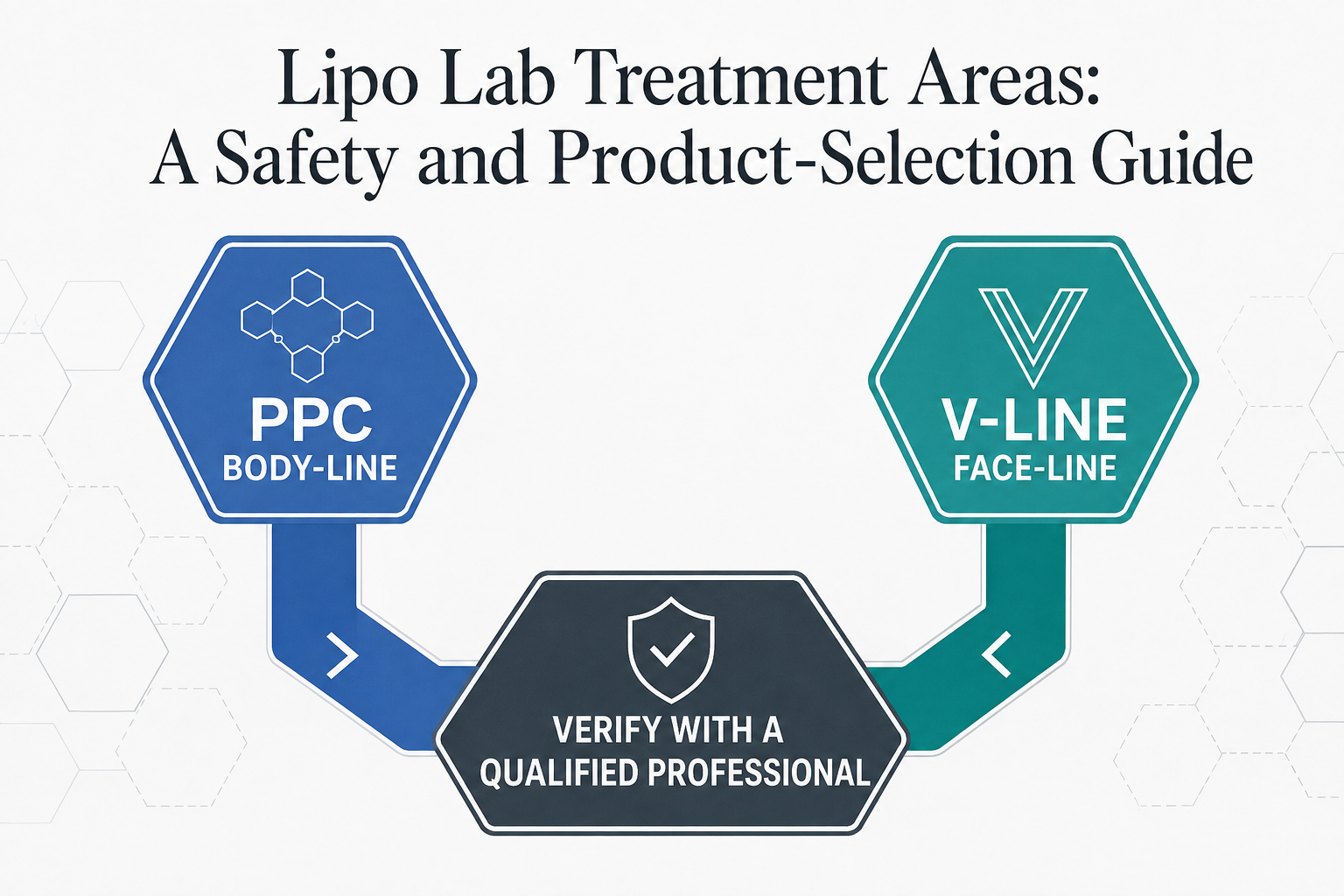
There is no responsible online zone-by-zone map that can decide where or how to inject Lipo Lab for an individual. MEDIHUB distinguishes Lipo Lab PPC Solution for body-line professional care from Lipo Lab V-Line for face-line care, but the name of an area does not establish patient suitability, a technique or permission to use either product.
Exact suitability, administration and treatment planning belong to a qualified clinician and local rules. The FDA warns that Lipo Lab and other unapproved fat-dissolving injections are not FDA-approved and can cause serious harm, so U.S. readers should not treat online availability as approval or as permission to self-inject.
Start With the Product Variant, Not a Body Map
“Lipo Lab” is used online as if it were one product with one universal set of areas. The official MEDIHUB lineup makes an important distinction: Lipo Lab PPC Solution is positioned for body-line professional care, while Lipo Lab V-Line is positioned for face-line care. Those are product-family identities, not interchangeable labels and not patient-specific directions.
Lipo Lab PPC Solution
Use the body-line identity only to select the correct commercial product record for a qualified professional pathway. It does not tell a patient where, how much or how to administer it.
Lipo Lab V-Line
Use the face-line identity to keep this variant separate from PPC Solution. It does not convert a facial area name into a treatment plan or establish local authorization.
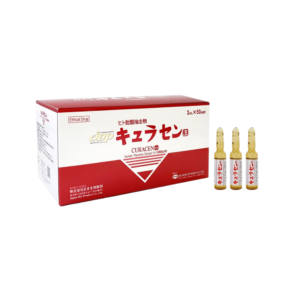
The distinction matters at the beginning of procurement. A buyer who has not confirmed the exact variant can easily compare the wrong listing, rely on claims for a different product or create a traceability gap. The correct product name, original sealed condition, batch information and supplier record should agree before a commercial decision moves forward.
Why an Area Name Cannot Decide Suitability
A searcher may type an area because it is easy to name, but suitability depends on more than location. A qualified assessment considers anatomy, the nature of the concern, health history, current medicines, prior procedures, contraindications, the exact product and the legal framework in the place where care is delivered.
Two people asking about the same region may therefore receive different professional conclusions. One may not be an appropriate candidate. Another concern may not match the product category at all. A third may need evaluation for a medical issue before any aesthetic plan is discussed. A static grid cannot represent those differences safely.
This article intentionally omits amounts, spacing, depth, needles, preparation and placement steps. Publishing them next to a product link would imply that a general web page can supervise an injectable procedure. It cannot. If a patient is researching options, the next step is an appropriately qualified local clinician, not a shopping list.
What the FDA Warning Changes for U.S. Readers
The U.S. regulatory boundary is direct: the FDA warning on unapproved fat-dissolving injections explicitly names Lipo Lab and states that these products are not FDA-approved. It also warns about serious adverse effects and the risks of products sold directly to consumers for self-injection.
A separate 2025 FDA warning letter addresses U.S. marketing of Lipo Lab PPC as an unapproved new drug. These sources apply to the United States and should not be rewritten as a universal global status. Buyers in other markets still need current local legal and professional guidance.
The practical consequence is that a U.S. reader should not interpret a product page, imported listing or social demonstration as evidence of FDA approval. A patient should not purchase the product for self-use. A professional buyer should establish the relevant legal and institutional position before considering procurement.
A Procurement Check for Qualified Professionals
For a qualified professional buyer in a market where the product can lawfully be considered, procurement should answer several questions before price or quantity. Is the listing the exact PPC or V-Line variant? Is the supplier traceable? Does the sealed product, labeling and batch record match the order? Can the buyer document storage, receipt and chain of custody? Is the intended professional use consistent with current local rules and institutional policy?
Clinical governance is equally important. Who decides whether a person is suitable? Who obtains consent, records the product, performs the procedure and provides follow-up? What is the escalation route if a complication is suspected? If those responsibilities are not assigned, a product comparison is premature.
| Decision | Evidence to verify | Stop condition | Next route |
|---|---|---|---|
| Variant | Exact PPC or V-Line identity across listing, invoice and sealed product | Variant is unclear or mixed across records | Resolve identity before ordering |
| Traceability | Supplier details, batch information, sealed condition and receipt record | Origin or batch cannot be documented | Do not proceed with the product |
| Jurisdiction | Current local regulatory and professional requirements | Use is prohibited or cannot be established | Follow local authority and institutional guidance |
| Clinical pathway | Qualified assessment, consent, treatment record, follow-up and escalation owner | No trained or accountable professional pathway | Stop procurement |
Qualified buyers can review the current Lipo Lab PPC Solution route and the separate Lipo Lab V-Line route only after these checks are in place. The fat-dissolving product category is useful for commercial comparison, not for selecting treatment for an individual.
Red Flags That Should Stop the Purchase
The clearest stop signal is DIY intent. Requests for a body map, exact amount, depth, spacing or reuse instructions show that the buyer is looking for a procedure rather than a commercial product record. FillersFairy does not provide patient-level injectable instructions, and an online sale must not be treated as clinical supervision.
Other stop conditions include a listing that confuses PPC with V-Line, missing traceability, broken or altered packaging, seller claims that cannot be tied to current official evidence, and a buyer who cannot identify the qualified professional responsible for assessment and complications. Price does not compensate for any of these gaps.
For a clinic or distributor needing documentation before a compliant decision, the FillersFairy contact route can be used to request commercial product information. It should not be used to obtain individualized medical advice or an injection plan.
Final Recommendation
Do not use an online zone list as permission or technique guidance. Patients should seek an appropriately qualified clinician. Professional buyers should verify the exact PPC or V-Line variant, traceability, local legal status, trained administration and a complication pathway before reviewing the current product routes.
Qualified professional buyers may compare the current PPC and V-Line product routes only after confirming exact variant, traceability, local eligibility, trained administration and a complication-management pathway.
Frequently Asked Questions
Is there a safe universal Lipo Lab injection-area map?
No. A body or face area does not establish individual suitability, product choice or technique. A qualified clinician must assess anatomy, health history, the exact product and local rules; this guide intentionally provides no procedural map.
What is the difference between Lipo Lab PPC and V-Line?
MEDIHUB distinguishes Lipo Lab PPC Solution for body-line professional care and Lipo Lab V-Line for face-line care. These identities help qualified buyers select the correct product record, but they do not create patient-level treatment instructions.
Is Lipo Lab FDA-approved?
No. The FDA explicitly names Lipo Lab among unapproved fat-dissolving injections and warns about serious harm. This is the U.S. regulatory position; buyers elsewhere still need current local legal and professional guidance.
Can I buy Lipo Lab for self-injection?
No. Product availability is not clinical supervision or permission to self-inject. The FDA warns consumers against buying unapproved fat-dissolving products for self-administration, and this article provides no dose, placement or technique instructions.
What should a qualified buyer verify before ordering?
Verify the exact PPC or V-Line variant, sealed condition, supplier and batch traceability, current local eligibility, trained professional use, treatment documentation, follow-up responsibility and a clear complication pathway.
Which red flags should stop a Lipo Lab order?
Stop when the purpose is DIY use, the variant is unclear, origin or batch cannot be documented, packaging is altered, claims cannot be verified, local eligibility is unresolved or no qualified professional owns assessment and complication management.
Evidence note: This guide separates product identity, procurement and U.S. regulatory evidence. It does not provide diagnosis, dosing, preparation, injection depth, spacing, placement points or a substitute for qualified clinical assessment.