Storage state changes the answer
“How long does Nabota last?” can mean shelf life, time after reconstitution or duration of effect. Only one of those questions can support a three-month stock plan, and only while the vial remains unopened and continuously refrigerated.
Table of Contents
Quick Answer
A three-month storage plan can apply only to an unopened, unexpired Nabota vial kept continuously at its labeled 2–8°C cold-chain conditions. Current regulatory datasheets require a reconstituted vial to remain refrigerated and be used within 24 hours, not stored for three months, and it must not be frozen.
For procurement, verify the expiry date leaves enough time, document the temperature from receipt through professional use, and quarantine any shipment with an unexplained excursion. Do not use a laboratory potency chart or online anecdote to extend the labeled post-reconstitution window.
Which “Longevity” Question Are You Asking?
Three different clocks appear in Nabota searches, and mixing them is the central error behind this topic.
How long an in-date vial can remain in inventory when stored under the labeled cold chain. This is the clock relevant to a three-month purchasing plan.
How long the prepared product may be held before use. This is a short labeled window, not an inventory horizon.
A third clock—how long a treatment effect may last—begins after professional administration and belongs to an outcome discussion. It says nothing about how long a vial can sit in a refrigerator. The separate guide to Nabota treatment duration addresses that question without mixing it with product storage.
The same distinction applies when people ask whether a product is still “good.” A vial can be within its printed expiry yet become unsuitable because the cold chain was not maintained. Conversely, a treatment effect can still be visible even though no product remains to be stored. One word—longevity—cannot safely answer both.
Can You Store Unopened Nabota for Three Months?
Yes, a three-month plan can fit unopened inventory when four conditions are met: the product remains within the printed expiry, refrigeration stays within the labeled range, the vial remains sealed, and the storage record is continuous. The current New Zealand government datasheet lists a 36-month unopened shelf life under refrigerated conditions, but the date printed on the exact product is what controls the stock in hand.
This means “three months” is not a promise attached to every delivered box. A clinic receiving stock close to expiry may have less usable time. A shipment with an unresolved temperature excursion may not be supported by the normal shelf-life statement. A freezer is not an acceptable shortcut for a poorly managed refrigerator.
For qualified buyers, the useful pre-order questions are operational:
- Will the remaining labeled shelf life cover the intended stock cycle?
- Can the receiving site transfer the shipment promptly into monitored refrigeration?
- Who reviews a temperature alarm or delivery exception before the stock is released?
- Can the lot, expiry, arrival condition and storage location be traced?
The product’s active ingredient and mechanism are separate from this cold-chain decision. Readers who need that identity layer can use the guide to Nabota’s active ingredient without turning it into storage permission.
Why Doesn’t Three Months Apply After Reconstitution?
Reconstitution changes the product state and therefore changes the clock. Current regulatory information from both the New Zealand Medsafe datasheet and the Singapore National Drug Formulary instructs refrigerated storage after reconstitution and use within 24 hours.
That boundary is not based only on whether the toxin might retain some measurable activity. A prepared product also raises handling, contamination and sterility questions that an online photo or personal experience cannot answer. “It still worked for me” is not equivalent to labeled storage evidence.
This article does not provide a reconstitution recipe, diluent volume, dose or injection instructions. The storage decision begins only after a qualified professional has prepared the product under the applicable instructions. At that point, the responsible site should mark the time, maintain refrigeration and use or discard according to the current local product information.
Can Freezing Extend the Window?
No. The current Medsafe datasheet explicitly says not to freeze the reconstituted product. Freezing should not be used to convert the labeled 24-hour window into a longer personal storage practice.
Online discussions sometimes cite experiments in which measurable potency persisted under particular laboratory conditions. That does not establish a clinic-ready storage protocol. A potency result answers whether activity was measured under the test conditions; it does not by itself validate sterility, container handling, repeated access, transport history or a new labeled use window.
The practical hierarchy is simple: current local product information and the exact package record come first. An experimental chart can generate a research question, but it cannot authorize a storage change for a product intended for professional use.
How Should a Clinic Build a Three-Month Stock Plan?
A good three-month plan starts with expected use, not maximum ordering. The aim is to keep enough unopened stock for realistic professional demand while preserving expiry headroom and reliable cold-chain records.
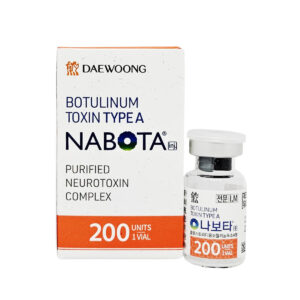
Qualified buyers can compare the current Nabota 100UI route and Nabota 200UI route only after the site can support this chain. Strength and purchasing quantity do not change the basic storage boundary.
Use This Storage Decision Table
| Product state | Applicable clock | Required decision | Stop condition |
|---|---|---|---|
| Before ordering | Planned inventory horizon | Match quantity to expected use and confirm enough expiry headroom | The site cannot maintain or document refrigerated storage |
| Delivered and unopened | Printed expiry under labeled refrigeration | Log lot, expiry, arrival condition and temperature-controlled placement | Packaging, temperature history or expiry is not acceptable |
| Unopened three-month stock | Part of the remaining shelf life | Continue monitored cold-chain storage and stock rotation | An excursion occurs or the printed expiry no longer covers planned use |
| After reconstitution | Refrigerated 24-hour labeled window | Mark time and handle under the current professional instructions | The labeled window has passed or handling integrity is in doubt |
| After a freeze or unexplained excursion | No self-created extension | Quarantine and obtain an accountable product-specific decision | Never release stock based only on appearance or anecdotal potency |
This table deliberately gives no mixing or injection steps. Its job is to help a clinic keep the correct clock attached to the correct product state.
Final Recommendation
Use three months only as an unopened inventory-planning horizon under continuous labeled refrigeration; once Nabota is reconstituted, keep it refrigerated, use it within the current labeled 24-hour window and do not freeze it. If the cold chain or timing cannot be documented, stop and quarantine the product rather than extending the clock from an online anecdote.
Qualified buyers may choose the current Nabota product route only when their site can receive, monitor and document the labeled refrigerated cold chain through the point of professional use.
Frequently Asked Questions
Can unopened Nabota be stored for three months?
Yes, when the vial remains sealed and in date and the labeled refrigerated cold chain is maintained continuously. The printed expiry on the exact product and any temperature excursion still control the decision.
How long is Nabota good for after reconstitution?
Current regulatory datasheets instruct refrigerated storage and use within 24 hours after reconstitution. That short window should not be replaced with a three-month personal storage practice.
Does Nabota need to be refrigerated before opening?
Yes. Current government product information specifies refrigerated storage at 2–8°C for the unopened product. A buyer should be able to document that cold chain from receipt through professional use.
Can you freeze reconstituted Nabota?
No. Current product information says not to freeze the reconstituted product. Freezing should not be used to extend the labeled post-reconstitution window.
Do potency studies prove Nabota can be kept longer?
No. A laboratory potency observation does not by itself establish sterility, handling integrity or a new approved storage window. Current local product information and the exact pack record remain the operational standard.
Is Nabota storage longevity the same as treatment longevity?
No. Storage longevity concerns the product before professional use, while treatment longevity concerns how long an effect may remain afterward. The two clocks should never be used interchangeably.
Evidence note: Storage limits are bounded to current Medsafe and Singapore national product information. The article separates cold-chain procurement from reconstitution, dosing and injection technique and does not provide a procedure tutorial.