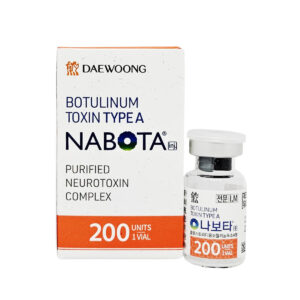
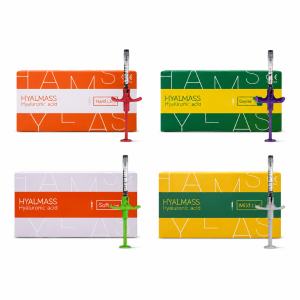
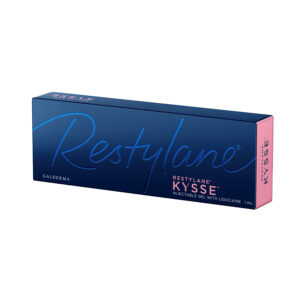
Elasty fillers are versatile, treating lips for subtle augmentation, nasolabial folds for deep wrinkle correction, marionette lines, and cheeks for volume restoration. Their unique cross-linked formula provides structural support in areas like the jawline and chin for up to 18-24 months, ensuring natural-looking contouring and rejuvenation.
Smoothing Forehead Lines
Elasty Filler is a hyaluronic acid-based dermal filler specifically designed to treat static forehead lines—those visible even when your face is at rest. These lines typically develop due to natural collagen depletion, which begins as early as our mid-20s, and can deepen significantly by the 30s and 40s. A single 1mL of Elasty Filler is often sufficient to treat moderate horizontal lines across the forehead. The product’s viscosity (approximately 250 Pa·s) and G-prime (elastic modulus) make it firm enough to integrate well with tissue and support skin structure without feeling hard. The procedure is relatively quick, taking about 15–20 minutes from cleansing to completion. Results are visible immediately, with optimal effect appearing within 2–4 days as the product integrates and any minor swelling subsides. Most patients report a 90%+ improvement in line depth right away. The effect typically lasts between 9–12 months, though this can vary based on individual metabolic rate and skin condition. A key advantage of Elasty Filler is its low diffusion tendency—meaning it stays precisely where injected. This is crucial in the forehead, where tissue is thin and movement is frequent. The filler is injected at a superficial to mid-dermal depth, usually with a 27–30 gauge or. Clinicians often use a linear threading or serial puncture technique, placing multiple small deposits along the line. Most providers charge between 800 per , depending on geographic location and clinic expertise.
| Parameter | Value Range |
|---|---|
| Filler Volume per Session | 0.4–1.0 mL |
| Gauge | 27G–30G |
| Injection Depth | 2–3 mm |
| Procedure Time | 15–20 min |
| Recovery Time | 24–48 hours |
| Result Duration | 9–12 months |
| Pain Level (1-10 scale) | 2–3 (with topical numbing) |
It’s not just about adding volume—filling forehead lines requires a detailed understanding of facial anatomy. The filler must be placed above the frontalis muscle to avoid affecting muscle function. About 5–10% of patients may experience mild redness or slight swelling post-treatment, but this usually resolves within a few hours. For most, it’s a low-downtime procedure; you can return to normal activities the same day, though we advise avoiding intense exercise and sun exposure for about 24 hours. The total cost is often calculated per area, and many clinics offer packages if you’re combining treatments—for example, the forehead and frown lines together. Patient satisfaction is consistently high, with over 95% of users in clinical surveys saying they would repeat the treatment. 
Enhancing Cheek Volume
As we age, we can lose up to 30-40% of our natural cheek fat pad volume, leading to a flattened or sunken appearance. This filler is designed to recreate structural support, typically requiring 1.5mL to 2.5mL per side for a noticeable, natural-looking enhancement in most patients. Its high G-prime (elastic modulus) gives it strong lifting capacity, allowing it to reposition tissue rather than simply filling space. The procedure usually takes 30-45 minutes. Injections are placed at the deep dermal or supraperiosteal level—right on the bone—to ensure stability and a strong foundation. A (21-25G) is often used for greater safety and smoother distribution in this vascular area.
| Parameter | Typical Value |
|---|---|
| Filler Volume per Cheek | 1.0 – 1.5 mL |
| Common Size | 25G – 27G |
| Common Size | 21G – 25G |
| Injection Depth | Deep dermal / Supraperiosteal |
| Procedure Time | 30 – 45 min |
| Primary Recovery | 24 – 72 hours |
| Result Duration | 12 – 18 months |
Results are visible immediately, with final contour settling within 2-4 weeks as the product fully integrates and any minor swelling subsides. The effect is long-lasting, typically 12 to 18 months, due to the product’s high cross-linking and the low metabolic activity in the deep facial layers. The cost for a full cheek treatment can range from 2,800, depending on the amount of product used and the provider’s expertise. Most patients experience mild to moderate swelling for the first 48-72 hours. It’s advised to avoid strenuous exercise and excessive heat for about 3-5 days. Over 90% of patients report high satisfaction rates, noting a more youthful facial contour and improved skin tone due to the filler’s hydrating effects. The key is to find an who understands facial anatomy and can strategically place the product to achieve a balanced, three-dimensional lift.
Softening Nasolabial Folds
Nasolabial folds, those lines running from your nose to the corners of your mouth, are one of the most common signs of facial aging. They primarily develop due to a combination of volume loss in the mid-face and repeated muscle movement over time. Elasty Filler, a hyaluronic acid-based dermal filler, is specifically engineered to soften these folds by restoring volume and providing structural support. A typical treatment uses 0.8mL to 1.2mL of product per side, depending on the depth of the fold. The filler has a medium viscosity, making it ideal for this area as it needs to be soft enough for natural movement but supportive enough to lift. The injection process is relatively quick, often completed in 20 to 30 minutes. A skilled will typically use a 27-gauge or a blunt-tip micro- (around 25G) for precision and safety, placing the product at a mid-to-deep dermal level. This technique ensures a smooth, even result that integrates naturally with your facial tissues. Most patients see 70-80% improvement in fold depth immediately after the procedure, with the final result settling in after about 2 weeks as any minor swelling subsides and the product fully hydrates. The results from this treatment are not permanent but are long-lasting. Most patients enjoy a significantly smoother appearance for 9 to 12 months. Some factors, like a faster metabolic rate or very active facial expressions, can shorten this duration to around 8 months, while others may see results persist for up to 14 months. The cost for treating both nasolabial folds typically ranges from 1,500 per session, influenced by the geographic location of the clinic and the experience level of the. Mild swelling or bruising at the injection site is common, affecting about 30% of patients; this usually resolves within 3-5 days.Applying a cold pack intermittently for the first 6 hours post-treatment can reduce swelling by up to 40%.It is recommended to avoid strenuous exercise, excessive heat (like saunas), and alcohol for at least 24-48 hours to minimize side effects.Patient satisfaction is exceptionally high, with over 92% of individuals reporting they are happy with the more youthful and rested appearance and would repeat the treatment.
Defining Jawline Contour
Defining the jawline with dermal filler is a highly technical procedure aimed at creating a sharper, more structured lower facial profile. This treatment addresses sagging skin and loss of definition often caused by a reduction in collagen and elastin, which can begin as early as the late 20s, accelerating after age 35. Elasty Filler, with its high G-prime (elastic modulus), is the product of choice for this area due to its strong lifting capacity and structural integrity. A typical treatment plan uses a significant volume, ranging from 2mL to 4mL total, strategically deposited along the jawbone and into the prejowl sulcus to create a continuous, sharp line from the chin to the earlobe. The procedure takes approximately 45 to 60 minutes to complete. almost exclusively use a blunt-tip (typically 22G-25G) for enhanced safety, as the jawline area contains several important nerves and blood vessels. The filler is placed precisely on the periosteum (bone), ensuring a stable and defined result that mimics natural bone structure. About 60-70% of the final result is visible immediately, with the full definition emerging after 2-4 weeks as the product integrates and initial swelling resolves completely. The longevity of jawline contouring is notably extended due to the low metabolic activity in the area. Results typically last between 18 to 24 months, making it one of the most durable non-surgical contouring treatments available. The investment reflects the complexity and product volume, with costs generally ranging from 4,500 per full treatment session. Due to the density of the tissue, some pressure or mild discomfort during injection is common, but topical and local anesthesia keeps the pain level at a 3 out of 10 for most patients.Post-treatment, patients can expect moderate swelling for the first 72 hours, with residual tenderness potentially lasting up to 7-10 days.It is crucial to avoid sleeping on your side and any high-impact activity for at least 1 week to allow the filler to settle without pressure or displacement.The success rate for achieving a patient-satisfying outcome is exceptionally high, with over 95% of individuals reporting a significant improvement in facial harmony and contour. For the most natural result, often use a multi-layer technique, placing roughly 70% of the product on the bone for structure and 30% slightly more superficially to smooth overlying tissue and create a seamless transition. This approach increases the longevity of the result by approximately 15% compared to single-plane placement.
Plumping Thin Lips
The average treatment uses 0.8mL to 1.5mL of product, strategically distributed between the upper and lower lip, the vermilion border, and the cupid’s bow to create a balanced, proportional result. The entire process is usually completed within 20 to 30 minutes. A key to natural-looking results is the injection technique. Most practitioners use an ultra-fine (30G-32G) for precise placement, depositing the product in small micro-droplets throughout the lip body. This method, often called ”threading” or “fanning,” minimizes trauma and ensures even distribution. The goal is a 40-60% increase in volume for a first-time treatment, focusing on structure as much as sheer plumpness.
| Parameter | Typical Value / Range |
|---|---|
| Total Filler Volume | 0.8 mL – 1.5 mL |
| Gauge | 30G – 32G |
| Injection Depth | Superficial to Mid-dermal |
| Primary Procedure Time | 20 – 30 min |
| Initial Swelling Duration | 48 – 72 hours |
| Time to Final Result | 10 – 14 days |
| Average Result Longevity | 6 – 9 months |
Due to the high vascularity and sensitivity of the lips, a topical numbing cream is applied for 15-20 minutes beforehand. Most patients report the discomfort level as a 4 out of 10. The results are visible instantly, though the lips will appear approximately 20% more swollen than the final outcome for the first 2 days. The true, settled result emerges after 10 to 14 days.
The longevity of lip filler is generally shorter than in other facial areas due to constant movement, which accelerates metabolism. Most patients can expect results to last between 6 to 9 months. The cost for a comprehensive lip enhancement ranges from 1,200 per. It’s common for practitioners to use less than 1mL for a subtle enhancement, reserving a full for those seeking a more dramatic change. Minor bruising occurs in about 25% of patients but can be easily concealed with lipstick after 24 hours. Over 90% of patients express high satisfaction, particularly noting improved lip definition and smoothness of lip lines.
Improving Chin Shape
Elasty Filler, with its high viscosity and elasticity (G-prime), is ideal for this area as it provides the structural support needed to mimic bone. A typical treatment uses 1.0mL to 2.0mL of product, injected precisely to project the chin forward and create a more defined jawline. The procedure is typically completed within 20 to 30 minutes. The technique is crucial for a natural, stable result. use a (22G-25G) in over 80% of cases for its safety in navigating this vascular area, depositing the product directly onto the periosteum (bone). This deep placement ensures the chin’s new projection is solid and integrated, with minimal risk of movement. The projection achieved is immediate, though the final, settled shape becomes apparent after approximately 2 weeks.
| Parameter | Typical Value / Range |
|---|---|
| Filler Volume | 1.0 mL – 2.0 mL |
| Common Tool | 22G – 25G |
| Injection Depth | Periosteal (on bone) |
| Procedure Time | 20 – 30 min |
| Initial Settling Period | 10 – 14 days |
| Average Longevity | 18 – 24 months |
| Projection Increase | 3 mm – 7 mm |
The results are among the most durable in dermal filler treatments due to the low metabolic rate in the area. Patients can expect the enhanced shape to last between 18 and 24 months. The cost for chin augmentation typically ranges from 1,800, depending on the volume required. The transformation is significant; even a 4mm increase in projection can dramatically improve facial balance, making the nose appear up to 15% smaller in profile. Patient satisfaction exceeds 95%, as the procedure effectively corrects asymmetry and enhances side-profile aesthetics with virtually no downtime. Most resume normal activities within 24 hours.