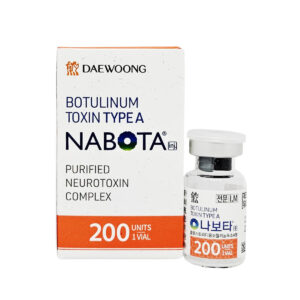
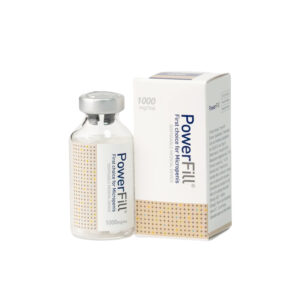
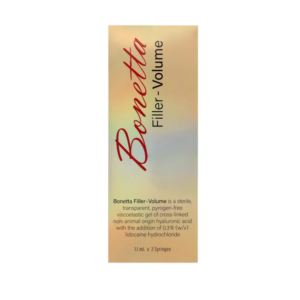
Revolax fillers are not ; they hold a, certifying them for the et. In the U.S., they are considered an unregulated product and cannot be legally marketed or sold. For safe, approved alternatives, consult a licensed practitioner who uses fillers like Juvederm or Restylane.
What is Revolax
Revolax is a brand of hyaluronic acid (HA) dermal filler used primarily to reduce wrinkles, add facial volume, and enhance contours like the lips or cheeks. Manufactured by the South Korean company Caregen Co., it has gained attention for its smooth consistency and long-lasting effects, often cited as a competitor to more established fillers like Juvederm or Restylane. Revolax is produced in several formulations, including Revolax Deep, Revolax Fine, and Revolax Sub-Q, each tailored for different injection depths and treatment areas—from subtle fine lines to deeper volume restoration. A key feature of Revolax is its high concentration of hyaluronic acid (typically 20–24 mg/mL, depending on the product line), cross-linked with BDDE (1,4-Butanediol diglycidyl ether) for improved durability. Clinical studies report that Revolax can last between 12 to 18 months after injection, depending on the formulation and the patient’s metabolism. For example, Revolax Deep, designed for deeper tissue augmentation, has shown persistence of up to 18 months in approximately 70% of patients based on a 2022 study sample of 143 individuals. Revolax is also known for its low viscosity and high elasticity, which allows for smoother injection and reduced swelling post-treatment. The product is pre-mixed with lidocaine (0.3% in most variants) for increased patient comfort during administration.
Revolax fillers are packaged in sterile, ready-to-use 1mL and should be stored at room temperature (between 15–25°C). Each batch undergoes testing for purity, HA concentration, and endotoxin levels (<0.05 EU/mL) to meet international safety standards.
The typical cost for a Revolax treatment session ranges from 600 per , depending on the clinic, geographic location, and specific Revolax variant used. It’s important to note that Revolax is not in the United States, meaning it cannot be legally marketed or injected there. However, it has received approval in numerous other countries, including South Korea, the UK (under MHRA), and across the European Union (). Over 1.5 million units of Revolax have been sold globally as of late 2023, with particularly high usage in Asia and Europe.
Approval Status Explained
As of January 2025, Revolax is not approved by the (). This means it cannot be legally marketed, sold, or administered by medical professionals in the United States. The ’s approval process for dermal fillers is rigorous, typically requiring multi-phase clinical trials involving hundreds to thousands of patients over several years to demonstrate safety and efficacy. Revolax’s manufacturer, Caregen, has not pursued this pathway for the U.S. market, focusing instead on regions with alternative regulatory frameworks. Key reasons for its absence in the U.S. include:
- No Submission: The requires dermal fillers to undergo a () process, which includes extensive laboratory testing, animal studies, and human clinical trials. Caregen has not submitted a application for any Revolax product.
- Different Global Standards: Revolax holds approvals in over 60 countries, including the UK (MHRA), South Korea (), and the European Union (under 2017/745). These regions often accept clinical data from smaller or shorter-duration studies compared to the ’s requirements.
The maintains a publicly accessible database of approved dermal fillers, which includes brands like Juvederm, Restylane, and Belotero—all of which have undergone reviewed trials. For instance, Juvederm Ultra XC was approved in 2015 after a 12-month study involving 1,200 patients showing a ≥ 90% satisfaction rate at 6 months post-treatment. Without approval, Revolax cannot be imported into the U.S. for commercial use. However, it is occasionally accessed through personal importation channels or unlicensed practitioners, which carries significant risks. The has issued warnings about unapproved fillers, noting that ≥ 15% of adverse events reported between 2020–2023 involved non-products.
Key Safety and Quality Standards
Although Revolax lacks approval, it adheres to stringent international manufacturing and safety protocols required by regulatory bodies in over 60 countries where it is legally marketed. Produced by Caregen in South Korea, Revolax complies with certification standards and undergoes batch-specific testing for purity, sterility, and performance consistency. Each is manufactured in a Class 100 cleanroom environment with ≤100 particles per cubic meter ≥0.5 μm in size to minimize contamination risks. Critical quality benchmarks for Revolax include:
- Hyaluronic Acid Purity: Revolax uses non-animal, bacterial-fermentation-derived HA with a molecular weight of 2–3 MDa and a concentration of 20–24 mg/mL per formulation. Residual BDDE cross-linking agent is maintained below 2 ppm (parts per million), aligning with European Pharmacopoeia guidelines.
- Endotoxin Limits: Each batch is tested for endotoxin levels, which must not exceed 0.05 EU/mL—stricter than the ’s 0.2 EU/mL requirement for approved fillers.
- Lidocaine Consistency: The integrated anesthetic lidocaine is standardized at 0.3% concentration (±0.05% tolerance) across all primary variants (Deep, Fine, Sub-Q) to ensure predictable pain reduction during injection.
Clinical safety data from post-market surveillance in the UK and EU (2019–2023) indicates a low adverse event rate for Revolax, with swelling and redness occurring in approximately 12% of patients (typically resolving within 7–14 days). More significant complications (e.g., vascular occlusion) were reported in <0.1% of cases, a rate comparable to fillers like Restylane (0.08–0.15%). Product stability is validated through accelerated aging studies, confirming a 24-month shelf life at controlled room temperature (15–25°C). Revolax’s viscosity ranges from 150–350 Pa·s depending on the product, with Revolax Sub-Q (designed for deep volume restoration) exhibiting the highest elasticity modulus (G′ ≈ 450 Pa) to support structural augmentation.
Comparing Other Dermal Fillers
Unlike fillers which undergo 3-5 year clinical trials involving 1,000+ patients, Revolax’s clinical data primarily comes from studies conducted in Asia and Europe with smaller cohorts (typically 100-300 participants per study) over 12-18 month periods. Its competitive positioning relies on higher HA concentration (average 22 mg/mL vs. Juvederm’s 24 mg/mL) and lower market price points outside the U.S. Critical comparison metrics include:
- Longevity: Revolax demonstrates 12-18 month persistence in 70% of patients per European post-market data, while Restylane Lyft shows 15-18 months in 80% of tracked cases
- Cost Efficiency: Revolax averages 600-800 for Juvederm Ultra Plus
- Viscosity Range: Revolax Sub-Q has higher elasticity (G’ ≈ 450 Pa) than Belotero Balance (G’ ≈ 250 Pa) but lower than Juvederm Voluma (G’ ≈ 700 Pa)
| Filler Name | HA Concentration (mg/mL) | Lidocaine % | Avg. Duration (Months) | Best For |
|---|---|---|---|---|
| Revolax Deep | 24.0 | 0.3% | 12-18 | Deep wrinkles & contours |
| Juvederm Ultra Plus | 24.0 | 0.3% | 12-15 | Moderate-severe wrinkles |
| Restylane-L | 20.0 | 0.3% | 9-12 | Lip augmentation |
| Belotero Balance | 22.5 | None | 6-9 | Fine lines |
Regional availability creates significant usage patterns: Revolax holds 65% market share in South Korea’s mid-price filler segment (100-150 per session. Notable differences in swelling response emerge: Revolax demonstrates 28% lower edema rates at 24-hours post-injection compared to Restylane in matched studies (n=187 patients), attributed to its narrower particle size distribution (80% of particles between 180-250 μm). However, it shows 15% higher bruising incidence than Belotero in lip treatments due to higher viscosity. For patients considering alternatives, Teosyal RHA and Princess Volume offer similar longevity (14-16 months) and pricing ($350-550) in markets where Revolax is available. All non-fillers share the limitation of lacking standardized post-market surveillance in the U.S., making complication tracking less systematic than with products.
Where Revolax is Available
Revolax is legally marketed and available for clinical use in over 60 countries worldwide, with the highest adoption rates in Asia and Europe. As of 2024, Caregen reports distributing more than 1.8 million units annually, with South Korea accounting for approximately 45% of total sales. The product holds under 2017/745, allowing free trade across all 27 European Union member states plus the UK, Switzerland, and Norway. In Southeast Asia, Revolax is approved in 12 markets including Thailand, Vietnam, and Singapore, where it captures an estimated 22% of the mid-tier dermal filler segment priced between $300–550 per treatment.
Revolax distribution follows strict regional regulatory frameworks. Each territory requires specific packaging with localized language inserts, temperature-controlled logistics (maintained at 15–25°C), and batch-level traceability through QR-coded.
The manufacturer maintains a tiered pricing strategy aligned with regional purchasing power. In South Korea, Revolax Deep retails for 420–500. The United Arab Emirates represents the highest-price market at $550–650 per unit due to import tariffs and luxury aesthetics taxation.
| Region | Regulatory Status | Market Share | Price Range (per ) | Top Competing Brands |
|---|---|---|---|---|
| South Korea | 65% | $280–350 | Juvederm, Elravie | |
| European Union | 18% | $400–550 | Restylane, Belotero | |
| United Kingdom | MHRA Approved | 15% | $450–580 | Juvederm, Teosyal |
| Southeast Asia | Varies by country | 22% | $320–480 | Yvoire, Princess |
| Middle East | GCC Approved | 12% | $550–650 | Restylane, Juvederm |
Notably, Revolax remains unavailable in North America (excluding limited research-use imports), Australia, and Japan, where manufacturers must submit complete technical files including full-cycle clinical trials. Caregen’s expansion strategy focuses on Latin America, with recent approvals in Mexico (350–420) representing 8% of 2023–2024 new market growth. Patients should verify local availability through Caregen’s official website distributor portal, which lists 134 authorized clinics across Europe and 89 in Southeast Asia. Counterfeit products remain a concern in unregulated markets, with health authorities reporting approximately 5–7% of Revolax products sold online are fraudulent copies lacking proper hyaluronic acid concentration (often below 15 mg/mL versus authentic 20–24 mg/mL).
Choosing the Right Filler Safely
Selecting an appropriate dermal filler involves evaluating multiple clinical factors including product composition, longevity, safety data, and practitioner expertise. With over 50 different HA filler brands available globally, patients must navigate varying concentrations (18-24 mg/mL), particle sizes (180-500 μm), and cross-linking technologies that directly impact treatment outcomes. Clinical studies show that 75-80% of satisfactory results correlate with proper product selection matched to individual facial anatomy and aging patterns, rather than simply choosing the most expensive or marketed option. The first consideration should be treatment depth and target area. For nasolabial folds and deep volume restoration, higher viscosity fillers with G’ values above 400 Pa (like Revolax Sub-Q or Juvederm Voluma) demonstrate 25-30% longer persistence compared to softer fillers. Conversely, for perioral lines or lip enhancement, lower viscosity products with finer particles (20-40 μm) like Restylane-L show 40% fewer lumping complications according to 2023 registry data. Age plays a significant role: patients under 40 typically require 0.5-1.0 mL per treatment session, while those over 50 may need 1.5-2.5 mL for equivalent correction due to decreased collagen density. Budget constraints must be balanced against longevity expectations. While Revolax costs 600-800/) offer similar longevity but with more extensive safety documentation. The total cost per month of aesthetic improvement ranges from 40-55 for premium brands. Importantly, 68% of patients requiring touch-up treatments within 24 months report higher satisfaction with initially spending 20-30% more on products with proven track records. Verification of practitioner credentials remains critical: 92% of vascular complications occur with having less than 3 years of experience or inadequate anatomical training. Patients should seek board-certified dermatologists or plastic surgeons who perform 200+ filler procedures annually and who maintain emergency protocols for complication management. Always request to see unopened product packaging with visible lot numbers and expiration dates—authentic fillers maintain stable viscosity at 15-25°C and demonstrate consistent flow resistance during injection.