Juvelook vs Botox: Why Comparing Them Misses the Point
Quick Answer
Juvelook and Botox belong to entirely different drug classes. Juvelook is a PDLLA-based collagen biostimulator that rebuilds skin structure over weeks. Botox is a botulinum toxin type A neurotoxin that relaxes muscles within days. They treat different types of wrinkles through different mechanisms, at different tissue depths, on different timelines. They are not substitutes for each other — but they can be part of the same treatment plan when a patient presents with both static texture loss and dynamic expression lines.

Two Products That Should Not Be Compared as Alternatives
The search query “Juvelook vs Botox” implies a choice — as if a practitioner or patient must pick one over the other. In clinical practice, this framing creates confusion because the two products address fundamentally different problems through fundamentally different biological pathways.
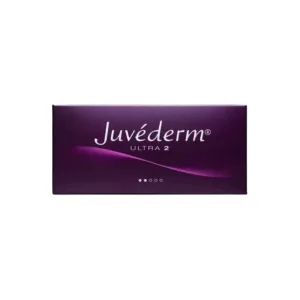
Juvelook is a hybrid injectable manufactured by VAIM Global Inc. (Seoul, South Korea). It contains PDLLA (poly-D,L-lactic acid, 42.5 mg) combined with non-crosslinked hyaluronic acid (7.5 mg) in a single lyophilized vial. When reconstituted and injected intradermally, the HA provides short-term hydration while the PDLLA microparticles stimulate fibroblasts to produce new collagen and elastin over the following weeks and months. It is classified as an MFDS Class IV injectable medical device in Korea with CE certification in Europe. It does not hold FDA approval in the United States.
Botox (onabotulinumtoxinA) is a neurotoxin manufactured by Allergan (AbbVie). It temporarily blocks acetylcholine release at the neuromuscular junction, preventing targeted muscles from contracting. This muscle relaxation smooths dynamic wrinkles — the lines that appear when you frown, squint, or raise your eyebrows. Botox is FDA-approved and used in over 90 countries worldwide.
One product works on skin structure. The other works on muscle movement. Calling them alternatives is like comparing sunscreen to moisturizer — both applied to the face, but solving entirely different problems.
How Each Product Addresses Wrinkles
Understanding why these products are not interchangeable starts with understanding the two types of facial wrinkles.
Dynamic wrinkles are caused by repeated muscle contractions. Forehead lines, frown lines (glabellar complex), and crow’s feet form because the underlying muscles pull the overlying skin into folds every time you make an expression. In younger skin with sufficient collagen, these lines disappear when the face is at rest. Over time, the repeated creasing wears through the dermis, and the lines become permanently visible — but the root cause is still muscle movement.
Static wrinkles and texture loss result from collagen and elastin degradation. As the dermal extracellular matrix thins with age, UV exposure, and intrinsic aging, the skin loses its structural support. Fine lines, crepey texture, loss of firmness, and decreased elasticity appear regardless of whether the muscles underneath are moving or not. These changes are not caused by muscle contraction — they are caused by loss of the skin’s own scaffolding.
Botox addresses the first category. By relaxing the muscles responsible for dynamic creasing, it prevents the mechanical force that creates expression lines. The result is visible within 2 to 14 days as the muscle gradually relaxes, and the effect lasts approximately 3 to 4 months before the neuromuscular junction regenerates.
Juvelook addresses the second category. By introducing PDLLA microparticles (10–40 μm in diameter) into the dermis, it triggers a controlled foreign-body response that stimulates fibroblasts to produce new type I and type III collagen. The HA component provides immediate but temporary hydration. The meaningful clinical effect — improved texture, elasticity, and dermal thickness — develops gradually over 4 to 12 weeks as new collagen accumulates. Manufacturer data indicates results lasting 6 to 12 months after completing the recommended course of 3 sessions at approximately 1-month intervals.
Mechanism of Action: Neurotoxin vs Biostimulator
The mechanisms could hardly be more different.
Botox acts at the neuromuscular junction. The toxin molecule binds to the presynaptic nerve terminal, is internalized, and cleaves SNARE proteins (specifically SNAP-25) that are essential for acetylcholine vesicle fusion. Without acetylcholine release, the muscle cannot receive the signal to contract. The effect is localized, dose-dependent, and reversible as the nerve terminal regenerates new SNARE proteins over 3 to 4 months.
Juvelook acts within the dermis on the extracellular matrix. The PDLLA microparticles are recognized by the body as a foreign material, triggering a subclinical inflammatory cascade. Macrophages attempt to degrade the particles, releasing growth factors (including TGF-β) that recruit and activate fibroblasts. These fibroblasts deposit new collagen and elastin fibers around and in place of the degrading PDLLA particles. As the PDLLA undergoes hydrolysis into lactic acid and glycolic acid — both naturally occurring metabolites — the newly formed collagen matrix remains. The result is structural rather than muscular: the skin itself becomes thicker, firmer, and more elastic.
This difference means the two products cannot substitute for each other in any clinical scenario. A patient with deep forehead lines caused by frontalis hyperactivity will not see those lines resolve from collagen stimulation alone. Conversely, a patient with crepey cheek texture and loss of skin elasticity will not see improvement from muscle relaxation.
Where and How Each Is Used
The injection sites, depths, and techniques for these products differ substantially because they target different tissue layers.
Botox is injected intramuscularly — into or near the target muscle. Common treatment areas include the frontalis (forehead lines), corrugator and procerus muscles (frown lines), and orbicularis oculi (crow’s feet). Precise placement matters to avoid unintended diffusion to adjacent muscles, which can cause side effects like brow ptosis or eyelid drooping. The injection volumes are small — typically 0.05 to 0.1 mL per point — and the total units per area follow product-specific dosing based on the manufacturer’s labeling.
Juvelook is injected intradermally — into the skin itself, not into muscle. The target is the mid-to-deep dermis where fibroblasts reside. Treatment areas include the full face (cheeks, periorbital region, forehead skin quality), neck, and décolletage. The injection technique, reconstitution protocol, and specific parameters are defined in the manufacturer’s Instructions for Use (IFU). Practitioners should refer to the product insert and any local training requirements before administering treatment.
How Results Appear — and Disappear
The timeline of onset and offset is another key distinction.
With Botox, the result is relatively fast: muscle relaxation begins within 24 to 72 hours, with full effect typically reached by day 7 to 14. The result is immediately visible — the treated area stops moving, and dynamic lines smooth out. When the effect wears off (typically at 3 to 4 months), the muscles resume full contraction, and the wrinkles return to their pre-treatment state. There is no cumulative structural change to the skin.
With Juvelook, the result is gradual and cumulative. The HA component provides a mild immediate hydration effect that fades within 1 to 2 weeks as the HA is absorbed. The PDLLA-driven collagen remodeling takes 4 to 12 weeks to become clinically apparent. Because the treatment protocol involves 3 sessions at approximately 1-month intervals, the full result is not realized until several weeks after the final session. However, because the endpoint is newly synthesized collagen — not a temporary pharmacological effect — the structural improvement persists after the PDLLA degrades. Manufacturer data indicates 6 to 12 months of sustained improvement for the 50 mg formulation.
| Parameter | Botox (OnabotulinumtoxinA) | Juvelook (PDLLA + HA) |
|---|---|---|
| Onset of visible effect | 2–14 days | 4–12 weeks (collagen phase) |
| Peak result | ~14 days post-injection | ~4–8 weeks after final session |
| Duration | 3–4 months | 6–12 months (manufacturer data) |
| Sessions per cycle | 1 | 3 (at ~1-month intervals) |
| Maintenance | Repeat every 3–4 months | Booster sessions as clinically indicated |
| What happens when effect ends | Muscles resume contraction; lines return | Collagen gradually degrades; skin quality diminishes over time |
Can They Be Used Together?
Yes — and in many clinical practices, they are. Because Botox and Juvelook target completely different tissue layers and different causes of aging, they complement rather than compete.
A common clinical scenario: a patient in their late 30s to 40s presents with both moderate forehead expression lines (dynamic, from frontalis activity) and loss of overall skin quality — dullness, early crepiness, superficial fine lines that persist at rest. Botox addresses the dynamic lines by reducing muscle contraction, while Juvelook addresses the dermal quality by rebuilding the collagen matrix.
However, combination protocols require clinical judgment. Timing, injection sequence, and area management should be determined by the treating practitioner based on patient assessment, product labeling, and any applicable local guidelines. The fact that these products can be used together does not mean they should always be used together — each patient’s anatomy, aging pattern, and treatment goals are different.
Why One Cannot Replace the Other
This point deserves emphasis because the search query “Juvelook vs Botox” implies a substitution decision.
You cannot use Juvelook instead of Botox for a patient whose primary concern is dynamic forehead lines. No amount of collagen stimulation will prevent the frontalis muscle from contracting. The muscle will continue to pull the skin into folds, and without neurotoxin intervention, those folds will persist and deepen regardless of how thick or elastic the overlying skin becomes.
Equally, you cannot use Botox instead of Juvelook for a patient whose primary concern is loss of skin quality — thinning dermis, fine static lines, loss of elasticity, textural irregularity. Botox does not add collagen, does not thicken the dermis, and does not improve skin texture. It relaxes muscles. If the problem is not muscle-driven, the solution is not muscle relaxation.
The two products exist in different clinical categories serving different indications. Treating them as alternatives leads to either undertreating the patient (choosing the wrong product for the problem) or creating unrealistic expectations (expecting collagen stimulation to freeze expression lines, or expecting neurotoxin to restore skin quality).
Regulatory and Professional Requirements
Both products are professional-use injectables that require administration by qualified medical practitioners. Neither is available for consumer self-administration or over-the-counter purchase.
| Category | Botox | Juvelook |
|---|---|---|
| Manufacturer | Allergan (AbbVie) | VAIM Global Inc. |
| Drug class | Neurotoxin (botulinum toxin type A) | PDLLA collagen biostimulator + HA hybrid |
| Product classification | Prescription biologic | Injectable medical device (MFDS Class IV) |
| Regulatory approvals | FDA approved, widely approved globally | MFDS (Korea) approved, CE certified (Europe). Not FDA approved |
| Product format | Vacuum-dried (requires reconstitution with saline) | Lyophilized powder (requires reconstitution with saline) |
| Storage | 2–8°C (refrigerated) | Room temperature, away from direct sunlight |
| Primary mechanism | Blocks acetylcholine → muscle relaxation | PDLLA microparticles → fibroblast stimulation → neocollagenesis |
| Target tissue | Muscle (intramuscular injection) | Dermis (intradermal injection) |
Clinic Decision Framework
For practitioners evaluating which product to recommend — or whether to recommend both — the decision is driven by the patient’s presenting concern, not by product preference.

| Patient Presentation | Appropriate Product | Rationale |
|---|---|---|
| Forehead lines that appear only during expression | Botox | Dynamic lines caused by muscle contraction — neurotoxin is the appropriate intervention |
| Overall skin dullness, loss of elasticity, fine crepey texture | Juvelook | Dermal quality issue caused by collagen loss — biostimulation addresses the structural deficit |
| Crow’s feet that deepen with squinting | Botox | Orbicularis oculi contraction drives these lines — muscle relaxation is first-line |
| Periorbital skin thinning, under-eye texture, early hollowing | Juvelook | Structural skin quality issue — PDLLA microparticles stimulate dermal thickening |
| Both expression lines AND loss of skin quality | Both (combination protocol) | Different products address different layers and causes simultaneously |
| Deep nasolabial folds or volume loss | Neither — consider dermal fillers or volume biostimulators | Botox does not add volume; Juvelook 50mg targets skin quality not deep volume (Juvelook Volume 200mg exists for volumizing indications) |
The Bottom Line for Practitioners
Juvelook and Botox are not competitors. They occupy different positions in the treatment toolkit: Botox for dynamic wrinkle management through targeted muscle relaxation, Juvelook for skin quality restoration through collagen biostimulation. A clinic that stocks both has the ability to address the two major categories of facial aging — movement-based lines and structure-based quality loss — either independently or in combination based on each patient’s individual presentation.
The most productive way to think about this pairing is not “which one is better” but “what is the patient’s skin actually asking for?” When the answer is muscle relaxation, use a neurotoxin. When the answer is collagen regeneration, use a biostimulator. When the answer is both, plan accordingly.
Related Guides
- What Is Juvelook? Complete PDLLA + HA Skin Booster Guide
- Juvelook vs Sculptra: PDLLA vs PLLA Compared
- How to Use Juvelook: Reconstitution and Injection Guide
- Does Juvelook Have Side Effects?
Frequently Asked Questions
Can I get Juvelook and Botox at the same appointment?
Combination use is clinically practiced because the products target different tissue layers. However, the specific timing, sequence, and area management in a single session depend on the practitioner’s clinical judgment and product labeling. Discuss the approach with your treating physician.
Does Juvelook freeze facial expressions like Botox?
No. Juvelook does not interact with muscles or nerve signals. It works within the dermis to stimulate collagen production. Facial movement and expression remain completely unaffected by Juvelook treatment.
Will Botox improve my skin texture the way Juvelook does?
No. Botox relaxes muscles — it does not add collagen, improve skin elasticity, or address textural concerns. If your primary goal is better skin quality (firmness, texture, luminosity), a collagen stimulator is the appropriate product category.
How does a practitioner decide which product I need?
Assessment starts with identifying the type of wrinkle. Dynamic lines (visible only during expression) typically respond to neurotoxin. Static lines and diffuse quality loss (visible at rest) typically respond to biostimulation or other dermal treatments. Many patients have both types, which may warrant a combined approach.
Is Juvelook FDA-approved like Botox?
Juvelook is approved by MFDS (Korea) and CE-certified in Europe but does not hold FDA approval in the United States. Botox is FDA-approved. Regulatory status varies by jurisdiction, and practitioners should verify the approval status of any product in their market before clinical use.
Reviewed against publicly available manufacturer information. This article is intended as a practitioner and patient education resource, not as clinical treatment guidance. Product selection, dosing, and treatment planning should be based on individual patient assessment, manufacturer labeling, and applicable local regulations. Always refer to the current product IFU.
References
- VAIM Global Inc. Juvelook official product information. juvelook.com
- Allergan (AbbVie). Botox Cosmetic prescribing information. botoxcosmetic.com
- Kim J, et al. Poly-d,l-lactic Acid (PDLLA) Application in Dermatology: A Literature Review. Polymers. 2024;16(17):2450.