Quick Answer
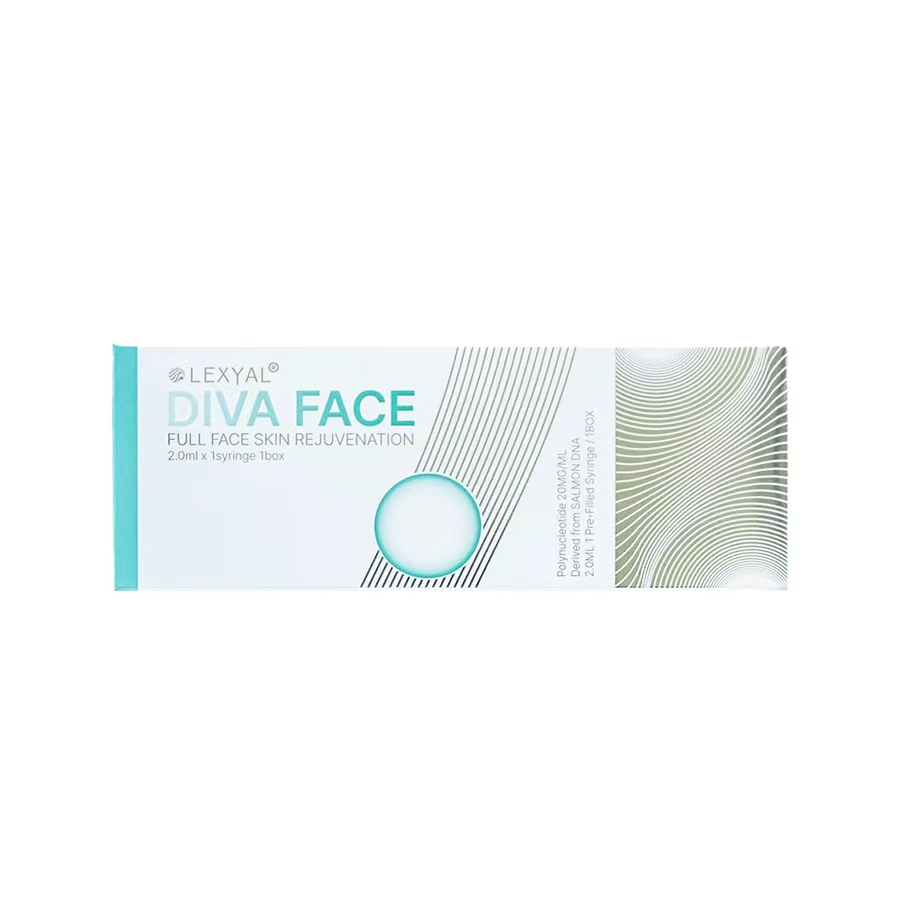
DIVA FACE PN is Lexyal's full-face polynucleotide formulation, supplied as a 2 mL syringe containing 40 mg of salmon-derived PN (MW 250–800 kDa). Polynucleotides activate fibroblast migration and proliferation; reported clinical observations include +42% improvement in skin roughness and –35% pore volume at 16 weeks. Standard course is three sessions, four weeks apart, ISO 10993-5 biocompatibility certified.
Why This Skinbooster Is Different
Where most skin boosters address one pathway — HA for hydration, vitamins for nutrition — PN delivers a direct fibroblast activation signal. The 40 mg / 2 mL concentration delivers therapeutically meaningful PN to the full face in one session. The 250–800 kDa MW range is optimised for fibroblast receptor engagement (shorter chains absorb too quickly; longer chains diffuse poorly).
Mechanism of Action
Full-face polynucleotide (fibroblast activation, ECM restoration). PN fragments (250–800 kDa) activate fibroblast migration and proliferation through DNA-derived nucleotide signalling. Over a 3-session course, dermal density and skin quality improve cumulatively — measured outcomes include reduced surface roughness, decreased pore volume, increased dermal density.
Frequently Asked Questions
Why is the molecular weight 250–800 kDa specifically?
PN molecular weight matters for clinical effect. Below ~200 kDa, fragments behave more like PDRN — fast absorption, less sustained signal. Above ~1000 kDa, diffusion through dermal tissue is poor. The 250–800 kDa range is selected to optimise fibroblast receptor engagement and tissue residence time.
What is the difference vs DIVA EYE PN?
Concentration and volume differ: FACE PN delivers 40 mg in 2 mL (full-face dose); EYE PN delivers 2 mg in 1.1 mL (calibrated for delicate periorbital tissue). The two formulations are designed for sequential or combined use — face for the bulk of the treatment area, eye for the periorbital refinement.
How does PN differ from HA skinboosters?
HA skinboosters (Restylane Vital, Hyaron) deliver physical hydration through HA's water-binding capacity. PN delivers biological signalling through DNA fragments that activate fibroblast receptors. Mechanisms are complementary — HA addresses hydration, PN addresses cellular regeneration. They are often used in sequential protocols.
How many injection points per session?
For a full-face treatment, 10–15 points per cheek with 0.1–0.2 mL per point is typical, scaled for total volume. For specific scar treatment, intradermal tunnelling with 27G needle at 0.3 mL per linear centimetre is common. Technique is adapted to indication.
Is it suitable for pore reduction?
Pore visibility is influenced by sebaceous activity, dermal elasticity around the pore, and skin barrier. PN affects the elastic component — by stimulating fibroblast collagen production around the pore unit, supporting structures tighten. Reported clinical improvement is ~35% pore volume reduction at 16 weeks.
Can it be combined with a same-day RF or laser treatment?
Yes — PN is widely used as a post-laser/RF adjunct. The standard sequencing is laser/RF first (to create controlled tissue injury), then PN injected or topically applied to amplify the regenerative response. Practitioner protocol governs timing — same-day or 2–7 days post-procedure both common.
Is it safe for patients with salmon or shellfish allergy?
Salmon and shellfish allergens are typically protein-based (tropomyosin, parvalbumin). PN is purified DNA, not protein. Cross-reactivity is biologically implausible. However, documented severe fish or seafood allergy warrants patient counselling and individual assessment before the first session.
How is it different from Rejuran?
Both are Korean salmon-derived nucleotide products. Rejuran (Pharma Research) markets a PN at 20 mg/mL concentration in a 1 mL syringe. DIVA FACE PN delivers 40 mg in 2 mL (also 20 mg/mL) but in a larger total volume, supporting full-face protocols in one session. Differences also exist in MW distribution and stabilizer composition; specifications should be confirmed batch by batch.
How is it stored and shipped?
2–8 °C refrigeration is required for transit and storage. The product is light-sensitive and should be protected from direct light. Single-use only; discard any unused portion after opening the syringe.
Are there contraindications?
Standard injectable contraindications: pregnancy and lactation, active infection at the treatment site, severe coagulopathy, hypersensitivity to any component, history of keloid formation. Active herpes infection at the treatment site is a temporary contraindication.






Reviews
There are no reviews yet.