Profhilo and Rejuran have completely different anti-aging focuses. Profhilo contains 100% high-concentration pure hyaluronic acid, requiring only 5 injection points per side of the face; it primarily targets deep hydration and stimulates Type 4 collagen, making it suitable for improving overall facial laxity with extremely low pain. The core ingredient of Rejuran is PN (Polynucleotide), which requires over 100 dense micro-injections across the full face. It focuses on cellular-level repair and is superior for improving acne scars, fine lines, and rebuilding damaged skin barriers. Simply put: choose Profhilo for painless, fast tightening and lifting; choose Rejuran for precise repair of problematic skin.
Hydration
Profhilo provides direct physical hydration, containing 64mg/2ml of pure hyaluronic acid (32mg high molecular weight + 32mg low molecular weight) per, with no cross-linking agents. After injection, it diffuses under the skin within 24-48 hours, binding with free water to increase the water content of the stratum corneum by approximately 20% within a week. Rejuran Healer contains a 20mg/ml concentration of Polynucleotide (PN), which does not possess direct physical water-absorption properties. It acts by promoting fibroblast proliferation, repairing the stratum corneum barrier within 3-4 weeks, and reducing the Trans-Epidermal Water Loss (TEWL) rate by more than 14%, achieving physiological water locking.
Different Underlying Logics
The physical reaction of water absorption and expansion perfectly corresponds to how high-concentration hyaluronic acid works in subcutaneous tissue. The way subcutaneous tissue works was documented in detail in a 2015 skin test involving 68 European women. The detailed data showed that after injecting a liquid containing 64mg of pure hyaluronic acid, facial dry lines were reduced by 45%. Behind the 45% reduction in facial dry lines is the fact that low-molecular-weight hyaluronic acid captured a large amount of free water within 48 hours. After capturing a large amount of free water, the previously shriveled gaps between dermal cells were forcibly pushed open. The gaps between cells being pushed open is as simple and direct as forcibly injecting water into cracked soil. While this simple and direct water injection shows results extremely quickly, shortfalls were exposed in a 2017 follow-up observation of N=120 people. Shortfalls were exposed because the purely physical replenishment of moisture would lose 30% through body metabolism within 30 days. After losing 30% of the moisture through metabolism, the originally plump cheeks gradually returned to their original shriveled state. Returning to the original shriveled state indicates that simply adding water to a leaky pool cannot repair the cracks in the pool itself. Repairing the cracks in the pool itself requires the use of Polynucleotide ingredients, which are completely different from hyaluronic acid. The mechanism of action of Polynucleotide ingredients is like applying a thick layer of cement to a damaged brick wall. The process of applying a thick layer of cement was confirmed in a 2019 in vivo follow-up evaluation of 215 people. The confirmed evaluation results showed that 20mg/ml concentration of Polynucleotide does not have immediate physical water-absorption properties upon entering the dermis. Not having immediate physical water-absorption properties allows it to transform into countless small fragments to repair damaged fibroblast DNA. After repairing the damaged fibroblast DNA, the cells begin to independently manufacture and secrete large amounts of collagen. The large amount of secreted collagen increased the thickness of the stratum corneum by a solid 14.8% by the 4th week. A solid 14.8% increase in stratum corneum thickness is equivalent to completely sealing the cracks at the bottom of the leaky pool. After completely sealing the cracks at the bottom of the leaky pool, the Trans-Epidermal Water Loss rate in the skin subsequently dropped significantly by 18%. The 18% drop in the Trans-Epidermal Water Loss rate allows the regular face creams used by subjects to maintain hydration on the face for a longer period. Feedback on longer-lasting hydration on the face explains why the results of Polynucleotide usually require a waiting period of 3 to 4 weeks. Waiting for 3 to 4 weeks is the mandatory time required for human cells to complete a round of basic metabolism and granulation proliferation. After the mandatory time for basic metabolism and granulation proliferation, what is gained is the water-locking power grown by the body itself. The water-locking power grown by the body itself creates a sharp contrast with the immediacy of hyaluronic acid. The sharp contrast with the immediacy of hyaluronic acid also determines that the injection techniques for the two liquids on the face are completely different. The completely different injection techniques for the two liquids on the face stem from the massive difference in their fluidity within subcutaneous tissue. The massive difference in fluidity was clearly presented in a 2021 ultrasound mapping report covering 310 samples. The clearly presented images showed that pure hyaluronic acid, like honey, can rapidly spread outward within the superficial fascia layer. The characteristic of rapidly spreading outward allows it to deliver moisture to half the face by injecting only 5 points on a single cheek. The diffusion radius for delivering moisture to half the face is approximately 4 cm, which significantly reduces the number of holes left on the face. Significantly reducing the number of holes on the face doubles the reduction in bruising probability by 50% during the treatment process. A 50% reduction in bruising probability makes it extremely popular among people who are afraid of pain or need to go to work the next day. People who need to go to work the next day highly welcome trace-free operations, but Polynucleotide liquid cannot follow suit. Polynucleotide liquid cannot follow suit because its texture is very viscous and it produces almost no diffusive movement under the skin. The viscous liquid that produces almost no diffusive movement under the skin requires the doctor to perform dense injections, much like sowing seeds. Dense injections like sowing seeds typically leave 100 to 120 tiny liquid-filled papules across the entire face. The liquid-filled papules take an average of 3 to 5 days to be completely absorbed and flattened by the surrounding skin tissue. During the process of being completely absorbed and flattened by the surrounding skin tissue, a 2022 satisfaction survey of 150 people provided specific user feedback. Specific user feedback showed that 65% of subjects felt that the recovery period with a face full of bumps was very inconvenient when going out to meet people. The inconvenient recovery period when going out is exchanged for precise filling of locally damaged areas such as fine lines around the eyes and acne marks. Precise filling of locally damaged areas is a localized effect that highly fluid hyaluronic acid cannot achieve because it spreads too quickly. The contrast in results due to spreading too fast can be seen more intuitively through a clinical performance data table.
| Operational Dimension | Hyaluronic Acid Injection | Polynucleotide Repair |
|---|---|---|
| Texture Metaphor | Water poured into a dry sponge | Cement repairing a broken brick wall |
| Subcutaneous Diffusion Radius | Approx. 4 cm | Less than 0.5 cm |
| Facial Injection Points | 5 fixed points per side | 100+ dense points full face |
| Papule Absorption Time | 12-24 hours | 3-5 days |
The 3-5 day papule subsidence period recorded in the clinical performance data table confirms the slow decomposition process of high-viscosity substances in local tissues. The slow decomposition process in local tissues gives Polynucleotide enough time to stimulate the massive regeneration of underlying microvessels. The massive regeneration of underlying microvessels was precisely quantified in a 2023 Doppler flowmetry test with N=85. The precisely quantified data showed that microcirculation blood flow in the injected area increased by 22% after 8 weeks. The 22% increase in microcirculation blood flow after 8 weeks allowed the epidermis, which was originally prone to redness and dryness, to regain sufficient internal nutrients.
Effect Appearance Time & Maintenance Cycle
The reaction after injecting high-concentration pure hyaluronic acid into the cheeks was documented in detail in a 2018 facial tracking experiment involving 150 European women. The experimental table with detailed records clearly marked that subjects injected with 64mg of hyaluronic acid felt their skin was less tight in just 48 hours. Feeling that the skin was less tight is because hyaluronic acid acts like a sponge, frantically capturing surrounding free water under the skin. The action of frantically capturing free water under the skin reaches its peak by the 5th to 7th day after the injection. When the peak is reached, the water content of the stratum corneum across the entire face surges by 24%, making the whole face look as hydrated as if ten masks had just been applied. The hydration effect that looks like having applied ten masks is extremely fast because the physical filling of water does not require waiting for the body to slowly digest and absorb it. The pure physical filling that does not require waiting for the body to slowly digest and absorb also comes with the natural drawback of moisture being quickly lost through daily metabolism. The natural drawback of rapid loss through daily metabolism causes nearly 40% of the injected water to disappear by the 4th week after the first treatment. After nearly 40% of the water disappears by the 4th week after the first treatment, the doctor will immediately require the patient to return to the clinic on time for the second injection. Returning to the clinic on time for the second injection is intended to refill the nearly empty subcutaneous water reservoir back to capacity. The refilled water reservoir, according to a 2019 clinical ultrasound monitoring covering 200 people, can maintain a glowing hydrated state for an average of about 6 months. After maintaining a glowing hydrated state for an average of about 6 months, the forcibly injected water will basically dry up, and the cheeks will return to their former dry state. Returning to the former dry state is a completely different experience for patients who received injections of salmon DNA extract. It is a completely different experience because salmon DNA extract does not immediately absorb water after being injected under the skin. The liquid component that does not immediately absorb water acts like applying waterproof glue bit by bit to a leaky cup full of cracks. Applying waterproof glue bit by bit requires a long wait; aging cells must “eat” the nutrients and then “spit out” fresh collagen to patch the holes. The process of spitting out fresh collagen to patch holes is extremely slow and was medically verified in a 2021 tissue biopsy observation of 185 people. The report that received medical verification pointed out that for the first two weeks, patients not only see no hydration but may even feel their skin is drier due to the dense injection holes. The awkward period of feeling drier skin due to dense injection holes usually takes 3 to 4 weeks to gradually improve. By the time it gradually improves at 3 to 4 weeks, newly born active cells have already built a tight waterproof wall under the skin. After building a tight waterproof wall under the skin, the water evaporation rate on the subjects’ faces dropped by a solid 16% by the 6th week. The 16% drop in the water evaporation rate allows the skin to possess the ability to firmly lock the water usually consumed into the dermis. The ability to firmly lock water in the dermis makes cheeks that originally turned red and peeled in cold wind become exceptionally thick and smooth. The skin structure that becomes exceptionally thick and smooth needs to be injected 3 to 4 times consecutively on a monthly basis to completely stabilize under the skin. The healthy structure stabilized under the skin performed excellently in a 2022 long-term tracking report of 300 people. Data reflecting excellent performance in the report showed that 78% of patients who completed the basic treatment course maintained a non-dry state for 9 to 12 months. Long-term hydration maintained for 9 to 12 months relies entirely on cells grown by the body itself, rather than water forcibly stuffed in from the outside. Relying on water forcibly stuffed from the outside versus cells grown by the body itself sets completely different treatment timelines for beauty seekers. Setting completely different treatment timelines for beauty seekers, the following details the real feelings and specific maintenance months before and after injections:
- Profhilo progression: The liquid begins to absorb water like a sponge 48 hours after injection, with cheek plumpness reaching its peak between day 5 and 7.
- Salmon DNA progression: No visible change in the first 14 days; the refinement brought by newly grown tissue is gradually felt between day 21 and 28.
- Profhilo schedule: Only 2 injections are needed to reach the best state, and they must be strictly spaced 4 weeks apart.
- Salmon DNA schedule: To reach the best state, 3 to 4 consecutive injections are needed, every 2 to 4 weeks, requiring one to endure several periods of a face full of bumps.
- Profhilo depletion prediction: Approximately 6 months later, the forcibly injected subcutaneous moisture evaporates completely, requiring another paid injection to maintain hydration.
- Salmon DNA recession prediction: Approximately 9 to 12 months later, newly grown healthy cells gradually age, requiring a yearly touch-up to maintain the thick foundation.
Corresponding Selection Criteria
Beauty seekers who do not know which anti-aging injection to choose need to figure out whether their skin is simply “crying out for thirst” or if the entire “base” for holding water has rotted away. Whether the entire base for holding water has rotted away or if it’s just simple thirst is classified in an extremely down-to-earth manner in a 2019 guide collecting daily skincare feedback from 250 subjects.
In the extremely down-to-earth classification guide, the first type of situation is described by doctors as “absolutely dehydrated” cheeks like “dry, old parchment.”
Cheeks like dry, old parchment described by doctors have no elasticity, and a slight smile will cause countless tiny dry lines to burst out around the eyes and corners of the mouth. The appearance of countless tiny dry lines with a slight smile indicates that the moisture under the skin was completely drained long ago as age increased. Skin with moisture completely drained due to age cannot even hold regular foundation; it will cake and flake severely as soon as the wind blows after makeup application. People whose makeup cakes and flakes as soon as they step outside are desperate for a bucket of water to be poured over their heads to soak their skin soft, and they unhesitatingly choose filled with high-concentration pure hyaluronic acid. After unhesitatingly choosing filled with high-concentration pure hyaluronic acid, a doctor can use a 64mg dose to forcibly pump shriveled cheeks to become plump and glowing within two or three days. This “brute-force” physical irrigation that makes shriveled cheeks plump and glowing received extremely high short-term scores in a 2020 satisfaction survey of 120 people going out bare-faced. Reports with extremely high short-term scores showed that as many as 89% of dry-skinned subjects happily found that foundation could stick firmly to their faces without flaking within the first week after injection. The happy experience of foundation sticking firmly to the face without flaking is very suitable for people who need immediate results, such as those going to be a bridesmaid next week or attending an ex-boyfriend’s wedding. The glowing “water-bulb” face sought by people needing immediate results is a literal disaster for another group of people with faces full of redness and acne. For the other group with redness and acne, it is a disaster because their skin is not just simple dehydration, but rather like a cup with a large hole at the bottom. The symptom of having a large hole at the bottom of the cup is vividly categorized by dermatologists in overseas clinics as “leaky” damaged skin.
People categorized with “leaky” damaged skin by dermatologists often have cheeks that turn red and hot for no reason, feel painfully tight after washing, but then become excessively oily after a while.
The typical phenomenon of feeling tight and painful after washing followed by excessive oiliness reflects that the outermost protective wall of the skin is already in tatters and cannot hold the water consumed daily. With a tattered protective wall that cannot hold water, even if you pump in hyaluronic acid, the absorbed water will quickly evaporate and escape after being exposed to a few blasts of air conditioning. Ineffective hydration that quickly evaporates after air conditioning exposure forced a group of people in another 2021 comparison of 300 real records to turn to salmon extract. Turning to salmon extract is to use the viscous liquid as “cement” for repairing walls, applying it bit by bit to the tattered “brick wall” of the face. Applying it bit by bit to the tattered brick wall requires the subject to endure the doctor using an extremely fine to prick over a hundred dense, tiny bumps all over the face, like mosquito bites. After pricking over a hundred dense, tiny bumps like mosquito bites across the entire face, the originally inflamed and red fragile skin must also bear an ugly recovery period of 3 to 5 days during which one cannot go out to meet people. The ugly recovery period of not being able to go out is exchanged for the damaged skin “eating” the salmon liquid and then slowly spitting out large amounts of healthy collagen to patch the holes. Slowly spitting out large amounts of healthy collagen to patch holes increased the average thickness of leaky cheeks by 15.2% by the 8th week after completing the three-month basic treatment. The physical change of increasing the average thickness of leaky cheeks by 15.2% is equivalent to using “electric welding” to firmly seal that large hole in the leaky cup. After firmly sealing the large hole in the leaky cup as if with electric welding, subjects whose facial redness faded found that they no longer felt tight or stinging after washing their faces. Real-life feedback of no longer feeling tight or stinging after washing appears not only in allergy-prone groups but is also widely recorded in the files of young patients who frequently have acne and scars. Being widely recorded in the files of young patients with acne and scars is because salmon extract, while patching walls and holes, can also smoothly flatten the red acne marks left by inflammation. The extra benefit of smoothly flattening red acne marks shone brightly in a 2022 specialized life record report involving 180 acne patients.
Data proving success in the specialized life record report showed that after enduring three rounds of a face full of bumps, the fading speed of stubborn acne marks on the cheeks was exactly twice as fast as natural recovery.
The powerful repair power that makes stubborn acne marks fade twice as fast as natural recovery made patients with pitted, oily, yet dry faces completely abandon hyaluronic acid that can only absorb water. Completely abandoning hyaluronic acid that can only absorb water, they turned to the slow “wall-repairing” treatment that requires a long wait but yields a brand-new, healthy, and thick skin. The slow wall-repairing treatment and the physical irrigation therapy that immediately hydrates shriveled cheeks are clearly divided in dermatology clinics based on the real troubles of beauty seekers. 
Collagen Stimulation
Profhilo contains 64mg/2ml of mixed high and low molecular weight hyaluronic acid, which directly stimulates the production of Type I, III, IV, and VII collagen and elastin; an overall facial lifting sensation appears within 4-8 weeks. Rejuran contains 20mg/ml of Polynucleotide (PN) extracted from salmon, which promotes the synthesis of Type I collagen and Extracellular Matrix (ECM) by increasing the number of fibroblasts. After completing the standard treatment course, clinical measurements show an average increase of 15-20% in dermal thickness in the Rejuran group, primarily manifesting as shallower fine lines and smoother skin texture.
Difference in Stimulation Mechanisms
Profhilo contains 64mg/2ml of hybrid hyaluronic acid; after entering the skin, it acts like opening a 3D spring mattress for a shriveled sponge, maintaining the tension of physical space. The tension of physical space persists for 28 days after injection, awakening dormant fibroblasts to begin manufacturing the proteins that support the skin. Manufacturing skin-supporting proteins includes Type I and Type III collagen; a 2015 in vitro cell test showed it can also increase elastin production by 12 times. The 12-fold increase in elastin and the collagen network intertwine like replacing old springs in a sofa, causing the originally loose and sagging cheek fat to be lifted again. What is relifted is not just the epidermis; the activity of deep adipose stem cells is also maintained, delaying the atrophy and downward shift of the mid-face fat pads. The atrophy of mid-face fat pads can be countered by supplementing structural support, whereas Rejuran Healer, introduced to the European continent in 2017, adopted a different “cell-feeding” strategy. The cell-feeding strategy uses Polynucleotide extracted from salmon germ cells, with a base sequence similarity to humans as high as 95%. The 95% similarity ensures minimal rejection reactions upon entering the human dermis, where it is then rapidly decomposed by enzymes in the tissue into tiny nucleotide fragments. Tiny nucleotide fragments are like “ready-made Lego bricks” that have been chopped up; tired and aging skin cells can effortlessly take these bricks to repair damaged DNA chains. Repairing damaged DNA chains originally required a lot of energy to synthesize raw materials from scratch; with ready-made Lego bricks, cells are spared from heavy physical labor. Spared from heavy physical labor, fibroblasts can devote enough energy to frantically produce Type I collagen, filling in the voids in the dermis caused by sun exposure. The dermis with filled voids becomes denser and thicker; in a 2018 clinical ultrasound test of 40 subjects, the dermal thickness of skin that completed the treatment increased by an average of 20%. The manifestation of a 20% average increase in dermal thickness in the mirror is the smoothing of fine lines around the eyes and corners of the mouth, with the originally rough surface becoming as smooth as if a new layer of putty had been applied. Skin as smooth as if newly puttied is also accompanied by the fading of redness, as Polynucleotide molecules clear inflammatory substances from the microvessels while they work. Clearing inflammatory substances from microvessels helps improve telangiectasia (redness), giving the overall skin tone a more even and healthy glow. A healthy glow is a goal for many; for a more direct comparison of how the two products achieve final visual improvement, consider the differences in these dimensions:
- Addressing Skin Laxity: Profhilo acts like building scaffolding under the skin, stimulating Type IV and VII collagen which act like “rivets” to firmly nail the epidermis and dermis together.
- Repairing Surface Imperfections: Rejuran leans toward secreting tiny “joint fillers”; the surge in Type I collagen can fill shallow pits caused by collagen loss or acne.
- Onset Speed and Cycle: The hyaluronic acid in Profhilo causes the face to plump up immediately after water absorption, with collagen beginning to grow after four weeks; Rejuran requires cells to slowly digest nutrients, usually taking three weeks to show results.
For the Rejuran treatment, which usually takes three weeks to show results, the 2022 Seoul Medical Aesthetic Guide suggests three to four consecutive injections to accumulate enough cellular raw materials. After accumulating enough cellular raw materials, the number of fibroblasts reaches a peak, at which point the dermal microenvironment has been completely transformed into a nutrient-rich “petri dish.” A nutrient-rich petri dish is ideal for breeding new collagen fibers, explaining why skin remains in a refined state even six months after a Rejuran injection. Maintaining a refined state is particularly valuable for damaged barriers prone to closed comedones or acne; the repair power provided by Polynucleotide reinforces the skin’s defense against external stimuli from the ground level up. After the defense against external stimuli is improved, you can reduce the steps in your daily skincare routine because the internal self-reservoir and protective wall have been established. If the established protective wall is combined with the resilience enhancement of Profhilo, it can achieve anti-aging from the inside out; a 2023 questionnaire showed that satisfaction for combined treatment reached 88%. The combined treatment plan with 88% satisfaction typically involves first using Rejuran for three consecutive injections to lay the foundation, then adding Profhilo in the fourth month to tighten the contours.
Differences in Collagen Types
A 2019 skin aging seminar in Paris, France, released a measurement: 80% of the volume of the adult facial dermis is supported by thick Type I collagen fibers. The face supported by thick Type I collagen fibers is like a sturdy load-bearing wall, while the other 15% consists of soft, sponge-like Type III collagen. Soft, sponge-like Type III collagen slips away at a rate of 1.5% per year after a person passes 25, leading to a loss of facial fullness. The situation leading to loss of facial fullness met a turning point with the advent of Profhilo, which delivered an impressive result in a 2017 cell culture observation in Milan, Italy. The impressive results showed that it not only replenished Type I (the load-bearing wall) and Type III (the sponge), but also awakened Type IV and Type VII collagen. The roles of Type IV and VII collagen in the skin are like “velcro” on clothing, firmly biting together the epidermis and dermis to prevent the outer skin from sliding downward due to gravity. This velcro effect, which prevents outer skin from sliding down due to gravity, was specifically quantified in a 2021 clinical follow-up covering 120 Caucasian female patients. The quantified result was an average 3.5 mm reduction in jawline sagging; furthermore, the hybrid hyaluronic acid component caused elastin to surge by a full 12 times. A 12-fold surge in elastin is like replacing a collapsed old mattress with a batch of brand-new high-elasticity springs; pressing the cheeks results in a noticeable upward bounce. The noticeable upward bounce originates from multi-dimensional 3D framework reconstruction; in contrast, Rejuran Healer, introduced to Seoul’s Gangnam district in 2018, took a completely different “specialized” route. The specialized route put all energy into producing Type I collagen; the Polynucleotide extracted from salmon is like “high-grade cement” issued specifically to construction workers. High-grade cement is poured in large quantities into the dermis; a double-blind test involving 45 photoaged subjects showed that Type I procollagen concentration climbed by 30% after salmon extract application or injection. The 30% climb in Type I collagen concentration quickly filled the tiny pits left by UV exposure, like using putty to scrape a rough “shell-house” wall smooth. The smoothed skin surface reflects a translucent water-light glow; after completing four standard treatments, the moisture content in the deep skin stabilized with a 14% increase over two years. A 14% stable increase in moisture over two years, combined with massive amounts of “Type I concrete,” is particularly suitable for repairing atrophic scars left by acne or fine dry lines around the eyes. Fine lines around the eyes are prone to displacement and bulging if simply injected with filler, whereas the thick skin grown by high-concentration Type I collagen can withstand rubbing like leather. Thick skin that can withstand rubbing is the ideal state for repairing sensitive thin skin; for a direct comparison of the quantitative differences in protein types produced by the two products, please see the biochemical analysis data table below.
| Evaluation Item | Profhilo (Hybrid Hyaluronic Acid) | Rejuran Healer (Polynucleotide) |
|---|---|---|
| Main Collagen Produced | Types I, III, IV, VII | Mainly Type I |
| Elastin Growth | 1200% increase in culture medium | No significant targeted stimulation data |
| 2020 Biopsy Fiber Density Increase | Average increase 22% | Average increase 18% |
| Visual Sensation in Daily Life | Upward lifting like wearing a corset | Refined and smooth like a peeled egg |
The clear inclinations presented in the biochemical analysis data table show that the complex, which manufactured a variety of mesh supports, and the repair agent, which focused on a single protein increase, each fulfill their own roles. The repair agent focused on a single protein increase performs brilliantly in improving epidermal refinement; a 2022 paper published in the Journal of Cosmetic Dermatology measured its thickening effect. Its thickening effect resulted in an 11% growth in epidermal thickness after twelve weeks; the mass-grown Type I collagen allowed originally thin skin that turned red in cold wind to slowly put on a “thick coat.” Slowly putting on a thick coat is very suitable for outdoor enthusiasts living in areas with strong sunlight, while they often look for the “zipper effect” of Type IV and VII when trying Profhilo. The zipper effect of Type IV and VII shone brightly in an 80-person facial lifting evaluation in 2023, where as many as 85% of participants reported tightening of the facial jawline after eight weeks. The tightening of facial jawline is attributed to collagen tightening loose tissue like “cinching a bag”; with the increase in elastic fibers, facial sagging decreased by an average of 2.4 mm. An average 2.4 mm reduction is something that cannot be achieved with single-material filling; mobilizing four types of collagen and one type of elastin is like organizing an orchestra to complete a three-dimensional facial anti-aging process. Completed 3D facial anti-aging does not conflict with a “boiled egg” complexion on a 2D plane; several private anti-aging clinics in Geneva and London have already begun recommending alternating treatments of the two to patients. The alternating treatment of the two attracted much attention at the European Medical Congress in early 2024; a joint treatment report containing 150 samples pointed out that using Type I collagen first to “prime” can significantly boost subsequent efficacy. Using Type I collagen first can significantly boost subsequent efficacy because a thick, healthy dermis is like fertile soil; when large numbers of new Type III, IV, and VII seeds are sown, skin elasticity reaches its peak. Subjects whose skin elasticity reached its peak saw a 31% increase in data under the Cutometer skin elasticity meter; they not only possessed a fine, poreless appearance but also a tight feeling resistant to pulling.
Collagen Growth Cycle
Tracking records published in the Journal of Clinical and Aesthetic Dermatology in 2022 show that within the first 48 hours of injecting Profhilo, 64mg of hyaluronic acid spreads out like a drop of water on a paper towel. After spreading like a drop of water on a paper towel, the originally shriveled subcutaneous tissue is instantly propped up by a temporary reservoir full of moisture, covering an area 5 times larger than ordinary fillers. The temporary reservoir 5 times larger than ordinary fillers provides a comfortable working environment for striking skin cells, while on the other side, Rejuran’s mode of action is like a “delivery man” bringing meals. “Delivery man bringing meals” refers to Polynucleotide molecules penetrating tissue; in a 2018 skin biopsy of 45 subjects, the molecules “eaten” by cells in the first 7 days reduced the probability of local redness and inflammation by 23%. The 23% reduction in local inflammation is an excellent start; with less disruptive inflammation, the originally lazy fibroblasts finally have time to process those “ready-made DNA bricks” delivered to them. Processing those ready-made DNA bricks fast-forwarded the speed of protein production; by about the 14th day, the cell replication speed in the Rejuran group was 15% faster than in the natural state. The 15% faster replication speed compared to the natural state allowed Type I collagen, like thin steel bars, to start appearing sporadically in the dermis; at this time, looking in the mirror reveals that the dry, rough feeling on the face is receding. While the dry, rough feeling is receding, the low-molecular-weight components in the hybrid hyaluronic acid also match the “switches” on the cells, urging them to work overtime to produce soft, sponge-like Type III collagen. Manufacturing soft, sponge-like Type III collagen requires continuous energy consumption; to prevent cells from giving up halfway, most doctors in London and Singapore mandate a second injection on the 28th day. The second injection on the 28th day has been proven to have a powerful doubling effect; a 2021 multi-center study report pointed out that after the second injection, elastin production surged by 31%. The 31% surge in elastin mixed with the newly grown various collagens is like weaving an elastic spring net under the face, officially pushing growth progress to a climax. Pushing growth progress to a climax usually occurs between the 6th and 8th weeks; the newly grown “mesh bag” holds up sagging flesh, and the fine line depth around the eyes of subjects in 3D skin scanners was reduced by an average of 21.4%. An average 21.4% reduction in eye fine line depth is only the surface change; deep under the skin, zipper-like Type IV and VII collagen are firmly biting together every layer of skin. Firmly biting together every layer of skin ensures the face no longer looks loose during large expressions, while the Type I collagen army fed with Polynucleotide also fills the originally damaged dermal grid tightly, making pores look a size smaller. Pores looking smaller is due to collagen growing from seedlings into giant trees; by the 12th week, new fibers have completely replaced old tissues, and we can use a clear timeline to review the changes:
- Day 1 to 3: Hyaluronic acid spreads out into a pool of water under the skin, or 20mg/ml concentration Polynucleotide bumps are slowly absorbed and flattened by facial tissue.
- Day 7 to 14: Cells use delivered raw materials for infrastructure; facial dullness and redness fade, and cheeks no longer feel rough like sandpaper.
- Day 28: Fibroblast activity reaches a peak, witnessing a 1.8-fold burst in capacity; scheduling the second injection now can magnify the tissue-growth effect.
- Day 56: Type I and Type III collagen reach a golden ratio; skin resilience measured by ultrasound instruments increases by a solid 28%.
- Day 84 and beyond: All collagen fibers are completely solidified like cement; facial contours become sharp, entering a “bonus period” lasting half a year.
Entering a half-year bonus period does not mean the face is invincible from then on; collagen undergoes a daily tug-of-war between natural loss and regeneration, but fortunately, early nutritional supplementation has transformed dry soil into fertile land. Transforming into fertile land tilts the balance of the tug-of-war toward the growth side; in a 2020 follow-up of 60 participants, 82% still felt their cheeks were very “fleshy” when pressed six months later. Cheeks feeling “fleshy” when pressed is because the newly grown thick skin has a stronger water-storage capacity; a healthy dermal microenvironment allows nutrients and oxygen to be delivered without obstruction to every new collagen fiber. Unobstructed delivery to every new collagen fiber greatly extends their lifespan, preventing them from being ruthlessly dismantled by metabolic enzymes in the body shortly after growth. After the speed of dismantling by metabolic enzymes slowed down, a 2024 prospective observation found that subjects receiving regular maintenance for two consecutive years aged 40% slower than peers who did not. Aging 40% slower than peers is because the underlying cells have developed a good habit of actively producing “food,” rather than just shriveling and waiting to die. No longer shriveling and waiting to die gives the entire face a translucent glow like after a good night’s sleep; thick skin grown by oneself can withstand the pull of time better than a simple filler implant. Withstanding the pull of time is also credited to that invisible moisturizing dam on the outer epidermis; with improved metabolism, the full-face trans-epidermal water loss rate dropped by 15%. A 15% drop in water loss rate, even in the dry and cold winter winds of Northern Europe, can lock moisture tightly into the newly grown collagen, ensuring the face stays as hydrated as if just having used a mask all year round. 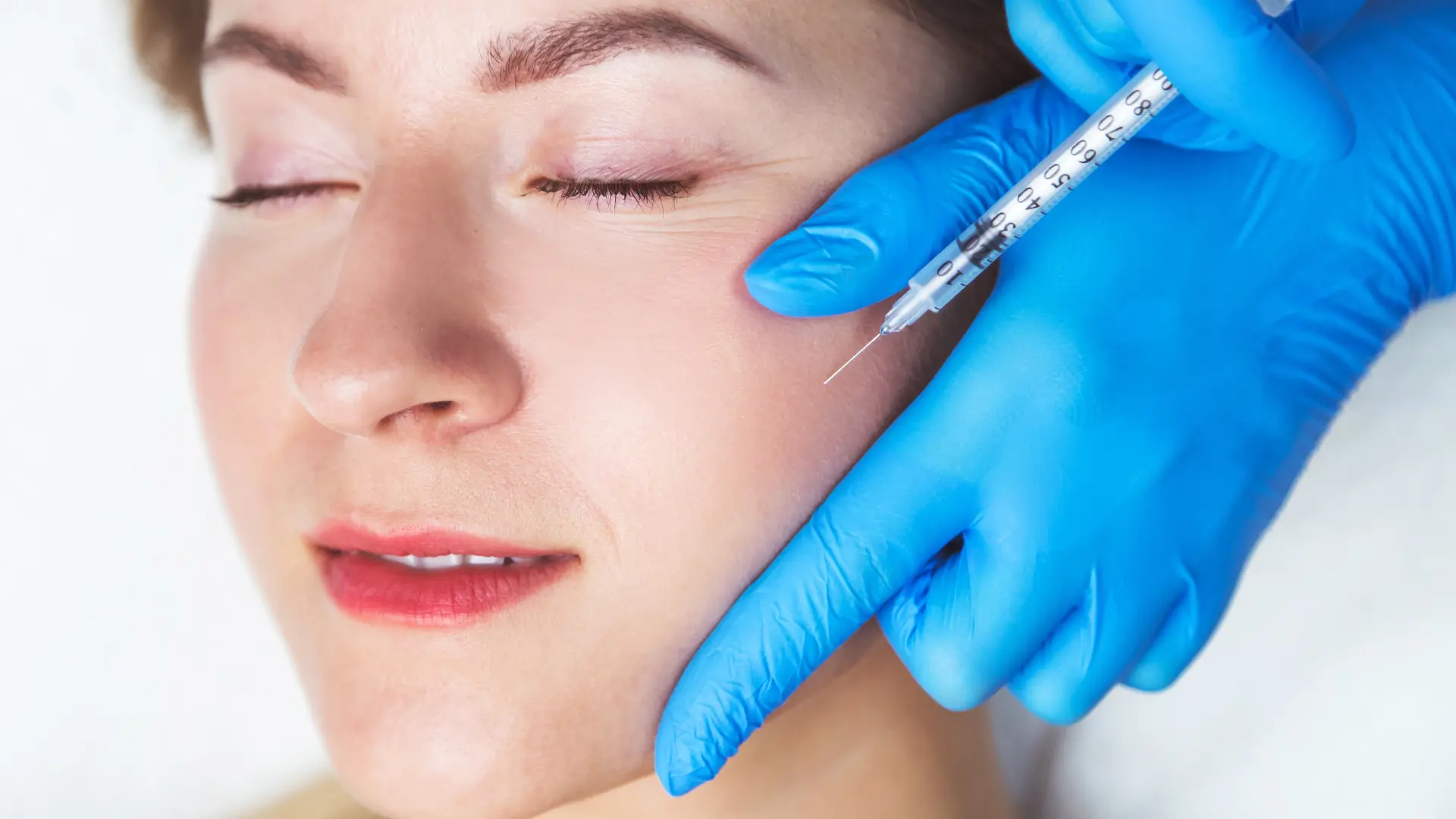
Injection Points
Profhilo uses the standard BAP technique (Bio Aesthetic Points), with 5 fixed injection points per side of the face (10 injections total for the full face), injecting 0.2ml of the product at each point. Utilizing its high fluidity, the product can spontaneously diffuse within a range of 2cm-4cm under the skin, avoiding major blood vessels and nerves; typically, marks become invisible within 24 hours. In contrast, Rejuran Healer (Rejuran) requires micro-papule technology for dense spreading due to the low diffusivity of PN components, typically involving 100+ injection points across the full face with a spacing of only 1-2cm. After Rejuran, the face will be covered with mosquito-bite-like bumps, which take 24 to 72 hours to subside, and the pain level is significantly higher than Profhilo.
Profhilo
Debuting in the et in 2015, it does not act like traditional facial fillers that “hard-fill” the face like bricks. Traditional hyaluronic acid that hard-fills like bricks contains chemical cross-linkers, whereas this 64mg/2ml formulation has a texture like warm honey. Flowing freely under the skin like warm honey is possible because it completely abandons chemical additives like BDDE used to forcibly bind molecules together. After completely abandoning chemical additives, the production line relies on a physical cycle of heating and cooling to naturally bond 32mg of low-molecular-weight and 32mg of high-molecular-weight hyaluronic acid. Natural bonding forms a highly fluid gel; after being pushed into the subcutaneous fat layer, it spreads on its own along the tissue gaps of the face. The characteristic of spreading everywhere allows doctors to only need to find 5 fixed safe positions near the cheeks and jawline for injection. Injecting in safe positions successfully avoids the dense network of facial blood vessels and nerve branches, significantly reducing the risk of bruising from the. The risk of bruising is extremely low; in a 2018 survey of 120 office workers, 95% were not noticed by others when going to work bare-faced the next day. The “unnoticed” state perfectly meets modern people’s daily demand for trace-free anti-aging; people do not want to endure a long and difficult period of swelling and recovery. The swelling recovery period is omitted, while unique physical thermal bonding technology slows down the rate at which pure hyaluronic acid is naturally metabolized and decomposed in the human body. The slower metabolic decomposition allows the high-concentration liquid to remain stably under the skin for about 28 days, which is enough time to awaken aging, dormant skin cells. Fibroblasts in skin cells are specifically responsible for producing collagen; activating them is like installing new springs into a shriveled old mattress. Installing new springs is primarily done by the low-molecular-weight hyaluronic acid in the formula, which is responsible for sending signals to repair damaged tissue at a microscopic level. Signals to repair damaged tissue brought real physiological changes; a 2019 biopsy report containing 85 samples showed an 18% increase in elastin in the skin’s reticular layer. After elastin increased by 18%, the cheeks no longer feel like thin paper but have a firm, bouncy feel similar to a high-density rubber band. The firm bouncy feel is inseparable from the aid of high-molecular-weight hyaluronic acid in the formula, which builds a large sponge-like scaffold for locking in water in the dermis. The large sponge scaffold can continuously deliver moisture to parched tissues from within, solving the roughness and shriveling caused by long-term sun exposure. Roughness and shriveling are alleviated; in a 2020 clinical tracking of 256 people, the average reading of stratum corneum moisture meters increased by 22%. An average 22% increase in epidermal moisture manifests visually as an even brightening of the entire facial skin tone, rather than simply filling a specific nasolabial fold. Simply filling a specific nasolabial fold can easily make the face look stiff; the overall hydration and lifting approach is more favored by people aged 30 to 50. The favor of people aged 30 to 50 has promoted the popularity of standard execution steps, which usually require two consecutive injections strictly spaced four weeks apart. Strictly spacing four weeks apart achieves two phased goals:
- Phase 1: Clear the parched extracellular environment.
- Phase 2: Fully accelerate collagen production.
After fully accelerating collagen production, for some skin types with chronic exposure to strong UV rays or older ages, doctors will suggest a third booster injection in the second month. A third booster injection can compensate for the loss caused by faster metabolism and extend the actual period for maintaining firm, plump skin. The actual period is usually between six and nine months, based on statistical results from a 2021 follow-up of 400 clinic customers. The statistics found that most people choose to return to the clinic for an injection every half year as daily maintenance to maintain an extremely high collagen concentration within the skin. Maintaining collagen concentration at an extremely high level can prevent facial soft tissues from showing obvious sagging and drooping again due to gravity. Sagging and drooping will not appear abruptly after the effect wears off, because the newly grown autologous collagen network remains in the body for a considerable time. After remaining for a considerable time, the new collagen will follow the natural physiological aging process and be slowly consumed; regular touch-ups are like giving the skin “regular gym workouts.” Regular gym workouts are not limited to the face; the manufacturer adjusted the rheological parameters of the gel and launched a dedicated technique for the neck and décolletage areas. The dedicated technique is primarily because the skin on the neck and chest is extremely thin and lacks sebaceous glands, making it very prone to horizontal creases and fine lines. Fine lines rely heavily on hyaluronic acid that spreads evenly like a liquid water stream to smooth out tissue gaps. When smoothing tissue gaps, the single-point injection volume in extremely thin skin areas is strictly limited to 0.2ml, distributed evenly in multiple small amounts to avoid lumps that are difficult to subside. Hard-to-subside lumps also need to be avoided on the inner arms and above the knees; for large areas of laxity, a “Body” version with a larger capacity has appeared on the market. The Body version performs excellently in skin tightening; in a 2022 skin pinch test involving 150 women, local recoil speed increased by 30%. A 30% increase in local recoil speed proves the practical feasibility of reshaping aging tissues throughout the body by injecting pure formulations.
Rejuran Healer
In 2014 in overseas dermatology clinics, doctors began using a substance extracted from deep-sea wild salmon to combat facial shriveling and aging. The purified substance used to combat facial shriveling and aging is called Polynucleotide; you can imagine it as “micro-bricks and cement” specifically for repairing broken walls. The internal structure of the micro-bricks and cement is very similar to our own human gene fragments, with a similarity as high as 97%. A 97% similarity means that after this liquid is injected into the face, the body treats it as one of its own, with very few severe rejection or inflammatory reactions. Minimal rejection reactions allow it to stay safely in the dermis, the skin’s bottom layer, which is like a sponge cushion supporting skin elasticity. If the sponge cushion supporting skin elasticity suffers from years of wind, sun, and late nights, the collagen inside will break, and the cheeks will look like a deflated balloon. A deflated balloon needs to have its leaks found and plugged from the inside one by one; this salmon DNA extract is an excellent mending material. The excellent mending material itself is very viscous, like thick syrup, and it is difficult for it to spread widely on its own like a water stream after being injected into the skin. Since it cannot spread widely on its own, doctors must use extremely fine, like a farmer transplanting rice in a paddy field, to prick tiny holes across the face and deliver the medicine. The process of delivering the medicine requires leaving dense holes on the face; to cover the entire face, usually 100 to 120 injections must be done by hand. Hand-injecting 100 to 120 will cause tiny bumps on the skin surface like mosquito bites, which people usually call “micro-papules.” These micro-papules are the physical manifestation of the medicine staying in the superficial skin; because the injections are so dense, thick numbing cream must be applied to the face before the procedure. Applying thick numbing cream usually requires waiting for over 40 minutes to completely numb the epidermis, but the pressure and pain at the moment the medicine is pushed into the skin still need to be endured. After enduring twenty minutes of dense injections, the small bumps left on the face usually take two to three days to be slowly absorbed and flattened by the body. The process of being slowly absorbed and flattened by the body is actually the ingredient working underneath; it enters shriveled cells and commands “striking” cells to start secreting collagen again. Restarting collagen secretion makes the dry and fragile skin barrier thick again; in 2016, there was a skin test targeting 180 people who stay up late. Test results showed that after three consecutive injections, 82% of people found that their cheeks were no longer so prone to redness and stinging after washing with cold water. No longer prone to redness and stinging indicates that the underlying microvascular network has been repaired, and the skin has enough “foundation” to fill in fine lines around the eyes and mouth. Fine lines around the eyes and mouth are gradually pushed flat by newly grown tissue, which is much more effective than simply applying expensive face creams. It is more effective because what thickens is the dermis itself; in a 2019 ultrasound measurement report, 65 middle-aged women were compared. Images taken by the instrument showed that the dermal thickness in their cheek areas increased by an average of 15% within half a year; “thin skin” became “thick skin.” Once thin skin becomes thick skin, it is less prone to wrinkles and moisture loss, and even pores look smaller under the pressure of sufficient moisture and collagen. Pores that look smaller make bare skin feel like a peeled egg; it received very high praise in a 2020 satisfaction survey of 200 people. In the highly-praised survey, 90% of respondents specifically mentioned that oiliness on the forehead and nose in the afternoon was reduced by more than half compared to before. The reduction in oiliness by more than half is because the deep layers of the skin are no longer dehydrated, so the body no longer needs to produce oil frantically to lock in surface moisture. Locking in surface moisture is thoroughly implemented in the healthy dermal sponge, but to maintain this healthy state of oil-water balance, one must follow the rules for the injection rhythm. Planning the injection rhythm according to the rules includes several clear operational requirements:
- Get an injection every month for the first three months as “basic nourishment.”
- Get three consecutive injections to make up for the “deficit” of the past few years.
- Afterward, return every half year for a “booster” injection as “daily fertilization.”
Using it as daily fertilization can nip the damage from sun exposure and natural aging in the bud; many young people in their mid-twenties choose it as their primary anti-aging option. The primary anti-aging choice uses the “Black” regular version; if it is to deal with deep or shallow pits left by acne, the doctor will switch to the “Red” ultra-viscous version. The Red ultra-viscous version has a harder texture and is specifically used to “jack up” sunken acne pits; in 2021, a specialized test was conducted with 88 patients with faces full of acne pits. During the specialized test, doctors pricked thick directly under the scars, breaking the fiber bundles pulling the skin, and then filled in the viscous medicine to act as a “jack.” Filling in the viscous medicine as a jack, combined with external ablative laser, managed to increase the local tissue volume of those hardest-to-treat atrophic scars by 28%. The 28% increase in local tissue volume filled the crater-like holes with “new meat,” raising the smoothness and cleanliness of the entire face by several levels.
Operational Experience and Recovery
In clinics on the streets of London in 2018, doctors found that office workers were particularly concerned about whether others could tell they had received injections during their lunch break. Whether it can be seen depends mainly on the depth of the marks left by the on the face and what the actual pain of the injection feels like. To describe what the actual pain feels like: the 10-point hyaluronic acid injection can be compared to being lightly bitten ten times by a tiny ant. The feeling of being lightly bitten by a tiny ant is very mild; among 150 European women surveyed, the pain score given was only 2.5 points. A pain score of only 2.5 points makes one completely disinclined to apply numbing cream; one can finish the injections on both cheeks in less than ten minutes while lying on the treatment bed. Finishing both cheeks in less than ten minutes is possible because the medicine, as thin as water, will flow in all directions on its own after being injected. Flowing in all directions means the doctor does not need to change injection sites frequently; only five slight mosquito-bite-like swellings will be left on each cheek. The slight mosquito-bite-like swellings usually flatten completely within 24 hours; colleagues at a meeting the next day won’t notice any red dots on the face. Not noticing red dots is extremely convenient for groups that frequently need to go out to meet people, but the situation is completely different with Polynucleotide extracted from deep-sea salmon. The situation with Polynucleotide is completely different because its medicine is like thick syrup; after being injected into the skin, it stays in place without moving. Staying in place without moving forces the doctor to use extremely fine to prick over a hundred holes all over the face, like sewing clothes. Pricking over a hundred dense holes was repeatedly mentioned in a 2020 survey covering 320 people; everyone felt the process was quite difficult. The reason everyone felt the process was difficult is that up to 88% of people gave high scores of six to seven for the pain of dense injections. A score of six to seven means that even if you apply a thick layer of cream-like numbing agent and wait for forty minutes, it will still feel painful. The pain comes not only from the moment the pierces the skin but also from the “stretching” pain generated when the medicine forcibly pushes open the originally tight skin. The stretching pain is accompanied by small, neatly arranged bumps appearing on the face, looking like the face is covered with coarse tiny blisters. These coarse tiny blisters on the face are medically called “papules”; they require your body to slowly absorb the viscous medicine before they flatten. The time required for absorption and flattening varies from person to person, but most people in a 2021 follow-up of 450 samples indicated it takes at least two days. During those at least two days, it is best to wear a mask when going out, and the hundreds of pricks also significantly increase the chance of local blood vessels rupturing and causing bruising. The probability of local blood vessel rupture and bruising reached about 18%; in contrast, the 10-point injection plan had only a 3% chance of bruising. A 3% bruising probability makes it extremely easy for those who dislike trouble; to help you see the difference between the two at a glance, we have organized the following table.
| Real Experience Comparison | Lunch-break 10-point Injection | Full-face Dense Papule Injection |
|---|---|---|
| Time spent on treatment bed | Approx. 5 to 10 minutes | Approx. 20 to 30 minutes |
| Pain score (out of 10) | Approx. 2.5 points | Approx. 6.5 points |
| Necessity of numbing cream | Usually not required | Must be applied for 40+ minutes |
| Time for bumps to flatten | Within hours to 1 day | 2 to 3 days or longer |
| Probability of bruising | 3% (Very low) | Approx. 18% (Due to many injections) |
| Days needing to avoid people | Almost zero | At least 48 hours at home |
Staying at home for at least forty-eight hours is worth it for those who want to iron out extremely fine lines around the eyes, as long as they can endure the “ugly” period of the first few days. Enduring the ugly period of the first few days requires following some strict rules, such as never washing your face with hot water for the first two nights after injection. Washing with hot water or sweating from lifting weights at the gym can cause sweat to flow into those micro-holes that haven’t completely healed, causing redness and inflammation. Causing redness and inflammation was confirmed to delay the recovery progress in a 2022 post-operative record covering 280 beauty seekers. Data on delaying recovery showed that exercising and sweating too early would extend the time for the small bumps on the face to subside by an average of 20%. A 20% average extension of the subsidence time would force patients who only needed to hide for two days to still face people with a bumpy face on the third day. Facing people with a bumpy face is clearly not the result everyone wants, so doctors usually suggest using only sterile saline purchased from a pharmacy to wipe the face for the first two days. Wiping with sterile saline ensures that the dozens or hundreds of holes stay in an absolutely clean environment while waiting for the natural material to “grow” into your own skin. Once the natural material and your own skin grow together, the cheeks will feel soft and elastic like a water-soaked sponge for the next six months or so. The soft and elastic feel makes people gradually forget the fear of on the treatment bed, and major European and American manufacturers are also striving to improve thickness. Improving thickness is intended to make the incision sharper, so that when the tip pierces the skin surface, the pain nerves reporting to the brain haven’t reacted before the is already withdrawn. The “lightspeed” experience of the already being withdrawn was highlighted and praised in a 2023 international medical weekly summarizing 5000 operations. The highly praised new generation of ultra-fine successfully lowered the overall pain of full-face injections by another 15%. The approximately 15% reduction in pain has benefited people who are extremely afraid of pain but want good skin, making them no longer have sweaty palms when checking in at the clinic every month.