Radiesse is a distinctive dermal filler and potent biostimulator composed of 30% calcium hydroxylapatite (CaHA) microspheres suspended in a 70% aqueous gel carrier, designed to provide both immediate structural volumizing and long-term tissue rejuvenation through neocollagenesis. Uniquely engineered for high viscosity and elasticity, it effectively corrects moderate-to-severe facial wrinkles like nasolabial folds and stands as the first injectable indicated for correcting volume loss in the dorsum of the hands. Beyond instant filling, the CaHA particles act as a scaffold to stimulate the body’s natural production of Type I collagen and elastin, delivering results that typically persist for 12 to 18 months or longer depending on metabolic factors.
Dermal Filler Uses
The primary applications of Radiesse are focused on deep soft tissue augmentation and structural bone support. With its formulation of 30% Calcium Hydroxylapatite (CaHA) microspheres and 70% aqueous gel, it possesses extremely high viscosity and G-Prime value (elastic modulus), providing stronger support than ordinary hyaluronic acid. The it in 2006 for the correction of moderate to severe facial wrinkles (such as nasolabial folds), and in 2015 for hand volume restoration. Beyond immediate filling, its biostimulatory properties induce the regeneration of Type I collagen and elastin. Clinical effects typically last for 12 to 18 months, and it is widely used for jawline reshaping and skin texture improvement after dilution.
Moderate to Severe Facial Fold Filling
Radiesse was approved by the in 2006, with its primary indication being the correction of moderate to severe facial wrinkles and folds, most typically the Nasolabial Folds. Unlike hyaluronic acid (HA), which relies solely on water absorption and expansion, Radiesse builds a stable physical scaffold under the skin using its unique Calcium Hydroxylapatite (CaHA) microsphere structure. Since facial folds are usually in high-dynamic areas (affected by speaking and chewing), ordinary soft fillers are prone to displacement or deformation due to muscle movement. However, Radiesse, with its high Viscosity and high G-Prime, can maintain structural stability in such high-tension areas.
Reasons for Resisting Deep Wrinkles
Its main components are CaHA microspheres with a diameter of 25 to 45 microns (accounting for 30%) suspended in a sodium carboxymethylcellulose aqueous gel (accounting for 70%).
- High G-Prime Value (Hardness): Its elastic modulus is higher than most hyaluronic acids, meaning it does not deform easily when subjected to external pressure (such as facial expression muscle compression). For deep dermal ruptures, it acts as a “liquid skeleton,” providing upward vertical support.
- High Viscosity (Resistant to Diffusion): After injection, it stays in the position placed by the doctor and does not diffuse into surrounding tissues like water. This is crucial for precise filling of nasolabial folds, as migration of the filler to the outer cheeks can actually worsen the visual depth of the smile lines.
Fixing Nasolabial Folds
Nasolabial folds are one of the most obvious signs of facial soft tissue aging, usually caused by a combination of gravity-induced fat pad sagging and bone resorption. When treating this area, Radiesse is typically administered using a deep injection method.
- Injection Layer: Doctors usually insert the into the deep dermis or subcutaneous tissue layer. If injected too shallowly (superficial dermis), the opaque white CaHA particles may cause visible white streaks or nodules on the skin surface.
- Linear Threading: This is the most common technique. The doctor inserts the through the full length of the fold and slowly, evenly injects the gel while withdrawing the. This method forms a continuous support column along the wrinkle.
- Fanning Technique: For wider depressed areas of the nasolabial folds, the doctor uses the same entry point to perform multiple passes in a fan shape. This method increases subcutaneous volume over a large area, lifting the entire collapsed nasal base region.
Data Reference: Clinical studies show that after a single injection, approximately 75% of the gel carrier is metabolized and absorbed by the body in about 3 months, but the CaHA microspheres remain to stimulate fibroblast growth around them.
Improving Downturned Mouth Corners and Marionette Lines
Marionette Lines are vertical lines extending downward from the corners of the mouth to the edge of the chin. The difficulty in treating this area lies in the high activity of the perioral muscles (such as the depressor anguli oris).
- Structural Support: The role of Radiesse here is not just to fill the grooves, but more to provide a structural block. Doctors build a triangular support zone below the corners of the mouth to prevent them from further sagging due to gravity.
- Cross-hatching: To counter vertical gravity lines, doctors may use a horizontal and vertical intersecting injection method, weaving a mesh-like subcutaneous scaffold to enhance the thickness and strength of the skin below the mouth corners.
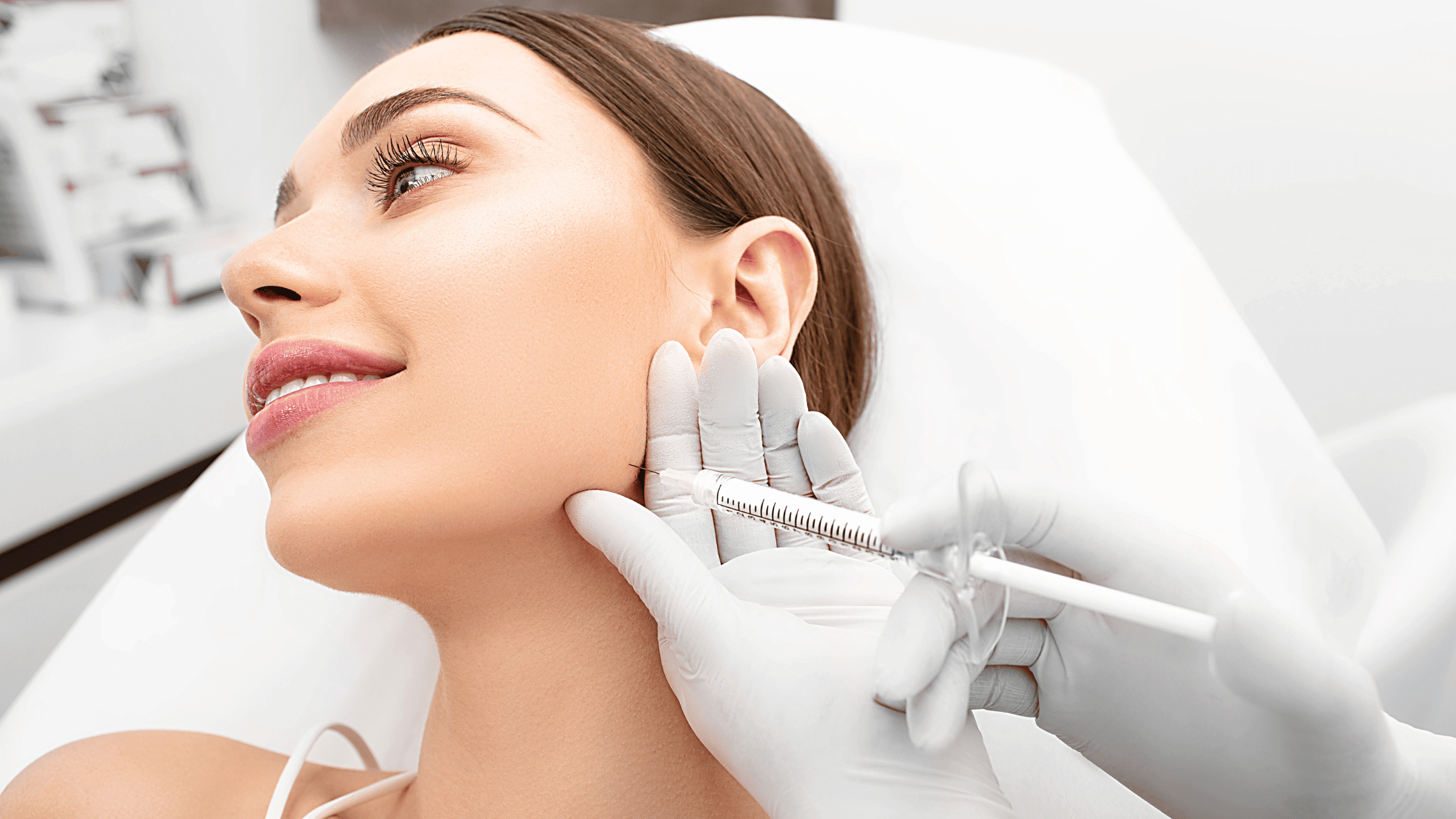
Facial Contouring
Jawline
With age, the Mandible undergoes physiological resorption, the bone frame becomes smaller, and the soft tissues attached to it lose support and sag, resulting in a blurred jawline. Radiesse is the preferred material for jawline reshaping, even superior to large-molecule hyaluronic acid:
- Simulated Bone Augmentation: Doctors inject Radiesse into the Supraperiosteal plane, which is right against the surface of the jawbone. Due to the hardness of the CaHA microspheres, it can effectively “widen” or “lengthen” the mandible here.
- Resisting Masseter Movement: The jaw angle area is covered by the powerful Masseter muscle. Ordinary fillers can easily deform or shift under the repeated contraction and pressure of the masseter, making the jawline look wider and blunter. Radiesse’s high cohesivity resists this muscle pressure, maintaining a sharp line.
- Dosage Reference: To create a complete and clear jawline from the ear to the chin, a dose of 1.5 cc to 3.0 cc (i.e., 1-2 ) per side is usually required, depending on the degree of bone deficiency. Doctors typically use a 22G or 25G for long-distance fanning to reduce entry points and lower the risk of vascular injury.
Chin
The Chin determines the profile depth of the face. For people with Retrognathia or a short chin, Radiesse provides a non-surgical alternative. Compared to hyaluronic acid, Radiesse has two significant advantages in chin sculpting:
- Extremely High Vertical Support: Skin tension in the chin area is high (especially when talking and making expressions). Soft fillers are easily flattened by tight skin, making the chin look wider rather than sharper. Radiesse acts like an implant, resisting skin tension to achieve Vertical Projection.
- Resistant to Widening: Many people who use hyaluronic acid for chin filling find that the chin becomes round and blunt over time because the gel diffuses to the sides. Radiesse’s high viscosity allows it to maintain the “pointed” shape intended by the doctor without migrating to the lateral soft tissues.
Operation Details: Doctors typically use the Bolus Injection method, injecting a larger amount of gel at a single point on the deep bone surface of the chin tip (Pogonion), then molding it by hand to the ideal shape. If mentalis muscle tension (cobblestone chin) is present, it is usually recommended to treat with Botox first to relax the muscle before Radiesse filling to extend the duration.
Malar Area (Apple Cheeks)
Mid-face aging often begins with the atrophy of deep fat pads and resorption of the zygomatic bone. This loss of volume leads to an overall downward slide of facial soft tissues, which in turn creates nasolabial folds. Using Radiesse for mid-face lifting is not about “filling flesh,” but about “rebuilding pivots”:
- Zygomatic Arch Support: The filler is injected onto the periosteum of the Zygomatic Arch. This is like placing bricks under the poles of a tent; by raising the bone support points, the entire facial skin is lifted back and upward.
- Deep Fat Pad Restoration: Injecting into the Deep Sub-Orbicularis Oculi Fat (DSOOF) can replenish lost deep volume. Due to Radiesse’s firm texture, it is not suitable for injection into superficial subcutaneous fat, otherwise, hard lumps might be felt when making expressions.
- Visual Slimming Effect: When the zygomatic highlight point becomes clear and shifts upward, facial light and shadow change, making the profile look more three-dimensional and the face visually smaller.
Hand Rejuvenation
Causes of “Skeleton Hands”
With physiological aging, the thin Dorsal Fat Pad between the skin and deep structures of the hand gradually atrophies or even disappears.
- Loss of Coverage: Without the buffer of this fat layer, the veins and Extensor Tendons responsible for finger extension bulge directly beneath the thin skin.
- Visual Aging: These changes result in a bony, vein-prominent, and wrinkled appearance, often referred to as a “skeleton hand.”
- Color Contrast: Blue veins appear particularly stark under thinning skin, worsening the sickly and aged visual impression.
Reasons for Choosing Radiesse
While large-molecule hyaluronic acid can also fill the back of the hands, Radiesse has a physical property that hyaluronic acid cannot match: Opacity. Radiesse gel is a Creamy white. It is like applying a layer of thick concealer to the back of the hand, whereas hyaluronic acid is more like a clear lip gloss.
- Physical Masking: When the creamy white CaHA gel is injected subcutaneously, it visually blocks the color of the underlying veins from showing through.
- Avoiding the Tyndall Effect: Hyaluronic acid is transparent and can cause a blue light reaction (Tyndall Effect) under light refraction, making the already prominent veins on the hand look even bluer and weirder.
- Smooth Spreading: The back of the hand requires flat fullness rather than a protruding “lump” like the malar area. Radiesse’s extensibility allows doctors to massage and spread it evenly like a carpet.
How Doctors Inject
For safety and efficacy, Western doctors generally follow these standard procedures:
- Anesthesia Pre-treatment: Radiesse is typically mixed with 2% Lidocaine. This is not only for pain relief but also to slightly dilute the gel, reducing injection resistance and making it easier to spread in the tight skin area of the hand.
- Injection Methods (Two Main Schools):
- Bolus Technique: The doctor lifts the skin on the back of the hand (tenting), inserts the between the superficial subcutaneous layer and the tendons, and injects most of the dose at once. This is followed by firm thumb massage to push the accumulated gel outward. This method is the least traumatic, with only one entry.
- Fanning: A single entry point is made at the wrist, and a long 22G is used to fan through the subcutaneous fat layer. This method allows for more precise delivery of the filler between the interdigital spaces, and the blunt tip is less likely to puncture superficial veins, significantly reducing the risk of bruising.
Dosage Reference: Clinical experience shows that for satisfactory coverage, mild aging usually requires 1.5 cc (one ) per hand; moderate to severe aging (visible tendons and hollows) often requires 3.0 cc (two ) per hand. Splitting one between both hands usually yields negligible results.
Benefits
Radiesse utilizes a formula of 30% Calcium Hydroxylapatite (CaHA) microspheres and 70% Carboxymethylcellulose (CMC) gel carrier to provide a dual action of immediate filling and subsequent biostimulation. The gel provides immediate support after injection, after which the CaHA microspheres act as a scaffold to induce the natural production of Type I collagen and elastin. With its high elastic modulus (High G-Prime), it provides superior structural bone support compared to traditional hyaluronic acid, making it particularly suitable for deep tissue lifting. As the first filler approved by the for hand rejuvenation, its clinical effects typically last 12 to 18 months, and it is eventually metabolized by the body into calcium and phosphate ions for excretion.
Strong Structural Sculpting
Resisting Gravity Sagging
- High G-Prime Property: The G-Prime value of Radiesse is typically significantly higher than mainstream hyaluronic acid products on the market. According to rheological test data, Radiesse’s G-Prime can reach 1400 Pa or higher, while ordinary volumizing hyaluronic acids (such as Juvéderm Voluma or Restylane Lyft) are usually between 500 to 900 Pa.
- Vertical Support: This high G-value grants it exceptional “vertical lifting ability.” When injected above the periosteum, it acts like a pillar against gravity and skin tension. For patients with heavy facial soft tissue or significant skin sagging, softer fillers might be flattened or spread sideways, but Radiesse maintains its columnar structure, directly “propping up” collapsed tissue.
Simulated Bone Texture
The main component of Radiesse is 30% Calcium Hydroxylapatite (CaHA) microspheres, which are chemically very similar to the bone minerals in the human body.
- Real Touch: The feel after injection is very close to real bone, with moderate hardness and no bouncy sensation. This makes it an ideal choice for reshaping bony contours.
- Opaque Property: Unlike the transparent gel of hyaluronic acid, Radiesse is an opaque creamy white paste. This characteristic prevents the “Tyndall Effect” (blue tint at the injection site) under strong light, resulting in a more natural and solid visual effect, especially in areas with thin subcutaneous fat.
Stays Where It Is Injected
Other important physical indicators are Viscosity and Cohesivity. High viscosity means the material does not flow easily, and high cohesivity means the material stays tightly bound internally and does not separate easily.
- Precise Placement: Due to its high viscosity, once Radiesse is pushed into the designated position, it stays firmly there. It does not migrate or slide into surrounding tissues under the pressure of facial muscles like low-viscosity hyaluronic acids might.
- Resistance to Shear Force: The face has a lot of expression muscle movement, which generates Shear Force. Radiesse’s high cohesivity allows it to resist this force, ensuring that the sculpted shape (such as a high nose bridge or sharp jaw angle) does not widen or deform into an “Avatar” nose over time due to talking or chewing.
No Water Absorption or Swelling
Many patients worry about a “puffy” face after injection, which is usually related to the hydrophilicity (water-absorbing ability) of the filler.
- Hydrophobic Property: Hyaluronic acid is essentially a polysaccharide and is extremely hydrophilic; it can absorb several times its own volume in water after injection, leading to edema immediately or weeks after surgery, making contours look bloated and blurred.
- 1:1 Filling: The carrier for Radiesse is Carboxymethylcellulose (CMC), which produces almost no additional water-induced swelling in the body. If the doctor injects 0.1 ml, the final result is 0.1 ml of volume. This “what you see is what you get” characteristic allows doctors to precisely control the final form when sculpting delicate areas like the chin tip, brow bone, or zygomatic arch, without unpredictable post-procedure swelling.
Certified Hand Restoration
Natural Concealer Effect
Since hand skin is extremely thin, injecting a transparent gel subcutaneously can easily lead to the “Tyndall Effect” under sunlight or indoor lighting due to light scattering, making the skin look unnaturally pale blue or bruised.
- Physical Masking: Radiesse is an opaque creamy white paste. When laid in the subcutaneous tissue, it not only adds volume but also acts as a physical concealer.
- Hiding Vessels: This creamy white matrix effectively blocks light penetration, directly covering the dark veins and white tendons underneath. After injection, the hand skin tone looks more even, the texture thicker, and vessel visibility is immediately reduced—an optical effect transparent fillers cannot achieve.
Official Certified Data
Studies used a specialized assessment scale—the Merz Hand Grading Scale (MHGS), which categorizes hand aging from 0 (young) to 4 (extreme aging).
- Efficacy Data: Clinical trial results showed that 75% of recipients saw an improvement of at least one grade in hand aging 3 months after injection.
- High Satisfaction: At 12 months (one year) post-treatment, 98% of subjects reported continued significant improvement in hand appearance. This high satisfaction primarily stems from the continuous collagen regeneration brought by the metabolism of CaHA microspheres, keeping skin texture firmer after a year than before treatment.
Increasing Skin Thickness
- Combatting Thin Skin: Aging hand skin is not only loose but also extremely thin (Atrophy). CaHA microspheres act as a scaffold, stimulating surrounding fibroblasts to grow and encapsulate them.
- Tissue Thickening: Histological section studies indicate that within a few months after Radiesse injection, the thickness of the dermis on the back of the hand increases. Thickened skin not only looks younger but is also more resistant to external physical damage, reducing the environment for age spot formation, making the hands look more plump rather than just “swollen.”
Longer Duration
According to multiple clinical control studies and data submitted to the, the aesthetic improvement from Radiesse lasts an average of 12 to 18 months. In some patients with slower metabolism or in specific injection sites (such as temples or jaw angles), the effect can even last up to 24 months.
The “Relay Race” Principle
- The First Leg (First 3 Months): Immediately after injection, support is provided by the 70% CMC gel carrier (Carboxymethylcellulose). This gel provides immediate physical occupancy, filling wrinkles or padding contours. However, this is only the first stage; the CMC gel is gradually absorbed and metabolized by the body within 2 to 3 months post-injection.
- The Second Leg (After 3 Months): As the gel gradually retreats, the 30% CaHA microspheres begin to play their true role. These microspheres do not disappear; they remain in place to form a stable scaffold. This scaffold is like the steel structure on a construction site, “ordering” surrounding fibroblasts to migrate over and tightly wrap around the microspheres to grow.
- Seamless Transition: Many short-term hyaluronic acids experience a noticeable “cliff-like” collapse during the metabolic phase, whereas Radiesse’s smooth transition from “physical filling” to “biological regeneration” ensures continuity of results.
Regenerated Tissue
- Collagen Network: Histological sections show that between 4 to 9 months after Radiesse injection, a dense collagen network forms around the microspheres. This newborn collagen is primarily Type I collagen, which has high mechanical strength and is the main component responsible for providing tension and toughness in the dermis.
- Half-life Advantage: Foreign filling materials will be metabolized, but the collagen tissue produced by the body itself has a normal physiological half-life. Even when the CaHA microspheres are eventually completely decomposed, the established collagen fiber network still exists, continuing to maintain skin thickness and firmness. This is why many patients feel the area remains fuller than before treatment even after the Radiesse has metabolized.
Body Metabolism
Unlike hyaluronic acid, which can be quickly dissolved by Hyaluronidase, Radiesse’s metabolism is a slow biodegradation process, which objectively extends its retention time.
- Phagocytosis: This is a cellular “transport” process. Macrophages in the body gradually surround the CaHA microspheres. Since the microspheres are very smooth and their diameters are mainly concentrated between 25 to 45 microns, this size is large enough to avoid triggering a severe inflammatory response, yet small enough to eventually be slowly processed by macrophages.
- Ionization Decomposition: Under the action of enzymes and acidic environments, CaHA microspheres gradually decompose into Calcium ions and Phosphate ions. These two components are themselves parts of human bone and body fluids and have no toxicity.
- Excretion Path: The decomposed ions enter the renal system through blood circulation and are eventually excreted naturally with urine. This process is very slow and gentle, usually taking more than a year for the complete degradation of the microspheres.
Less Movement, Longer Lasting
Although the average duration is 12 to 18 months, how long it actually lasts is significantly related to the injection site.
- Structural Support Zones: Radiesse lasts longest in areas with minimal activity, such as the nose, chin, jaw angle, or temples. These areas have less muscle movement, and the filler is subjected to less mechanical pressure and shear force. Metabolism is extremely slow; in clinical settings, a clear contour is often seen even 18 months after injection.
- High-Dynamic Areas: In areas with rich expressions and frequent muscle contractions, such as nasolabial folds or the perioral region, the metabolic rate increases. Continuous mechanical pressure accelerates the disintegration and absorption of the material, typically bringing the duration in these areas closer to the 12-month lower limit.