STARPHARMTEC Lip Filler Technology
Why Anthocyanin Makes Lipstar Different from Standard HA Lip Fillers
Most Korean lip fillers focus on volume retention alone. Lipstar’s formulation pairs cross-linked HA with anthocyanin — a flavonoid polyphenol with documented antioxidant activity 4–6 times higher than vitamin C. The result is a lip filler that adds volume and contributes to lip tissue protection.
1
Multi-Stage Cross-Linking
Hyaluronic acid is cross-linked using sequential stabilisation phases rather than single-step BDDE cross-linking. The result: more uniform gel structure and reduced residual BDDE — important for lip placement where tissue is thin and vascular.
2
Anthocyanin Antioxidant
Natural polyphenol from blueberries and black rice. Documented ORAC (oxygen radical absorbance capacity) is 4–6× higher than vitamin C. In lip tissue, anthocyanin contributes to natural lip pigmentation enhancement and protection against UV-induced oxidative damage.
3
1.2 mL Volume Advantage
20% more product per syringe than standard 1.0 mL lip fillers. Allows full upper + lower lip treatment in one syringe rather than two — reducing per-treatment cost and patient injection burden.
Side-By-Side
Lipstar vs Restylane Kysse vs Juvederm Volbella
| Feature |
Lipstar |
Restylane Kysse |
Juvederm Volbella |
| Syringe Volume |
1.2 mL |
1.0 mL |
1.0 mL |
| Antioxidant Ingredient |
Anthocyanin (natural polyphenol) |
None |
None |
| Cross-Linking Tech |
Multi-stage HA stabilisation |
OBT / XpresHAn™ |
Vycross™ |
| Pigment Enhancement |
Subtle from anthocyanin |
None |
None |
| Approval |
KFDA (South Korea) |
FDA + CE |
FDA + CE |
| Origin |
South Korea (STARPHARMTEC) |
Sweden (Galderma) |
USA (Allergan / AbbVie) |
| Distinctive Strength |
Volume + antioxidant + pigment |
Soft, flexible lip movement |
Smooth fine-line correction |
↔ Swipe horizontally on mobile to view all columns
Comparison based on manufacturer published data. See our top dermal filler comparison guide for broader market context.
FAQs
Lipstar — Frequently Asked Questions
What is Lipstar lip filler?
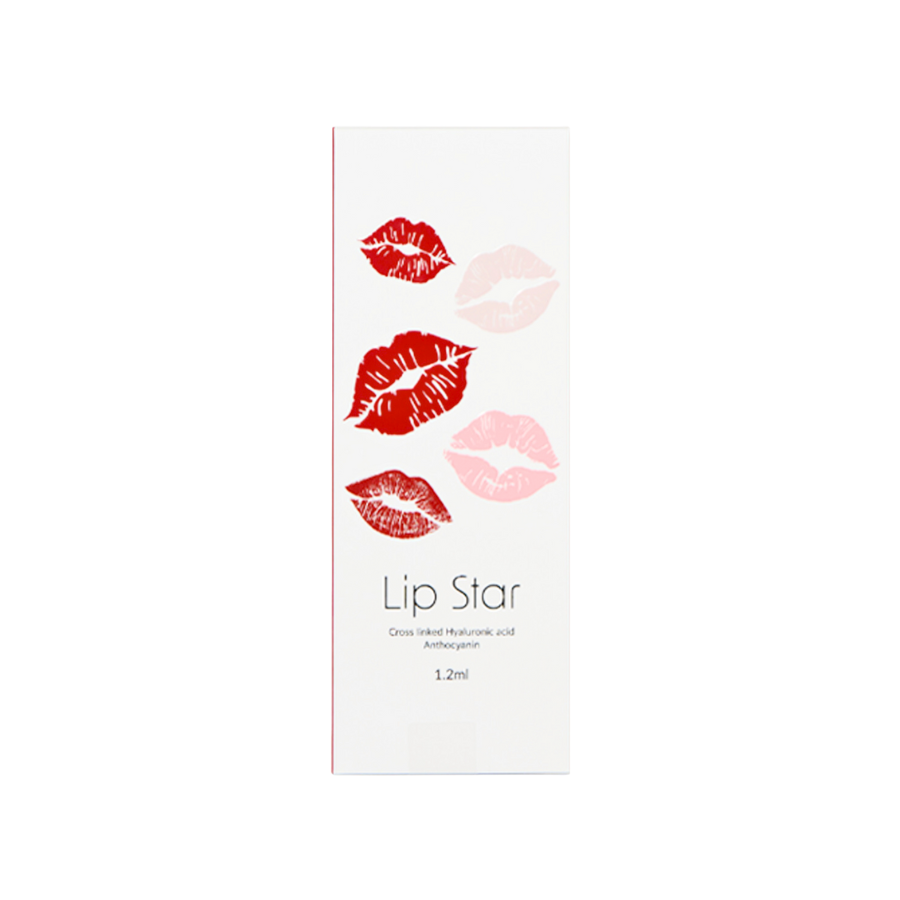
Lipstar is a Korean cross-linked hyaluronic acid lip filler manufactured by STARPHARMTEC in Seoul, formulated with natural anthocyanin antioxidant. Each syringe contains 1.2 mL — 20% more volume than the standard 1.0 mL lip filler format — and the gel is stabilised using a multi-stage cross-linking process for extended duration in lip tissue.
What is anthocyanin and why is it in Lipstar?
Anthocyanin is a water-soluble flavonoid polyphenol naturally present in dark berries, black rice, and red cabbage. Its documented antioxidant capacity (ORAC scale) is 4–6× higher than vitamin C. In Lipstar, anthocyanin contributes to three benefits beyond standard HA filler: protection against UV-induced free radical damage at the injection site, subtle natural lip pigment enhancement, and anti-inflammatory effect during post-procedure recovery.
Why is Lipstar 1.2 mL instead of the standard 1.0 mL?
Most lip fillers are supplied as 1.0 mL syringes — typically enough for one lip (upper OR lower) per session. Lipstar’s 1.2 mL format provides ~20% additional product, allowing practitioners to treat both upper and lower lips comprehensively in a single syringe. This reduces per-treatment cost for the patient and eliminates the need to open a second syringe for combined lip procedures.
How long does Lipstar last in the lips?
Per the manufacturer, Lipstar delivers sustained volume retention through the multi-stage cross-linking process. Most cross-linked HA lip fillers in this class provide 6–9 months in the lip body, with individual duration depending on patient metabolism, lip animation intensity, and injection technique. Touch-up sessions are recommended once volume softening becomes visible.
Does Lipstar contain lidocaine?
Lipstar’s standard formulation focuses on HA + anthocyanin without premixed lidocaine. Practitioners typically administer separate topical anaesthesia (EMLA cream or dental block) for lip procedures. If you require a premixed-lidocaine variant, confirm with the supplier whether Lipstar Lidocaine is available in your market.
Does the anthocyanin actually change lip colour?
Anthocyanin’s pigment effect in Lipstar is subtle — it is not a lip tint and does not replace lipstick. Patients commonly report a mild natural-looking colour enhancement (slightly more saturated lip pigment) rather than a dramatic visible colour change. The primary functional role of anthocyanin remains antioxidant protection; the pigment enhancement is a secondary cosmetic benefit.
Where is Lipstar manufactured?
Lipstar is manufactured by STARPHARMTEC Co. Ltd., a Korean medical device manufacturer based in Dongdaemun-gu, Seoul. The product is registered with the Korean Ministry of Food and Drug Safety (KFDA / MFDS). Registration details can be verified at the official MFDS pharmaceutical database at nedrug.mfds.go.kr.
Is Lipstar FDA approved or CE marked?
Lipstar is KFDA registered in South Korea. It is not currently FDA approved in the United States and CE marking status should be confirmed directly with STARPHARMTEC for the EU market. Buyers are responsible for verifying that import and clinical use are permitted in their jurisdiction before ordering.
How should Lipstar be stored at the clinic?
Store between 2 °C and 25 °C, away from direct sunlight. Do not freeze — freezing damages the HA gel structure. Shelf life is typically 24 months from the manufacturing date printed on the box when unopened. Once a syringe is opened, contents must be used immediately. Partial syringes cannot be retained for later use due to sterility risk.
Can Lipstar be combined with other lip fillers or Botox in the same session?
Yes, layered protocols are common. Practitioners may use Lipstar for lip body volume in combination with a softer HA filler for vermillion border definition, or in conjunction with botulinum toxin around the perioral area for upper lip lines. Always wait the recommended interval between different injectable products and confirm biocompatibility per the manufacturer’s IFU.
Important Safety Information
Read Before Clinical Use
Lipstar is a prescription medical device for use only by licensed aesthetic practitioners. Common reactions include injection-site bruising, swelling, redness, and tenderness — generally resolving within 3–7 days. Lip placement carries elevated bruising risk due to dense vascular supply. Like all hyaluronic acid dermal fillers, treatment carries rare but serious vascular complication risks — particularly important around the labial artery in the upper and lower lip vermillion. Practitioners with anatomical knowledge of facial vasculature and access to hyaluronidase for emergency dissolution are required. Anthocyanin is generally well-tolerated; patients with known berry or polyphenol allergies should be screened pre-procedure. Full contraindications, vascular complication protocols, aftercare, and emergency guidance are detailed on the dermal filler safety page.
Read Full Dermal Filler Safety Information →
Fillersfairy.com is a channel distributor and does not provide medical advice. This page is for informational purposes only and does not replace the manufacturer’s official Instructions for Use, which remains the authoritative source for clinical administration. Regulatory status varies by jurisdiction — buyers are responsible for verifying legal status before ordering. Last reviewed May 2026 against STARPHARMTEC manufacturer documentation.



Reviews
There are no reviews yet.