Ami Eyes Side Effects: Why Patients Keep Coming Back for This Under-Eye Treatment
Last updated: July 2026 · Reading time: 6 min
Quick Answer
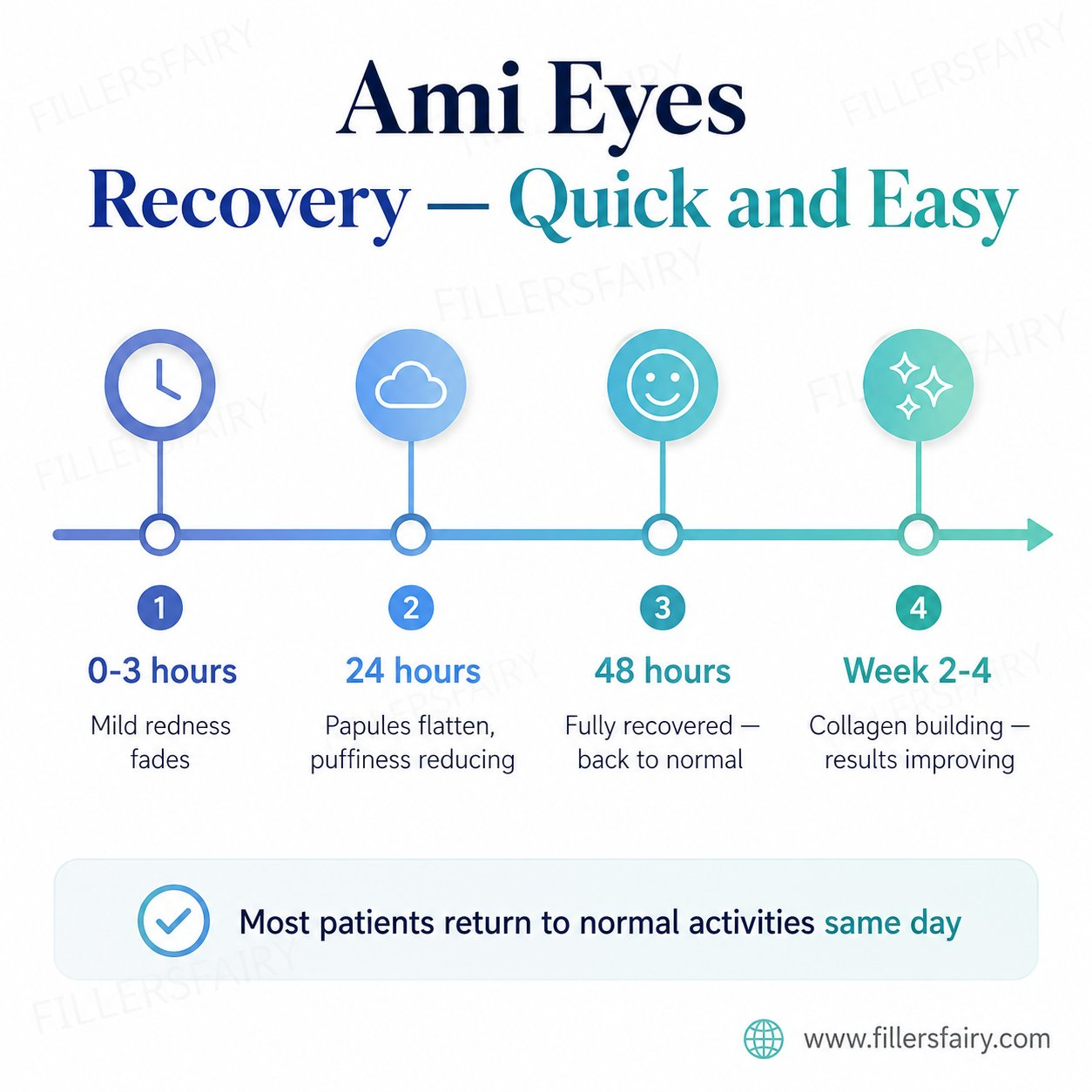
Ami Eyes has one of the gentlest recovery profiles of any periorbital injectable treatment. Because it uses polynucleotides (PN) instead of HA filler, there is no risk of Tyndall effect, no lumps, and no lymphatic congestion — the three most common problems with traditional under-eye fillers. Patients typically experience nothing more than mild redness at injection points that fades within a few hours. Most patients return to their normal routine the same day and describe the recovery as “barely there.” This gentle profile is one of the main reasons Ami Eyes has become the most popular periorbital treatment in Korean aesthetic practice.
What Patients Actually Experience After Ami Eyes
The under-eye area is the most delicate zone on the face, so patients naturally feel nervous about any treatment there. Practitioners who can confidently explain the recovery set the right expectations and build trust from the first consultation.
Mild redness at injection points — fades in 1–3 hours. Small pink dots where the needle entered the skin. Most patients find these invisible by the time they leave the clinic. Some patients with very fair or reactive skin may notice mild pinkness lasting until the next morning.
Slight puffiness — resolves in 24–48 hours. The periorbital skin is thin and tends to show any treatment effect more visibly than other areas. A subtle fullness under the eyes is normal in the first day or two. This is actually a positive sign — it means the PN is hydrating and integrating into the tissue. Patients may find that cold compresses speed resolution, but it resolves on its own without any intervention.
Tiny papules — flatten within 24 hours. Small raised bumps at injection points are the PN sitting in the superficial dermis before it disperses. These are less noticeable than papules from full-face skin boosters because Ami Eyes uses fewer injection points in a smaller area.
What Patients Consistently Tell Us
“I was nervous about getting needles near my eyes, but it was nothing. A bit of redness that was gone by dinner.”
“Way easier than the tear trough filler I had before. No swelling, no bruising, I went back to work right after.”
“I wish I’d started this sooner — the recovery is genuinely nothing.”
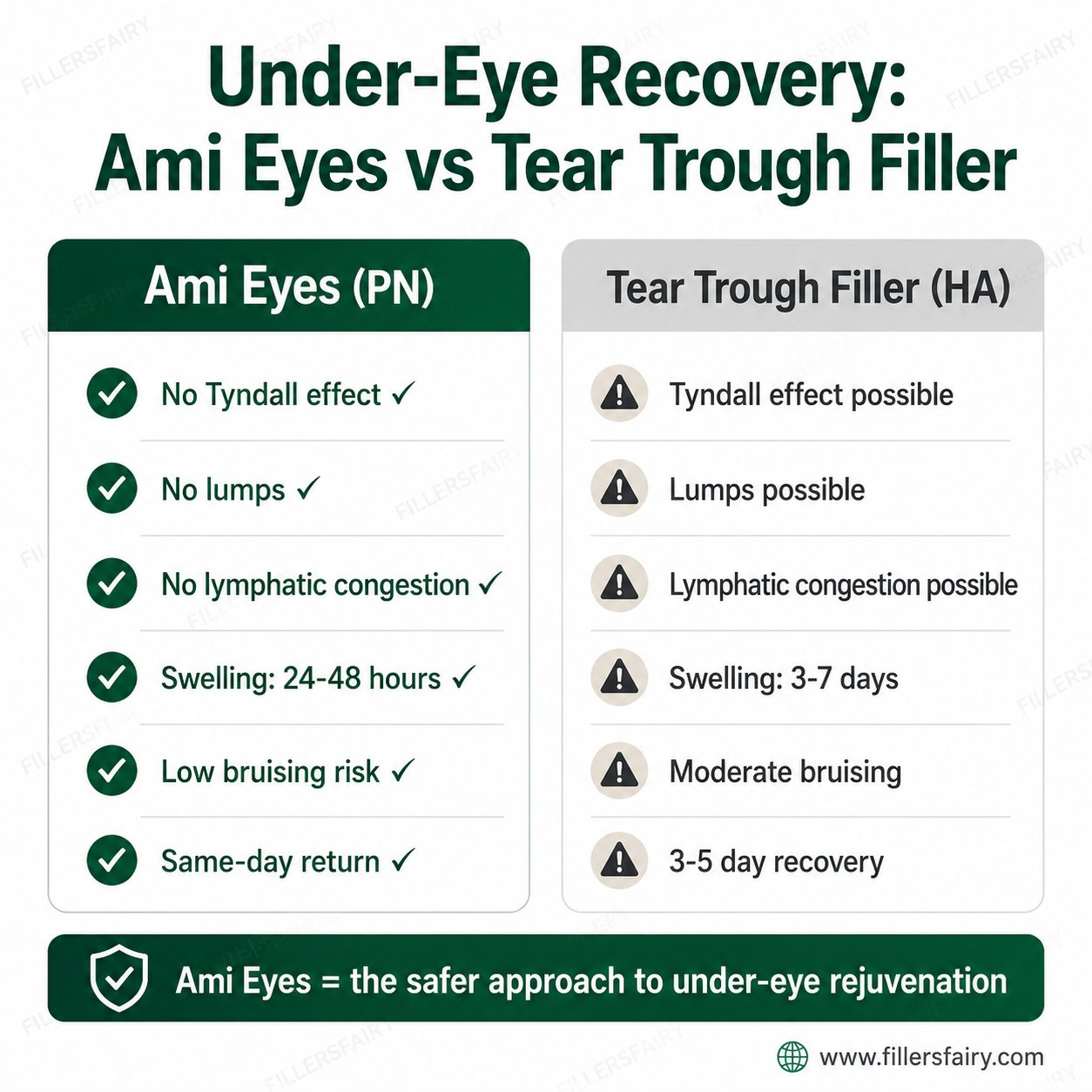
Why Ami Eyes Recovery Is Gentler Than Under-Eye Filler
Many patients come to Ami Eyes after negative experiences with tear trough HA filler. The comparison is stark — and understanding it helps practitioners explain why PN is a better approach for the periorbital area.
| Recovery Factor | Ami Eyes (PN) | Tear Trough Filler (HA) |
|---|---|---|
| Tyndall effect risk | None — PN is absorbed, not deposited | Possible — blue discoloration through thin skin |
| Lumps or nodules | None — PN disperses naturally | Possible — product migration or uneven placement |
| Lymphatic congestion | None — no volume added to tissue | Possible — HA can compress lymphatic channels |
| Swelling duration | 24–48 hours, mild | 3–7 days, can be significant |
| Bruising risk | Low — superficial, small-volume injections | Moderate — deeper injection near orbital vessels |
| Return to normal | Same day | 3–5 days typical |
This comparison is Ami Eyes’ strongest commercial argument. Patients who have experienced tear trough filler complications — Tyndall effect, persistent puffiness, visible lumps — are actively looking for a safer alternative. Ami Eyes is that alternative, and its gentle recovery proves it every single treatment.
Why Ami Eyes Is So Well-Tolerated
Three factors explain Ami Eyes’ gentle recovery. First, polynucleotides are biocompatible — structurally identical to molecules already present in human tissue. The body recognizes PN as natural material rather than a foreign substance, which minimizes inflammatory response.
Second, the injection is superficial. Ami Eyes targets the papillary dermis (1 mm depth), not the deeper tissue planes where major blood vessels sit. Shallower injection means less tissue disruption, lower bruising risk, and faster resolution.
Third, the treatment volume is small. Each session uses approximately 2 mL distributed across the periorbital area in micro-deposits. Small volumes at each injection point mean minimal tissue distension and rapid absorption.
The Rare Exceptions — And Why They Are Preventable
Ami Eyes is an excellent product with a proven global safety record. In the rare cases where patients experience unexpected reactions, the cause is almost always related to practitioner technique or patient screening — not the product itself.
Prolonged puffiness (3+ days) — may indicate injections were placed too deep or too much volume was used in a concentrated area. Prevention: follow the recommended superficial injection depth and distribute product evenly across the treatment zone.
Asymmetric results — caused by uneven product distribution between the two eyes. Prevention: careful measurement and symmetrical injection mapping. A follow-up appointment at 2 weeks allows for assessment and correction if needed.
Allergic reaction — extremely rare with PN due to its high biocompatibility with human tissue. Prevention: thorough medical history and allergy screening before every treatment. Patients with known fish allergies should be evaluated carefully since PN is derived from salmon cells.
The Bottom Line
Ami Eyes is a rigorously developed, clinically validated periorbital treatment with an outstanding safety record. The product works as designed. When rare complications occur, they are technique-related and preventable with proper training. For clinics looking to offer a safe, effective, dark circle treatment that patients genuinely enjoy — Ami Eyes delivers on every front.
Frequently Asked Questions
Does Ami Eyes hurt?
Most patients describe it as very tolerable — a series of small pinches. The periorbital area is sensitive, so practitioners often apply topical numbing cream 15–20 minutes before treatment. After that, most patients are comfortable throughout. The entire treatment takes only 15–20 minutes.
How long does redness last after Ami Eyes?
Typically 1–3 hours. Most patients find the redness has faded by the time they get home. Very fair-skinned patients may notice mild pinkness until the next morning. No concealer needed for most people.
Can I wear makeup after Ami Eyes?
Wait 12–24 hours before applying eye makeup. The injection sites need time to close to minimize infection risk. After 24 hours, you can resume your full routine including concealer, eye cream, and sunscreen.
Is Ami Eyes safer than tear trough filler?
For the specific concern of under-eye skin quality (dark circles, crepiness, dehydration) — yes. Ami Eyes eliminates the three biggest risks of periorbital filler: Tyndall effect, lumps, and lymphatic congestion. For volume loss (hollow tear troughs), filler is still needed — but many clinics now combine Ami Eyes with filler for the safest comprehensive result.
Are there any long-term side effects of Ami Eyes?
No long-term adverse effects have been reported in clinical use. PN is fully metabolized by the body — it does not accumulate or persist indefinitely like some filler materials can. The treatment stimulates your own collagen production, so the long-term effect is actually improved skin quality, not deterioration.
Related Guides
- Ami Eyes for Dark Circles: Does It Work?
- How Does Ami Eyes Work? The PN Science
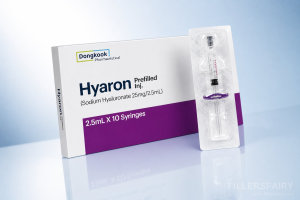
- Hyaron Side Effects — Skin booster recovery comparison
- Nabota Side Effects — Botulinum toxin safety