What Is Volassom? How CaHA Collagen Stimulators Work — Mechanism, Protocol, and Clinical Evidence for Practitioners
Last updated: June 2026 · Reading time: 8 min
Quick Answer
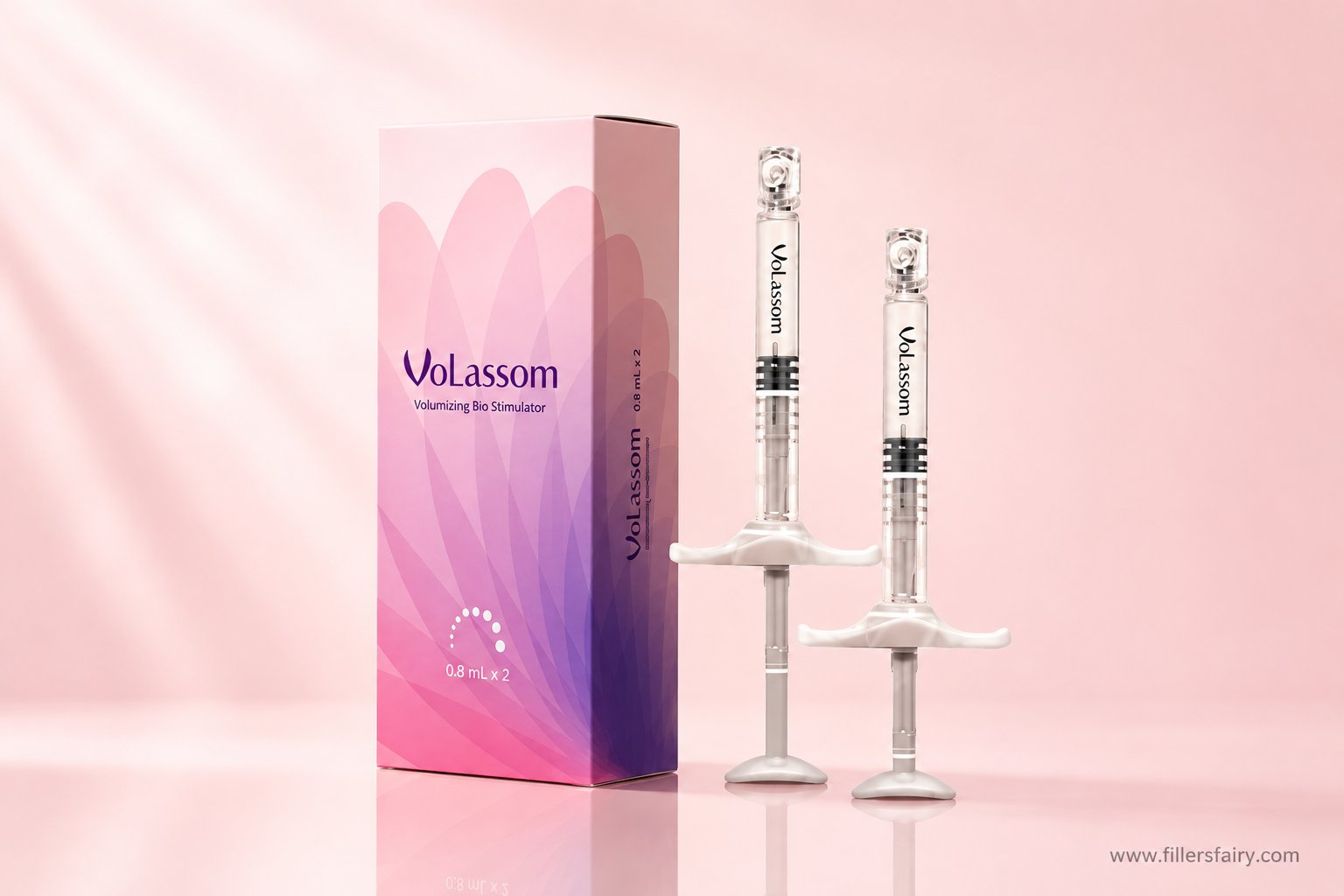
Volassom is a calcium hydroxyapatite (CaHA) collagen-stimulating injectable manufactured by CGBio Inc. (Seoul, South Korea). It contains 30% CaHA microspheres suspended in a 70% sodium carboxymethylcellulose (CMC) gel carrier, packaged as 0.8 mL × 2 sterile syringes. Volassom delivers both immediate volume correction and long-term collagen stimulation lasting 18–24 months. The product is MFDS approved (Korea), backed by 24 patents in Korea and the U.S., and has been clinically studied at Seoul National University Hospital and Asan Medical Center. Note: despite being frequently searched as a “skin booster,” Volassom is technically a CaHA biostimulator — a fundamentally different product category from PN/PDRN/HA skin boosters.
Volassom Is Not a Skin Booster — Here’s Why That Matters
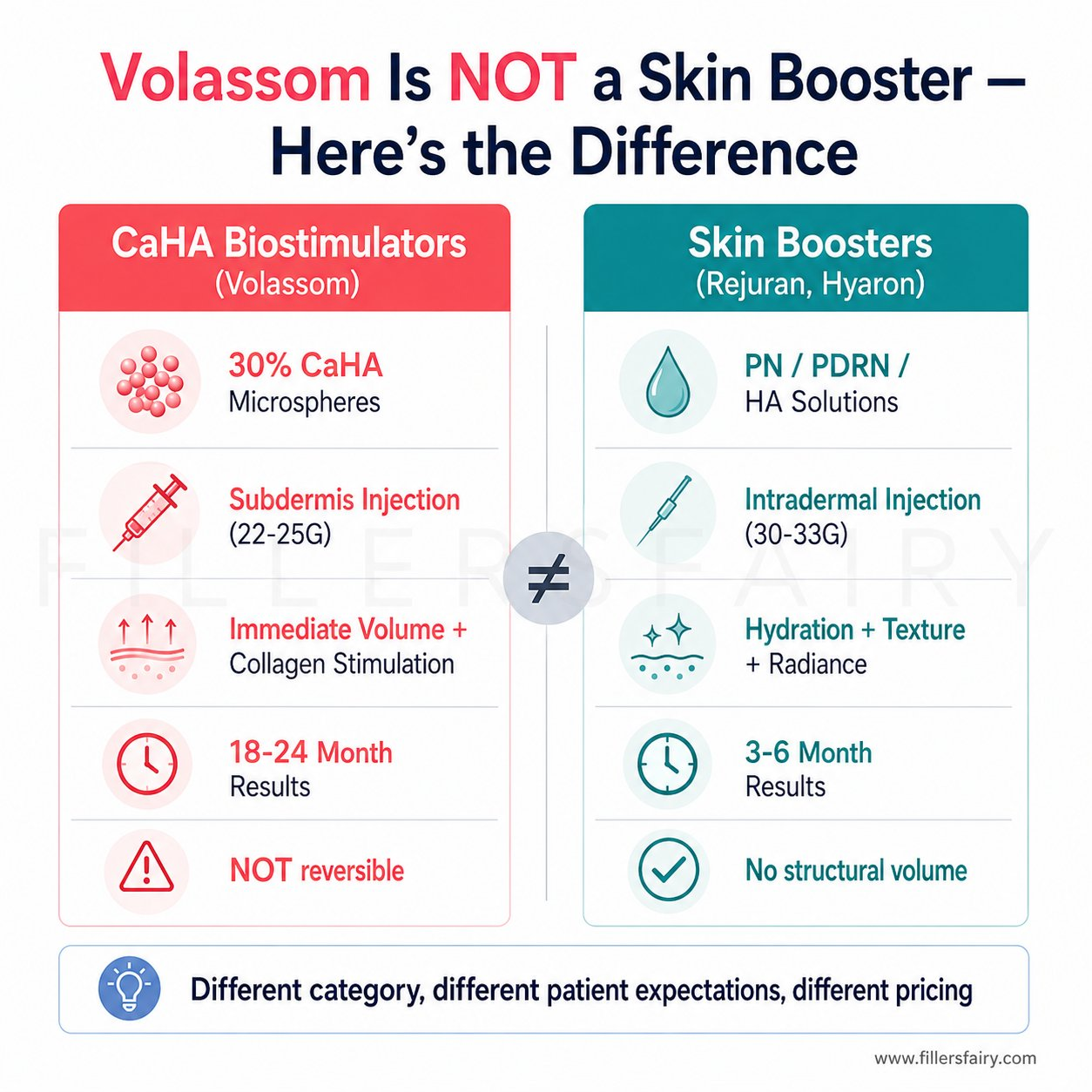
If you arrived here searching for “Volassom skin booster,” you’re not alone — it’s one of the most common search terms for this product. But understanding the correct product category is critical for practitioners making purchasing and treatment decisions:
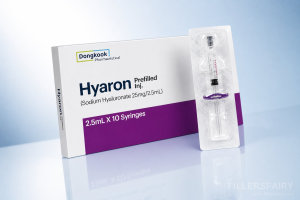
Skin boosters (like Rejuran, Hyaron, or Curenex Glow) are typically low-viscosity PN, PDRN, or non-crosslinked HA solutions injected superficially into the dermis to improve skin quality — hydration, texture, radiance — without adding structural volume.
CaHA biostimulators (like Volassom or Radiesse) are high-viscosity scaffolding materials injected into the subdermis. They provide immediate volume AND trigger a sustained collagen remodeling response around the microspheres as they gradually biodegrade. The result is structural correction — lifted contours, restored volume, reduced deep folds — not just skin quality improvement.
This distinction matters for how you position Volassom in your treatment menu, what patient expectations to set, and how you price the service. Volassom competes with other CaHA and biostimulating fillers, not with PN/PDRN skin boosters.
Why Clinics Choose Volassom
Korean-developed CaHA alternative. Volassom provides a Korean-manufactured alternative to Western CaHA products. It draws on CGBio’s 30+ years of hydroxyapatite research — the same Apatite technology platform behind Bongros, their FDA-approved bone graft material. This deep materials science heritage translates into a product with well-characterized microsphere properties and manufacturing consistency.
Lattice-pore microsphere architecture. Volassom’s CaHA microspheres feature a proprietary lattice-pore internal structure — smooth, round particles with a network-like pattern inside. This design provides three advantages: uniform particle size for smoother injection feel, gradual biodegradation without sudden structural loss, and a larger surface area for collagen scaffolding. The result is more predictable, even collagen integration compared to standard solid CaHA microspheres.
Dual function in a single session. Volassom delivers immediate volume correction (from the gel carrier) plus long-term collagen stimulation (from the CaHA microspheres) — a 18–24 month effect from a single treatment series. For clinic economics, this means fewer required sessions for longer-lasting results, supporting a premium price point and higher patient lifetime value.
Comprehensive clinical backing. Volassom has been clinically studied at two of Korea’s most respected institutions — Seoul National University Hospital and Asan Medical Center. A peer-reviewed study published in the Journal of Cosmetic Dermatology (Hong & Park, 2025) evaluated both volumizing and skin-quality outcomes over 24 weeks, confirming dual efficacy. For clinics ordering through authorized Korean aesthetic product suppliers, this institutional-grade evidence supports confident patient consultations.
How CaHA Collagen Stimulation Works
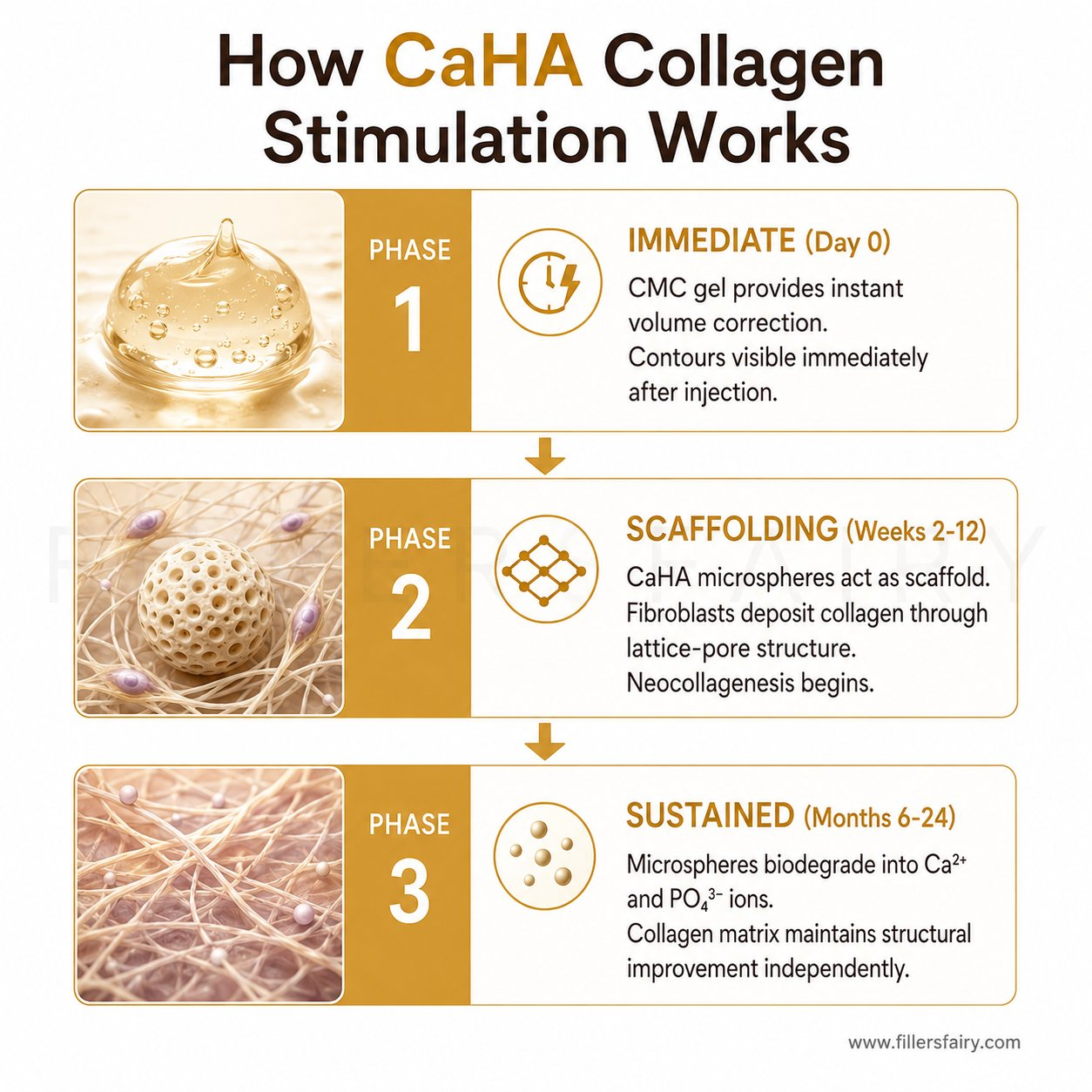
Calcium hydroxyapatite (CaHA) is a mineral that occurs naturally in human bones and teeth. When formulated into injectable microspheres, it acts as both a space-filling material and a biological scaffold for new collagen growth.
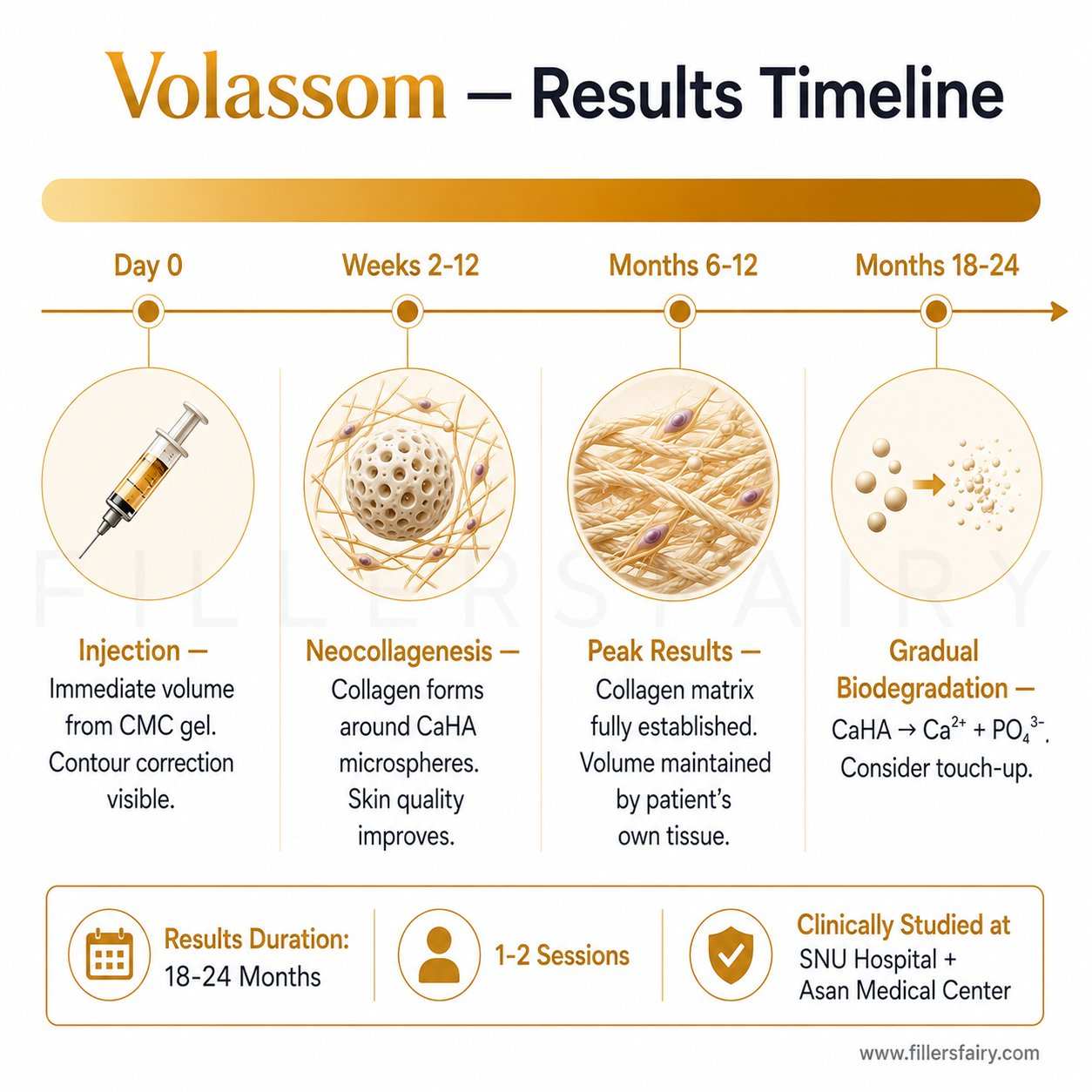
Phase 1: Immediate Volume (Day 0)
Upon injection, the CMC gel carrier provides instant volumization and contour correction. The gel fills the targeted space — nasolabial folds, midface hollows, jawline, or other treatment areas — giving the patient an immediate visible result.
Phase 2: Collagen Scaffolding (Weeks 2–12)
As the CMC gel carrier gradually absorbs, the CaHA microspheres remain in place and act as a scaffold. Fibroblasts migrate to the microsphere surfaces and begin depositing new type I and type III collagen around and through the lattice-pore structure. This neocollagenesis creates a natural collagen matrix that replaces the temporary gel volume with the patient’s own tissue.
Phase 3: Biodegradation + Sustained Results (Months 6–24)
The CaHA microspheres slowly biodegrade into calcium and phosphate ions — both naturally occurring in the body — which are safely metabolized. By this point, the collagen matrix that was built around the microspheres maintains the structural improvement independently. Results typically last 18–24 months from the initial treatment.
CaHA vs HA Fillers: When to Choose Which
Both CaHA (Volassom) and crosslinked HA fillers (Elasty, Juvederm) provide volume, but through different mechanisms:
- CaHA (Volassom): Volume + long-term collagen stimulation. Best for midface contouring, jawline definition, and patients who want fewer treatments with longer-lasting results (18–24 months). Not reversible with hyaluronidase.
- HA fillers: Volume + immediate hydration. Best for lips, tear troughs, and areas requiring fine detail. Shorter duration (6–12 months for most products). Reversible with hyaluronidase.
Many clinics stock both categories and select based on treatment area, patient goals, and desired longevity.
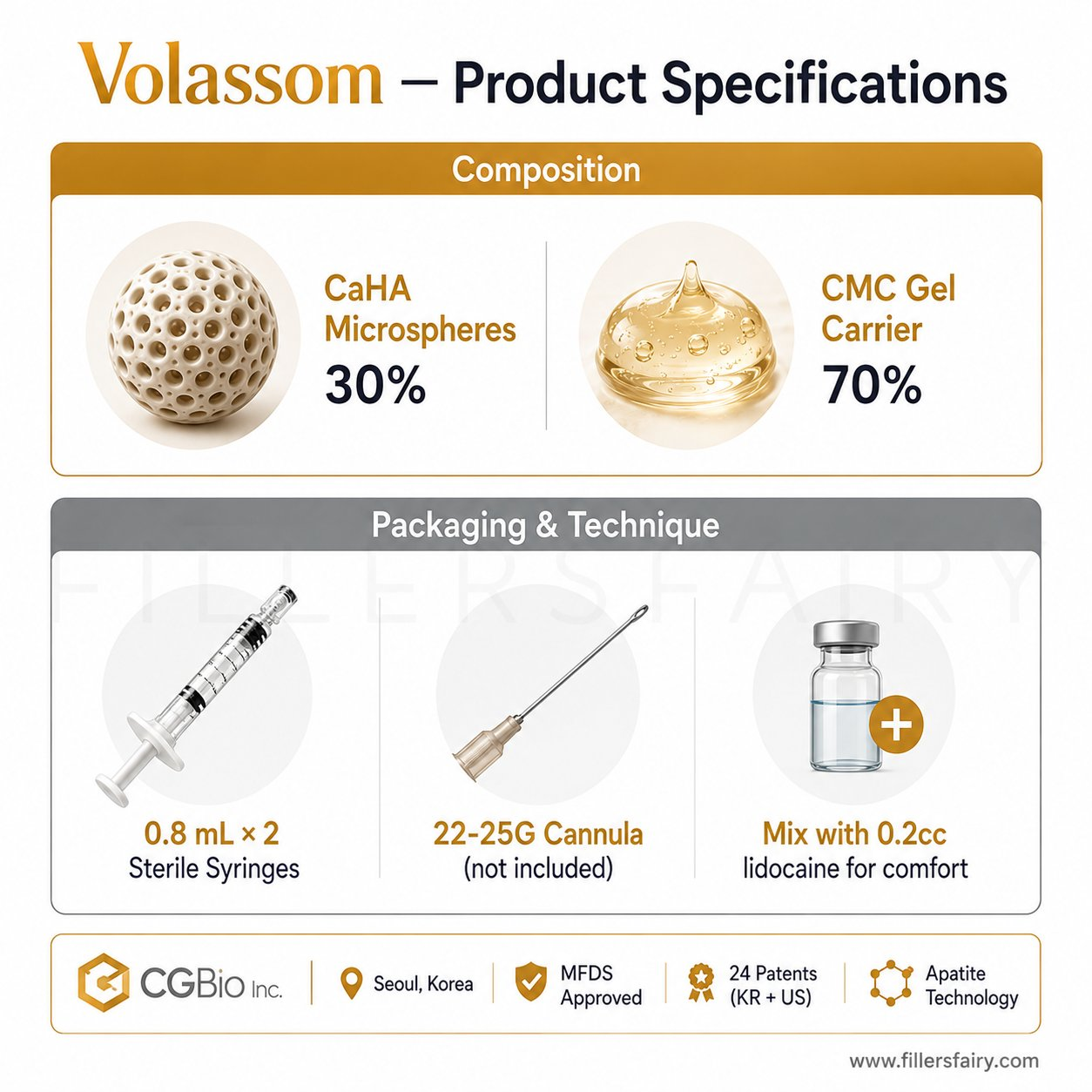
Full Composition & Specifications
| Parameter | Specification |
|---|---|
| Product Name | Volassom Calcium Injectable Implant |
| Active Component | Calcium Hydroxyapatite (CaHA) microspheres — 30% |
| Carrier | Sodium Carboxymethylcellulose (CMC) gel — 70% (CMC, glycerin, water) |
| Microsphere Design | Lattice-pore structure — smooth, round, uniform particle size |
| Packaging | 0.8 mL × 2 sterile syringes per box |
| Injection Cannula | Sterile 22–25G cannula recommended (not included) |
| Lidocaine | Not included — can be mixed pre-injection (0.2cc 2% lidocaine + 0.8cc Volassom) |
| Results Duration | 18–24 months |
| Origin | Fully synthetic — no animal-based ingredients |
| Manufacturer | CGBio Inc., Seoul, South Korea |
| Regulatory | MFDS approved (Korea), 24 patents (Korea + U.S.) |
| Technology Platform | Apatite technology — shared with Bongros (FDA-approved bone graft) |
Clinical Evidence
Volassom’s clinical program includes studies at two of Korea’s top teaching hospitals:
A prospective study published in the Journal of Cosmetic Dermatology (Hong & Park, 2025) evaluated 15 participants with moderate midface volume deficiency (MFVDS grade ≥ 3) who received undiluted CaHA injection. Assessments were conducted at baseline and at 2, 4, and 24 weeks using the Midface Volume Deficiency Scale (MFVDS), Global Aesthetic Improvement Scale (GAIS), and objective skin quality parameters. The study confirmed dual benefits — both volume restoration and measurable improvements in skin barrier function, hydration, and elasticity over 24 weeks.
This research was supported by the Korea Ministry of Trade, Industry & Energy and represents one of the first prospective studies to comprehensively assess the integrated effects of subdermally injected CaHA on both volume and skin quality over a 24-week period.
Recommended Treatment Protocol
Injection Technique
Volassom is injected into the subdermis using a 22–25G cannula at approximately a 30° angle (bevel down). The product is administered in linear threads while withdrawing the cannula, with slow and even pressure. Post-injection, gentle massage ensures even distribution of the microspheres.
Lidocaine Mixing
Volassom does not contain lidocaine. For patient comfort, mix 0.2cc of 2% lidocaine with 0.8cc Volassom using a sterile luer-lock connector, alternating plungers for 10 strokes until homogeneous.
Treatment Areas
Common treatment zones include nasolabial folds, midface volume restoration (zygomaticomalar, anteromedial cheek, submalar), jawline definition, marionette lines, and hand rejuvenation. Volassom is contraindicated in the lips and periorbital region.
Session Cadence
Most patients achieve desired results in 1–2 sessions. Results last 18–24 months due to the collagen stimulation effect. Touch-up treatments may be needed based on the degree of volume loss and individual patient metabolism.
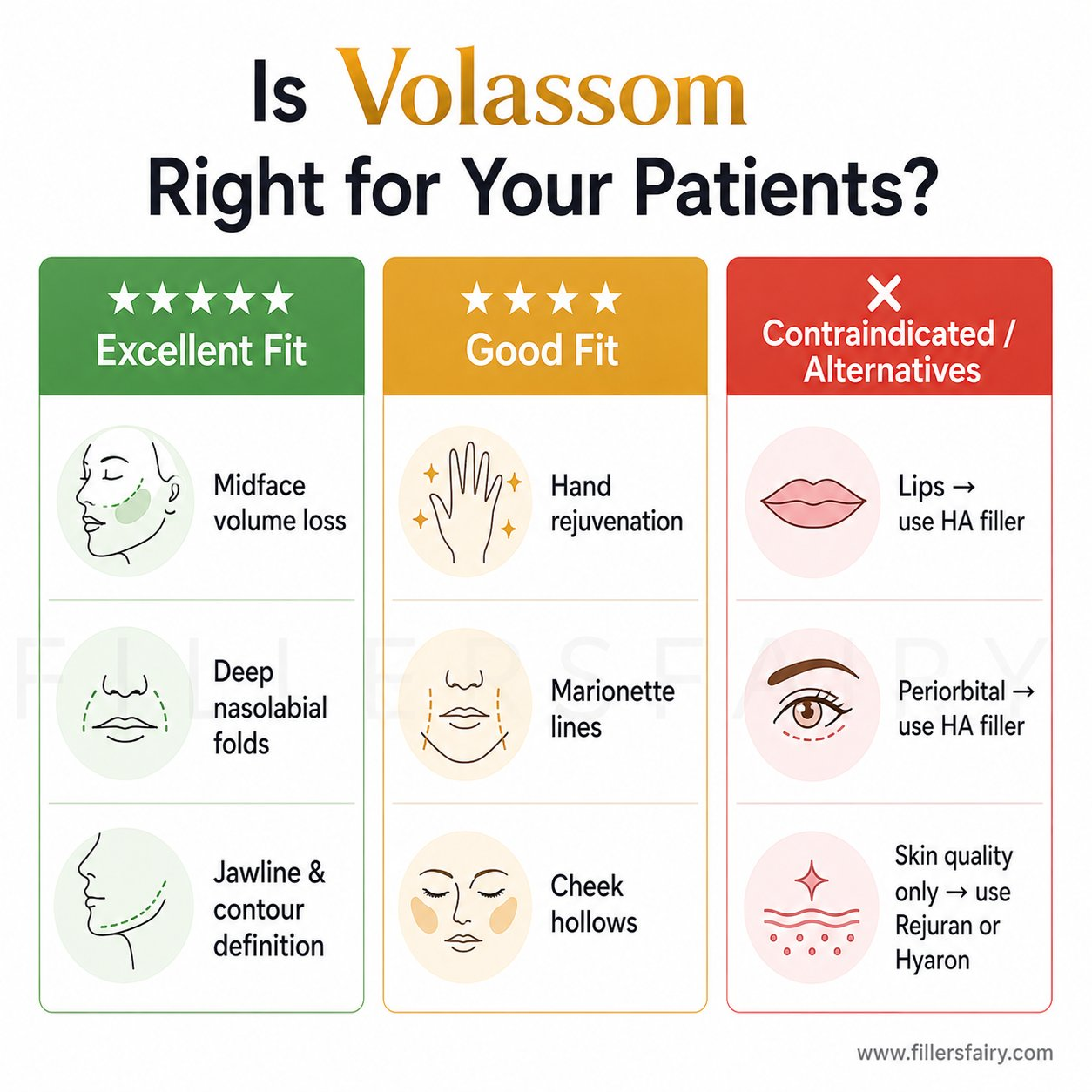
Patient Suitability Matrix
| Patient Concern | Volassom Fit | Clinical Notes |
|---|---|---|
| Midface volume loss | ★★★★★ | Primary indication — clinically studied for MFVDS grade ≥ 3 |
| Deep nasolabial folds | ★★★★★ | High-viscosity CaHA fills deep folds + stimulates collagen for sustained correction |
| Jawline & contour definition | ★★★★★ | Structural scaffolding effect — ideal for creating definition |
| Hand rejuvenation | ★★★★☆ | CaHA restores dorsal hand volume and reduces visible tendons/veins |
| Skin quality only (no volume) | ★★☆☆☆ | Published data shows skin quality improvement, but use Rejuran or Hyaron for skin-only goals |
| Lips or periorbital | ✗ | Contraindicated — use HA fillers for these areas |
Recovery Timeline
| Timeframe | Expected Response |
|---|---|
| 0–48 hours | Immediate volume correction visible. Possible swelling, mild bruising at injection points. Cold compresses recommended. |
| 1–2 weeks | Swelling resolves. Initial gel carrier effect stabilizes. Volume settles to final position. |
| 4–12 weeks | Neocollagenesis begins. Collagen forms around CaHA microspheres. Skin quality improvements measurable. |
| 6–24 months | CaHA microspheres gradually biodegrade. New collagen matrix maintains structural improvement. Results last 18–24 months. |
Downtime: Moderate — more than skin boosters, less than surgical procedures. Expect 2–5 days of swelling and potential bruising. CaHA is biocompatible and fully synthetic (no animal-derived components), so allergic reactions are rare.
Frequently Asked Questions
Is Volassom a skin booster?
No. Despite being frequently searched as a “skin booster,” Volassom is a CaHA (calcium hydroxyapatite) collagen-stimulating injectable — a different product category. Skin boosters (Rejuran, Hyaron, Curenex Glow) are low-viscosity solutions for superficial dermal hydration and texture improvement. Volassom is a high-viscosity subdermal implant that provides volume correction and stimulates structural collagen remodeling over 18–24 months.
Who manufactures Volassom?
CGBio Inc. — a Seoul-based Korean biotech company with over 30 years of hydroxyapatite research. CGBio also developed Bongros, an FDA-approved bone graft material using the same Apatite technology platform. Volassom is backed by 24 patents in Korea and the U.S.
How does Volassom compare to Radiesse?
Both Volassom and Radiesse are CaHA-based injectables that provide volume + collagen stimulation. Volassom uses CGBio’s proprietary lattice-pore microsphere structure for more uniform biodegradation, while Radiesse uses solid CaHA microspheres. Both products last 18–24 months and are not reversible with hyaluronidase. Volassom offers a Korean-manufactured alternative with competitive wholesale pricing.
Can Volassom be dissolved if results are unsatisfactory?
No. Unlike HA fillers that can be dissolved with hyaluronidase, CaHA products cannot be enzymatically reversed. They biodegrade naturally over 18–24 months. This is why accurate injection technique and conservative treatment planning are critical with CaHA products.
Where can clinics purchase Volassom wholesale?
Volassom is available through authorized Korean aesthetic product distributors that source from CGBio Inc. The 2-syringe box format (0.8 mL each) is designed for professional use, with volume pricing available for multi-box orders.
Related Guides for Practitioners
- Elasty D Plus Filler — Korean crosslinked HA filler for volume
- What Is Rejuran? — PN skin booster for skin quality (different category)
- What Is Hyaron? — Non-crosslinked HA skin booster
- What Is Curenex Glow? — PDRN + multi-peptide skin booster