Quick Answer
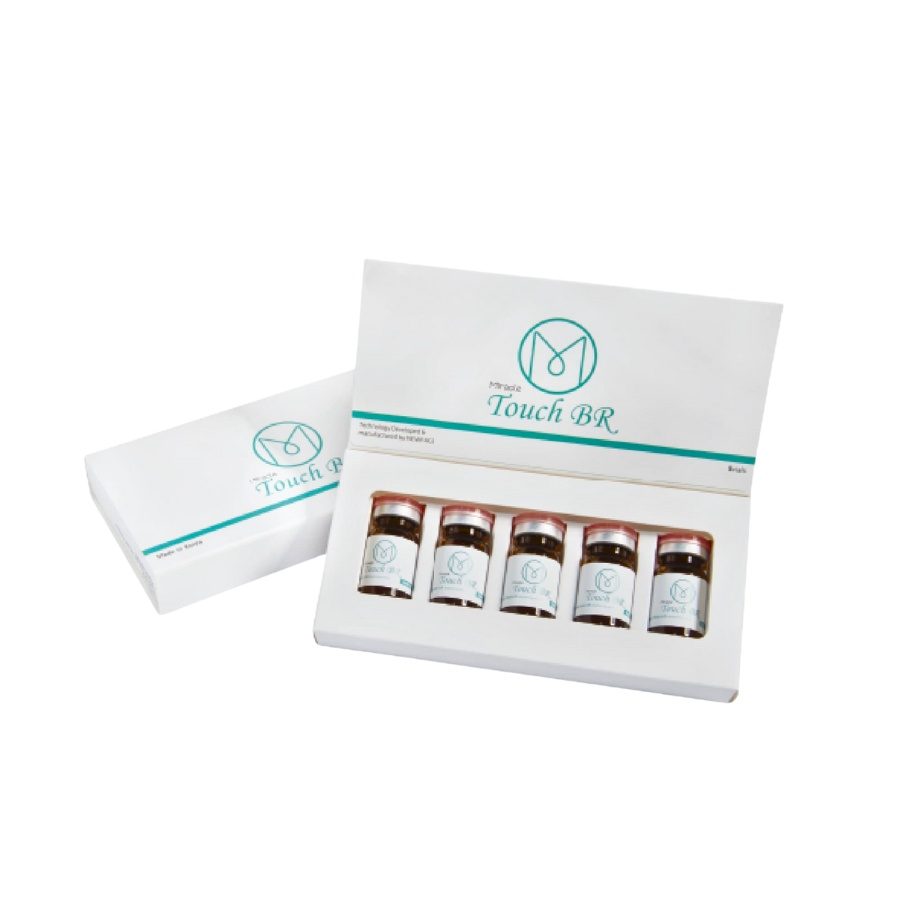
Miracle Touch BR is Dexrevo's brightening mesotherapy concentrate, supplied as 5 × 5 mL vials. The formulation combines the XT80 whitening complex with peptides, HA, vitamin C, and niacinamide — addressing melanin synthesis inhibition, antioxidant protection, and barrier support in a single cocktail. Standard course is 4–6 sessions at 2–3 week intervals, with effect duration up to ~12 months reported.
Why This Skinbooster Is Different
Miracle Touch BR's formulation pairs XT80 (a proprietary whitening complex with multi-target action) with the gold-standard topical brighteners — vitamin C (antioxidant + tyrosinase inhibition) and niacinamide (melanosome transfer regulation) — alongside peptides and HA for skin quality. The combination targets both the pigment pathway and the underlying skin quality that contributes to dull complexion.
Mechanism of Action
Multi-pathway brightening cocktail (melanin synthesis + antioxidant + peptide). Multi-target intervention on melanin biology: upstream signalling (α-MSH, endothelin) suppression, tyrosinase enzyme inhibition (rate-limiting step in melanin synthesis), melanosome maturation modulation, and melanosome-to-keratinocyte transfer regulation. Combined with the photoprotection regimen, established pigment is reduced and new pigment formation is limited.
Frequently Asked Questions
What is the XT80 Whitening Complex?
XT80 is Dexrevo's proprietary whitening complex used in Miracle Touch BR. The complex targets melanin synthesis through multiple pathways — tyrosinase inhibition, melanosome modulation, and antioxidant action. Full ingredient composition is proprietary to the manufacturer; the clinical effect is observed reduction in skin pigmentation over the treatment course.
How does it compare to Puri Heal Lucent?
Both are brightening mesotherapy products with similar indications (freckles, age spots, PIH, dull tone). Miracle Touch BR uses the XT80 complex with vitamin C, niacinamide, and peptides. Puri Heal Lucent uses a 4-stage melanin-pathway architecture. Both produce similar clinical outcomes; selection is at practitioner preference. Some protocols alternate the two.
Is sun protection critical during the course?
Yes — absolutely. All brightening interventions reduce existing pigment but do not prevent new UV-induced pigment production. Without strict daily SPF 50+ and broad-spectrum coverage, gains from the mesotherapy course will be undermined. Photoprotection compliance is a prerequisite for outcome.
Can it be used on melasma?
Melasma is multifactorial and notoriously difficult to treat. Miracle Touch BR can be a useful adjunct alongside strict photoprotection and prescribed topical brighteners (hydroquinone, tranexamic acid). It is not a stand-alone melasma cure. Patient counselling on melasma's chronic, relapsing nature is essential.
How is it different from Miracle Touch Up?
Touch Up is a PCL biostimulator — its mechanism is collagen induction through PCL microsphere placement, addressing skin laxity and firmness. Touch BR is a brightening mesotherapy — its mechanism is melanin synthesis inhibition, addressing pigmentation and tone. They serve different objectives and are sometimes used together in comprehensive Dexrevo Miracle-series protocols.
How many sessions before pigmentation visibly improves?
Initial brightening of overall complexion is typically reported by week 2–3. Visible reduction in established pigment spots takes longer — observable improvement from session 3, with the full benefit at 12–16 weeks after the final session. Patients with melasma may require longer courses.
Can it be combined with topical brighteners?
Yes — and indeed combination is the standard approach. Topicals (hydroquinone, tranexamic acid, kojic acid, retinoids) act daily; the mesotherapy provides intermittent dermal-delivery enhancement. The combined regimen produces stronger and more sustained brightening than either alone.
Can it be combined with laser pigment treatments?
Yes. Most protocols use Miracle Touch BR in the period after Q-switched, pico, or fractional laser pigment treatment to suppress rebound pigmentation. Avoid same-day mesotherapy immediately before laser if practitioner's protocol indicates separation. Sequencing is at practitioner discretion.
Are there contraindications?
Standard mesotherapy contraindications: active infection at the treatment site, severe coagulopathy, hypersensitivity to components (including vitamin C, niacinamide, peptides), pregnancy and lactation (precautionary). Patients with known photosensitivity disorders should be evaluated case-by-case.
Are there sex/gender-specific considerations?
No — Miracle Touch BR is appropriate for both male and female patients. Male patients with photo-induced uneven tone, post-acne pigmentation, or melasma benefit equally. Photoprotection counselling applies regardless of patient gender.





Reviews
There are no reviews yet.