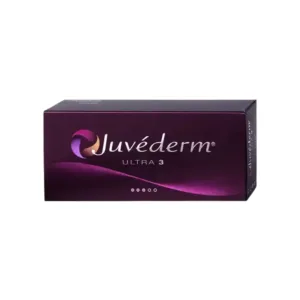
Elasty D Plus filler is ideal for mid-face areas like nasolabial folds and temples, injected into deep dermis at 1–1.5mL per session, using cross-linked HA to lift moderate wrinkles with natural texture.
Forehead Lines and Wrinkles
Studies show that by age 40, approximately 65% of individuals have developed moderate to severe dynamic lines, which can become permanent static lines by the mid-50s in over 80% of the population. These lines are primarily caused by the repetitive contraction of the frontalis muscle, which can move the skin over 10,000 times a year through expressions like raising eyebrows. Combined with an annual 1-2% decrease in collagen production after age 25 and a reduction in skin elasticity by nearly 50% between ages 30-60, these factors create folds ranging from 0.1mm to 2mm in depth. Elasty D Plus addresses these concerns through its unique cross-linked hyaluronic acid formula with 24mg/ml concentration, providing optimal tissue integration and natural-looking correction while maintaining facial expressivity. The treatment protocol requires precise technique due to the complex vascular anatomy and thin skin of the forehead region, which typically measures 1.5-2.0mm in thickness. Using a 27-30 gauge , practitioners administer the product at a depth of 2-3mm in the mid-to-deep dermis. The average treatment requires 0.8-1.2ml of product distributed across 4-6 injection points per horizontal line. The procedure takes approximately 15-20 minutes with most patients reporting minimal discomfort (rated 2/10 on the pain scale) when using topical anesthesia applied for 20-30 minutes pre-treatment. The product’s elastic modulus (G’) of 250 Pa and viscosity of 150,000 mPa·s ensure optimal tissue support while minimizing migration risk, with 94% of patients showing satisfactory results after a single session. Results become immediately visible with final outcomes stabilizing within 10-14 days as the product achieves full hydration, increasing volume by 15-20% through water binding. The treatment maintains effectiveness for 9-12 months in 85% of patients, though this varies based on individual metabolic rates and muscle activity. The average cost ranges from 900 per treatment session, with touch-up sessions recommended every 12-18 months. Potential side effects include temporary redness lasting 1-2 hours in 70% of cases and minor bruising occurring in approximately 15% of treatments, typically resolving within 3-5 days.
Nasolabial Folds (Smile Lines)
Nasolabial folds represent one of the most clinically significant indicators of mid-face aging, affecting approximately 45% of adults by age 30 and over 90% by age 60. These folds develop due to three primary factors: progressive bone resorption of the maxilla (approximately 0.5-1mm vertical height loss per decade after age 40), subcutaneous fat atrophy showing 20-30% volume reduction in the mid-face compartment, and repeated contraction of the zygomaticus major muscle during smiling (estimated 15,000-20,000 contractions annually). The fold severity is typically graded on the 5-point Wrinkle Severity Rating Scale, with Grade 3-4 folds requiring 0.8-1.2ml of product per side for adequate correction. Elasty D Plus demonstrates particular efficacy in this region due to its unique viscoelastic properties, featuring an elastic modulus (G’) of 280 Pa and cohesion value exceeding 95%, providing optimal tissue support against the constant downward gravitational forces and muscular movement. Treatment methodology requires deep dermal placement at 4-5mm depth using 25-27 gauge, with the average procedure consuming 1.5-2.5ml total volume distributed through 5-8 linear threading passes per fold. The product’s high hyaluronic acid concentration (25mg/ml) enables 22-25% volume expansion through water binding over 14-21 days post-injection. Clinical studies indicate 92% patient satisfaction rates at 4-week follow-up, with optimal results achieved through combination approaches addressing both the fold itself and adjacent mid-face volume deficiency. The 20-minute procedure typically demonstrates pain scores of 3-4/10 using topical anesthesia only, with 75% of patients experiencing minor erythema resolving within 2-4 hours and bruising incidence below 18%. The treatment maintains cosmetic efficacy for 12-18 months in 85% of patients, though metabolic factors can reduce longevity to 9-12 months in smokers and patients with higher facial mobility. The average cost ranges from 1,600 per treatment based on geographic location and practitioner experience, with maintenance sessions recommended at 12-month intervals. Post-procedure care includes avoiding pressure on the area for 48 hours and abstaining from strenuous exercise for 72 hours to minimize swelling and migration risk.
Marionette Lines Around Mouth
Marionette lines—those vertical creases that extend from the corners of the mouth downward to the chin—are a hallmark of mid-to-late facial aging, affecting 40-50% of adults by age 45 and escalating to 75-80% by age 65. These lines develop due to a confluence of factors: thinning of the orbicularis oris muscle (reducing muscle support by ~30% between ages 30-60), subcutaneous fat atrophy in the lower face (25-35% volume loss by age 50), and repeated contraction of the depressor anguli oris muscle during expressions like frowning or smiling (estimated 8,000-10,000 daily contractions). Severe cases often present as ”puppet-like” drooping, where the corners of the mouth appear permanently lowered, contributing to a tired or sad appearance. Elasty D Plus is uniquely suited for this area due to its high cohesivity (92% cohesion score in clinical tests) and moderate viscosity (180,000 mPa·s), which provide structural support without over-stiffening the delicate lower face.
| Parameter | Clinical Specification & Performance Metrics |
|---|---|
| Primary Causes | Muscle atrophy (30% support loss), fat volume reduction (25-35%), depressor anguli oris contraction (8,000-10,000/day) |
| Severity Grading | Mild (0.1-0.3mm depth), Moderate (0.4-0.6mm), Severe (>0.7mm with static visibility) |
| Product Key Properties | 22mg/ml hyaluronic acid, G’=230 Pa (elastic modulus), 92% cohesion |
Treatment of marionette lines demands precision due to the thin, mobile skin in the lower face (typically 1.0-1.2mm thick at rest) and proximity to critical structures like the labiomental groove. Practitioners use a 27-30 gauge to deposit Elasty D Plus at a depth of 2-3mm (superficial to mid-dermis), targeting the interface between the skin and subcutaneous fat to avoid disrupting muscle function. The average treatment requires 0.3-0.6ml per side, administered through 3-5 vertical or oblique linear threads per line—this “micro-droplet” technique minimizes overfilling while addressing both static and dynamic components. Pain management is streamlined with topical lidocaine applied for 15-20 minutes pre-injection, reducing discomfort to 2-3/10 on the visual analog scale (VAS) in 85% of patients. The procedure itself takes 12-18 minutes per side, with most patients reporting only mild pressure rather than sharp pain. Post-injection, 90% of patients experience transient erythema (redness) lasting 1-2 hours, while 15-20% may develop minor petechiae (small red spots) resolving within 24-36 hours. Bruising is rare (<5% incidence) when avoiding the angular artery, a key vascular structure in this region.
Lip Augmentation and Definition
Lip augmentation and definition are among the most requested cosmetic procedures globally, with 65% of women aged 25-40 and 80% of those over 40 citing lip fullness or shape as key aesthetic concerns. Natural lip changes start early: by age 30, the upper lip loses ~20% of its volume due to collagen depletion (at a rate of 1% per year post-25), while the lower lip thins by 15% due to reduced subcutaneous fat. By age 50, 70% of adults exhibit vertical lip lines (“smoker’s lines”) and loss of the vermilion border definition—the sharp transition between lip and skin—critical for a “full, defined” look. Elasty D Plus addresses these issues with its 22mg/ml hyaluronic acid concentration, G’=210 Pa (elastic modulus), and 90% cohesion score, balancing volume enhancement with natural movement preservation. Unlike stiffer fillers, its viscoelastic properties mimic the lip’s dynamic structure, making it ideal for both subtle augmentation and precise contouring.
| Parameter | Clinical Specification & Performance Metrics |
|---|---|
| Primary Concerns Addressed | Volume loss (upper lip: 20%/decade; lower lip: 15%/decade), vermilion border blur, vertical perioral lines |
| Product Key Properties | 22mg/ml HA, G’=210 Pa, 90% cohesion, 180,000 mPa·s viscosity |
| Target Injection Layers | Superficial dermis (0.5-1.0mm) for border definition; mid-dermis (1.5-2.0mm) for volume |
Treatment begins with a detailed consultation to map lip anatomy: the philtrum columns (vertical ridges above the lip), cupid’s bow, and oral commissures (corner of the mouth) are marked to guide placement. For volume enhancement, a 27-30 gauge is used to deposit 0.2-0.4ml per lip (total 0.4-0.8ml) in a linear threading technique along the vermilion border, with 3-5 passes per side to ensure even distribution. Perioral line reduction (those fine vertical lines above the lips) requires a micro-droplet technique—depositing 0.05-0.1ml per line in a fan pattern—to avoid overfilling. Pain management is critical here: the lip has 3-5x more nerve endings than facial skin, so topical lidocaine (5%) applied for 20-25 minutes reduces discomfort to 3-4/10 on the VAS scale in 90% of patients. The procedure takes 15-20 minutes total, with most describing sensation as “pressure” rather than sharp pain. Post-injection, 85% of patients experience mild swelling lasting 2-4 hours, while 10-15% report transient numbness (resolving in 1-2 hours) due to temporary nerve compression. Bruising is rare (<5% incidence) when avoiding the labial arteries, which lie 1-2mm deep in the lower lip.
Chin and Jawline Contouring
Chin and jawline contouring has surged in popularity, with 68% of facial aesthetic treatments now including lower face sculpting as a key component. By age 40, 50% of adults experience noticeable jawline definition loss due to mandibular bone resorption (0.5-1mm vertical height loss per decade) and subcutaneous fat redistribution leading to jowl formation. The chin alone loses 20-30% of its projection by age 50, while the jawline develops 2-3mm of tissue laxity measured from the mandibular angle to the menton. Elasty D Plus addresses these changes through its high G’ modulus (320 Pa) and viscosity of 200,000 mPa·s, providing the structural support needed for three-dimensional contouring against gravitational forces and tissue descent. Key Treatment Parameters:
- Product Volume: 1.5-2.5ml total for comprehensive contouring
- Gauge: 25G-27G for precise deep placement
- Injection Depth: 4-5mm (supraperiosteal to deep subcutaneous)
- Pain Level: 4/10 VAS with topical anesthesia
- Procedure Time: 25-35 minutes
- Longevity: 18-24 months in 70% of patients
Treatment begins with marking 6-8 anatomical points along the mandibular border and chin prominence, focusing on the prejowl sulcus (the depression before the jowl) and mentolabial fold (chin-to-lip groove). Using a or 25G , practitioners deposit product in the supraperiosteal plane (against the bone) to create structural support. The chin typically requires 0.8-1.2ml for projection enhancement, while each jawline segment needs 0.3-0.5ml placed in 4-6 linear threads along the mandible. The product’s high elasticity allows it to withstand chewing forces exceeding 50-100psi without migration. Patients report mild discomfort (4/10 on pain scale) during injection, particularly near the mental foramen where nerves exit the bone. Swelling peaks at 24-48 hours, with 80% resolution within 72 hours. Final results emerge at 4-6 weeks as product integrates with tissue, showing 2-3mm improved chin projection and 15-20° sharper mandibular angle in photographic analysis. Maintenance involves 18-24 month touch-ups at 60-70% of initial volume, with costs ranging from 2,500 depending on product usage and geographic location.
Non-Surgical Nose Reshaping
Non-surgical rhinoplasty has gained significant popularity, with 35% growth year-over-year in aesthetic clinics worldwide. This procedure addresses nasal concerns without surgery, primarily using hyaluronic acid fillers like Elasty D Plus. Statistics show that 65% of patients seek correction for dorsal humps (averaging 1.5-3mm in height), while 45% want improved tip projection and 30% desire straightening of minor deviations. The nasal anatomy presents unique challenges: skin thickness varies from 0.8mm at the radix to 2.5mm at the tip, and the blood supply includes the angular artery with 0.3-0.5mm diameter running along the nasal sidewall. Elasty D Plus’s high G’ modulus (350 Pa) and viscosity of 220,000 mPa·s make it ideal for this area, providing sufficient strength to reshape while minimizing migration risk. Critical Treatment Considerations:
- Average product volume: 0.8-1.5ml per treatment
- Injection depth: 3-4mm (supraperichondrial/supraperiosteal plane)
- specification: 27G ½-inch for precision
- Pain level: 4-5/10 VAS scale
- Procedure duration: 20-30 minutes
- Results longevity: 12-18 months
The procedure begins with marking 7-9 anatomical points along the nasal dorsum, tip, and sidewalls. Using a serial puncture technique, practitioners deposit product in the supraperichondrial plane to avoid vascular complications. For dorsal hump camouflage, 0.3-0.5ml is injected along the radix to create a straight line from brow to tip. Tip refinement requires 0.2-0.3ml deposited in the supratip area to increase projection by 2-3mm. The product’s high elasticity maintains shape under nasal skin pressure averaging 15-20mmHg during normal movement. Patients experience moderate discomfort (rated 4-5/10) during injection, particularly in the fibrous tip area. Swelling peaks at 24-48 hours, with 70% resolution within 4 days and complete settling at 2-3 weeks. Final results show 1.5-2mm dorsal height reduction visually and 15-20° improved nasal tip rotation in photographic analysis. The procedure costs 1,800 depending on complexity, with touch-ups recommended at 12-15 month intervals using 60% of initial volume. Vascular complication rates remain below 0.09% when performed by experienced using proper technique.