What Is Laennec? Why Japanese Placenta Extract Remains the Gold Standard After 50 Years
Written by FillersFairy Editorial · Reviewed by FillersFairy Clinical Team · Last updated: June 23, 2026
Quick Answer
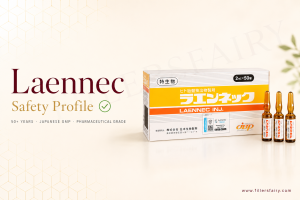
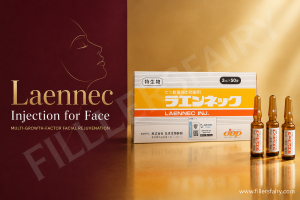
Laennec is a pharmaceutical-grade human placenta extract manufactured by Japan Bio Products Co., Ltd. (JBP) under Japanese GMP standards since 1970. Each 2 mL ampoule contains 112 mg of water-soluble human placenta hydrolysate — a complex of growth factors (HGF, EGF, FGF, IGF), cytokines, amino acids and peptides that support cellular regeneration. Originally developed for chronic liver disease, Laennec has been adopted globally by aesthetic practitioners for skin rejuvenation, anti-ageing therapy, fatigue recovery and overall wellness. With over 50 years of continuous manufacturing and a rigorous safety screening process, Laennec is the most established placenta preparation in clinical use worldwide.

What Makes Laennec Different from Other Placenta Products
The placenta extract market includes products from animal sources (porcine, equine) and varying manufacturing standards. Laennec occupies a distinct position for three reasons:
Human-origin. Laennec is derived from human placenta, not animal. This matters biologically — human growth factors have the highest compatibility with human tissue receptors. JBP also produces Laennec MD (porcine placenta) for markets where human-origin products face regulatory restrictions, but the flagship product remains human-derived.
Pharmaceutical classification. Laennec is classified as an ethical drug (prescription pharmaceutical) in Japan — not a supplement, not a cosmetic, not a medical device. This classification subjects it to the most rigorous manufacturing, quality control and safety surveillance requirements in the Japanese regulatory system.
50+ years of continuous production. JBP has manufactured Laennec since 1970. This track record means the product has an extensive post-market safety profile that newer placenta products simply cannot match. The manufacturing processes have been refined over decades, and the safety screening protocols have evolved with advances in virology and testing technology.
Composition and Growth Factor Profile
| Parameter | Specification |
|---|---|
| Manufacturer | Japan Bio Products Co., Ltd. (JBP), Tokyo, Japan. Established 1970. |
| Active Substance | 112 mg water-soluble human placenta hydrolysate per 2 mL ampoule |
| Growth Factors | HGF (hepatocyte growth factor), EGF (epidermal), FGF (fibroblast), IGF (insulin-like), NGF (nerve), CSF (colony-stimulating) |
| Other Components | Cytokines, 100+ amino acids, peptides, nucleic acids, enzymes, minerals |
| Product Classification | Ethical drug (prescription pharmaceutical) in Japan |
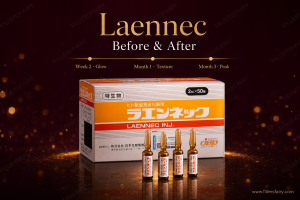
| Packaging | 2 mL ampoules, typically 10 ampoules per box |
| Market Versions | Japanese version and Korean version are both produced by JBP and are both genuine products. The Japanese version includes a scannable QR code on the packaging for product authentication; the Korean version does not carry this QR code feature. |
| Appearance | Light yellow liquid |
| Manufacturing Standard | Japanese GMP, with biological product safety screening |
Source: JBP official product information (jbpglobal.placenta.co.jp)
Important note from JBP: “The active ingredients of this agent cannot be identified as a single substance or group of substances.” Laennec’s therapeutic effect comes from the synergistic action of its entire biological complex — not from any single isolated ingredient. This is fundamentally different from single-molecule drugs and is what makes placenta extract unique as a therapeutic category.
How Laennec Works — Multi-Pathway Regeneration
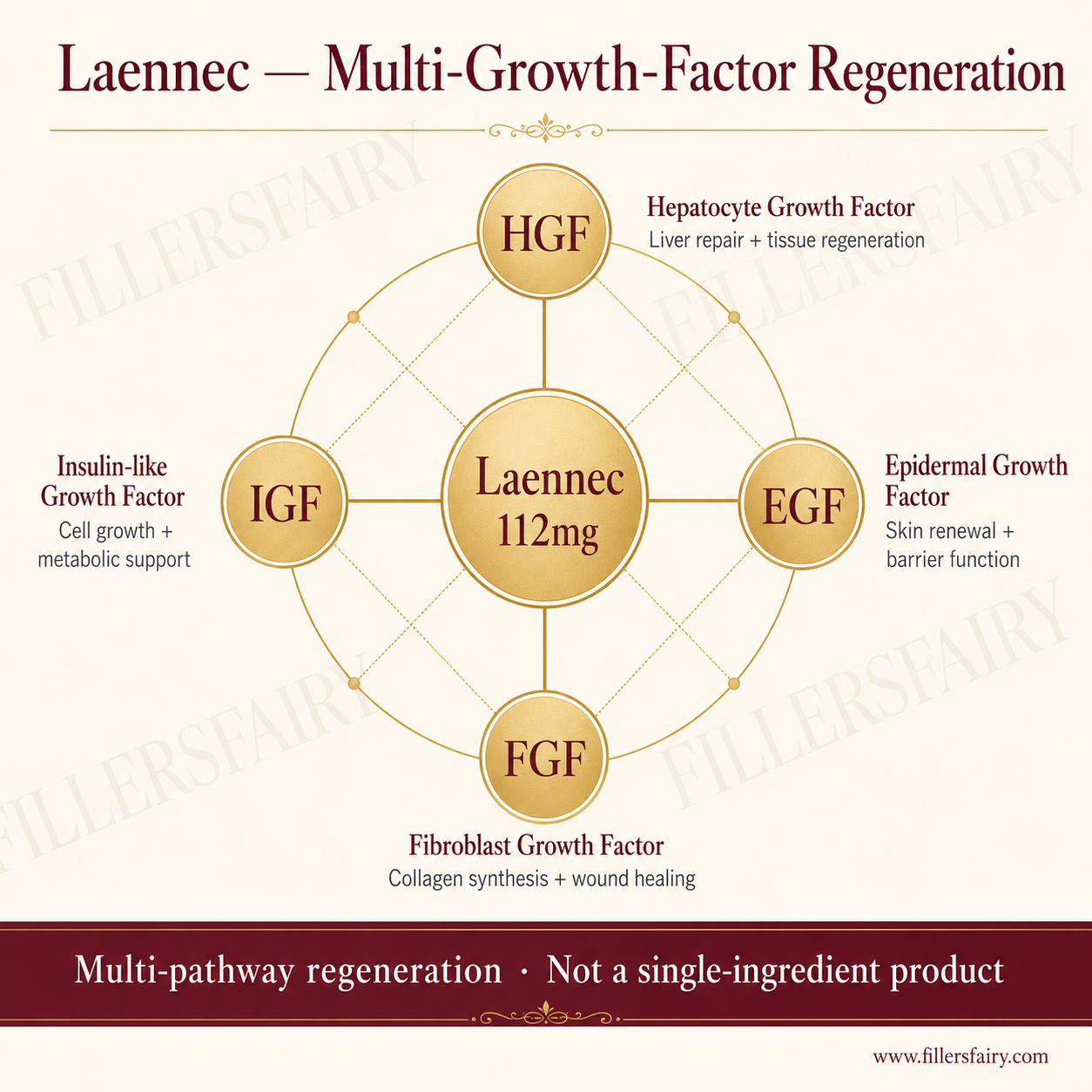
Unlike most aesthetic treatments that target a single biological pathway, Laennec delivers a complex of growth factors that simultaneously activate multiple regenerative mechanisms:
HGF (Hepatocyte Growth Factor): Originally identified for its role in liver cell proliferation, HGF also promotes wound healing, tissue repair and anti-fibrotic activity across multiple tissue types including skin.
EGF (Epidermal Growth Factor): Stimulates epidermal cell proliferation and differentiation. Supports skin renewal, wound healing and maintenance of skin barrier function.
FGF (Fibroblast Growth Factor): Activates fibroblast proliferation and collagen synthesis — the same biological pathway that PN skin boosters and PDLLA collagen stimulators target, but delivered as a native human growth factor rather than a synthetic stimulant.
IGF (Insulin-like Growth Factor): Supports cell growth, differentiation and survival. Plays a role in tissue repair and metabolic regulation.
The multi-pathway approach means Laennec addresses cellular health broadly rather than targeting a single aesthetic concern. Practitioners describe this as a “systemic wellness” treatment that produces aesthetic improvement as one of several benefits.
Clinical Applications in Aesthetic Medicine
While Laennec’s original indication is chronic liver disease, aesthetic practitioners have adopted it for a range of applications based on its growth factor profile:
| Application | Mechanism | What Practitioners Report |
|---|---|---|
| Skin rejuvenation | EGF + FGF stimulate epidermal renewal and collagen synthesis | Improved skin texture, elasticity, tone and luminosity after a course of treatments |
| Anti-ageing | Multiple growth factors support cellular repair and regeneration | Reduction in fine lines, improved skin firmness, overall “younger-looking” appearance |
| Fatigue recovery | Amino acids + growth factors support metabolic function and tissue repair | Increased energy levels, improved recovery from physical and mental fatigue |
| Post-procedure recovery | HGF + wound healing growth factors accelerate tissue repair | Faster recovery from laser, microneedling and surgical procedures |
| Liver support | HGF promotes hepatocyte proliferation (original indication) | Improved liver function markers in patients with chronic liver disease |
How practitioners position Laennec: In high-end aesthetic clinics, Laennec is typically positioned as the “wellness and regeneration” layer in a comprehensive treatment programme — complementing injectable aesthetics (toxins, fillers, skin boosters) with systemic cellular support. This positioning appeals to premium patients who view aesthetics as part of their broader health and wellness strategy.
Manufacturing Safety and Quality Standards
As a human-derived biological product, Laennec’s safety depends on manufacturing rigour. JBP’s safety framework includes:
Donor screening. All placental tissue undergoes screening for infectious diseases before processing.
Manufacturing process. JBP’s proprietary extraction technology preserves growth factors and biologically active substances while inactivating potential pathogens. The process has been refined over 50+ years of continuous production.
Biological product classification. In Japan, Laennec is designated as a “specific biological product” — requiring that the drug name, lot number, date of use and patient information be recorded and stored for at least 20 years. This is the most stringent traceability requirement in the Japanese pharmaceutical system.
Japanese GMP compliance. Manufacturing occurs under Japanese Good Manufacturing Practice standards, with batch testing, quality control and traceability at every production stage.
Administration and Treatment Considerations
Laennec is administered via subcutaneous or intramuscular injection, or intravenously as part of an IV drip protocol. Specific administration routes, dosing and treatment frequency should follow the practitioner’s clinical judgement and any applicable local regulatory requirements.
Treatment course: Most aesthetic protocols involve a series of sessions — commonly 1-2 ampoules per session, with sessions scheduled weekly or biweekly during the initial phase, followed by monthly maintenance. The specific protocol varies by practitioner and patient needs.
Combination potential: Laennec integrates well with other aesthetic treatments. Practitioners commonly combine it with PN skin boosters (Rejuran), HA mesotherapy (Hyaron), botulinum toxin and collagen stimulators. Laennec provides the systemic regeneration layer while other products address specific aesthetic concerns.
Storage: Store at room temperature, protected from light. Check expiry date on each ampoule before use.
Practitioner Confidence Summary
Laennec is not a trend product — it’s a pharmaceutical with 50+ years of continuous manufacturing by Japan Bio Products under Japanese GMP standards. The multi-growth-factor composition addresses cellular health broadly, producing aesthetic improvement alongside systemic wellness benefits. For clinics building a premium treatment programme, Laennec adds the “regeneration and wellness” tier that differentiates high-end practices from standard injectable clinics. The combination potential with skin boosters, toxins and collagen stimulators makes it a versatile addition to any practitioner’s treatment menu. View Laennec product details →
Frequently Asked Questions
What is Laennec made from?
Laennec contains 112 mg of water-soluble human placenta hydrolysate per 2 mL ampoule. It is manufactured by Japan Bio Products Co., Ltd. (JBP) using proprietary extraction technology that preserves growth factors (HGF, EGF, FGF, IGF), cytokines, amino acids, peptides and other biologically active substances from human placental tissue.
What is Laennec injection used for?
Originally developed for chronic liver disease (its approved indication in Japan), Laennec is widely used in aesthetic medicine for skin rejuvenation, anti-ageing therapy, fatigue recovery and post-procedure healing. The multi-growth-factor composition supports cellular regeneration across multiple tissue types.
How often should Laennec be administered?
Treatment frequency varies by practitioner and indication. Common aesthetic protocols involve weekly or biweekly sessions during an initial phase (typically 4-8 weeks), followed by monthly maintenance. Specific protocols should be determined by the treating practitioner based on individual patient needs.
Is Laennec safe?
Laennec has over 50 years of continuous clinical use in Japan. It is manufactured under Japanese GMP standards with donor screening and biological safety protocols. In Japan, it is classified as a “specific biological product” with the most stringent traceability requirements — patient records must be stored for at least 20 years.
Can Laennec be combined with other aesthetic treatments?
Yes. Practitioners commonly combine Laennec with PN skin boosters (Rejuran), HA mesotherapy (Hyaron), botulinum toxins, and collagen stimulators. Laennec provides systemic regeneration while other treatments address specific aesthetic concerns. The treatments can be administered in the same session or scheduled separately based on the practitioner’s protocol.
What is the difference between Japanese and Korean Laennec?
Both the Japanese version and the Korean version are manufactured by Japan Bio Products (JBP) and are genuine products with the same formulation — 112 mg human placenta hydrolysate per 2 mL ampoule. The key difference is packaging: the Japanese version includes a scannable QR code for product authentication, while the Korean version does not carry this QR feature. Both versions are pharmaceutical-grade and manufactured to the same JBP standards.
Related Guides
Disclosure: FillersFairy is a wholesale supplier of Laennec and other aesthetic products. This article is for educational purposes only and does not constitute medical advice. Laennec is a prescription pharmaceutical — regulatory status and availability vary by country.
References
- Japan Bio Products Co., Ltd. LAENNEC official product information. jbpglobal.placenta.co.jp.
- JBP Research and Development. Placenta-derived growth factors and regenerative medicine. jbpglobal.placenta.co.jp/about/research-and-development.
- RE Biotech / JBP. Stem cell regeneration research using human placental tissue. rebiotech.co.jp.