A technology-first reference for aesthetic practitioners — covering how Rejuran works, all four variants, clinical applications, and practice considerations.
Quick Answer
What is Rejuran? Rejuran is an injectable skin booster based on polynucleotide (PN) technology, manufactured by Pharma Research Products (PRP) in South Korea. It delivers purified salmon-derived DNA fragments (c-PDRN) into the mid-dermis to activate cellular repair pathways, stimulate collagen production, and improve skin texture, elasticity, and resilience. Rejuran is available in four variants — Healer, I (Eye), S (Scar), and HB (Hybrid) — each formulated for specific treatment zones and clinical goals.
Why Clinics Choose Rejuran
Clinics often choose Rejuran because it offers:
- A well-established PN technology platform with the deepest clinical evidence base in the category
- Four specialized formulations covering full-face, periorbital, scar, and hybrid treatment needs
- Strong brand recognition across Asia and growing global awareness
- Broad applicability across the most common skin quality concerns — texture, scars, elasticity, pores
Rejuran didn’t just enter the skin booster category — it effectively created it. Before Rejuran’s commercial launch, skin quality treatments were limited to basic HA mesotherapy and light-based devices. Rejuran introduced the concept of polynucleotide-driven skin repair: using DNA fragments not as a filler, but as a biological signal to trigger the skin’s own regenerative mechanisms.
Today, Rejuran remains the reference product in the PN/PDRN category globally. Competing products like Curenex, Elaxen PN, and Vitaran all position themselves relative to Rejuran. Understanding Rejuran is foundational to understanding the entire PN skin booster landscape. For a broader view of how PN fits alongside exosome, HA, and multi-technology boosters, see our Korean Skin Boosters Guide.
How Rejuran Works

In Simple Terms
Rejuran delivers purified DNA fragments into the dermis. These fragments bind to repair receptors on skin cells, triggering them to produce more collagen and elastin while reducing inflammation. The result is gradual, cumulative skin quality improvement over 2–12 weeks.
Technical Details — Full Mechanism ▸
Rejuran’s active ingredient is c-PDRN — a purified concentrate of polydeoxyribonucleotide chains extracted from salmon DNA through a proprietary filtration process. These DNA fragments range from 50 to 1,500+ kDa in molecular weight.
Step 1 — A2A Receptor Binding. The DNA fragments bind to adenosine A2A receptors on dermal fibroblasts. A2A receptors are part of the purinergic signaling system — they regulate tissue repair, inflammation, and cell proliferation.
Step 2 — Fibroblast Activation. A2A activation triggers fibroblasts to increase their metabolic activity. This includes upregulated production of collagen types I and III, elastin, and glycosaminoglycans (GAGs) — the structural proteins and hydration molecules that define skin quality.
Step 3 — Anti-inflammatory Cascade. Simultaneously, A2A signaling suppresses pro-inflammatory cytokines (TNF-α, IL-6), reducing chronic low-grade inflammation that accelerates skin aging. This dual action — repair stimulation plus inflammation reduction — is why PN products show results beyond what pure hydration can achieve.
Step 4 — Dermal Scaffolding. The longer PN chains (>1,500 kDa) provide a physical scaffolding effect within the dermis, creating a temporary matrix that supports tissue remodeling during the regenerative phase.
This is fundamentally different from HA skin boosters, which hydrate passively. Rejuran actively instructs the skin to rebuild itself. The trade-off: results are gradual (appearing over 2–4 weeks) rather than immediate.
The Rejuran Product Family

Rejuran is not a single product but a family of four variants, each optimized for different clinical applications.
| Variant | Primary Indication | Treatment Area | Key Differentiator |
|---|---|---|---|
| Healer | Overall skin texture, fine lines, elasticity, pore refinement | Full face | The original — broadest applicability. Start here. |
| I (Eye) | Under-eye thinning, crepey lines, periorbital texture | Lower eyelid, lateral canthal area | Lower viscosity prevents lump formation in delicate periorbital skin |
| S (Scar) | Atrophic acne scars, post-surgical scars | Scar sites (cheeks, temples) | Higher PN concentration for intensive focal repair |
| HB (Hybrid) | Combined repair + hydration | Full face | PN + HA dual action — same-day glow plus long-term repair |
Protocol for all variants: 3–4 sessions spaced 2–4 weeks apart, with maintenance every 3–6 months. For detailed aftercare protocols, see our Rejuran aftercare guide.
Treatment Areas
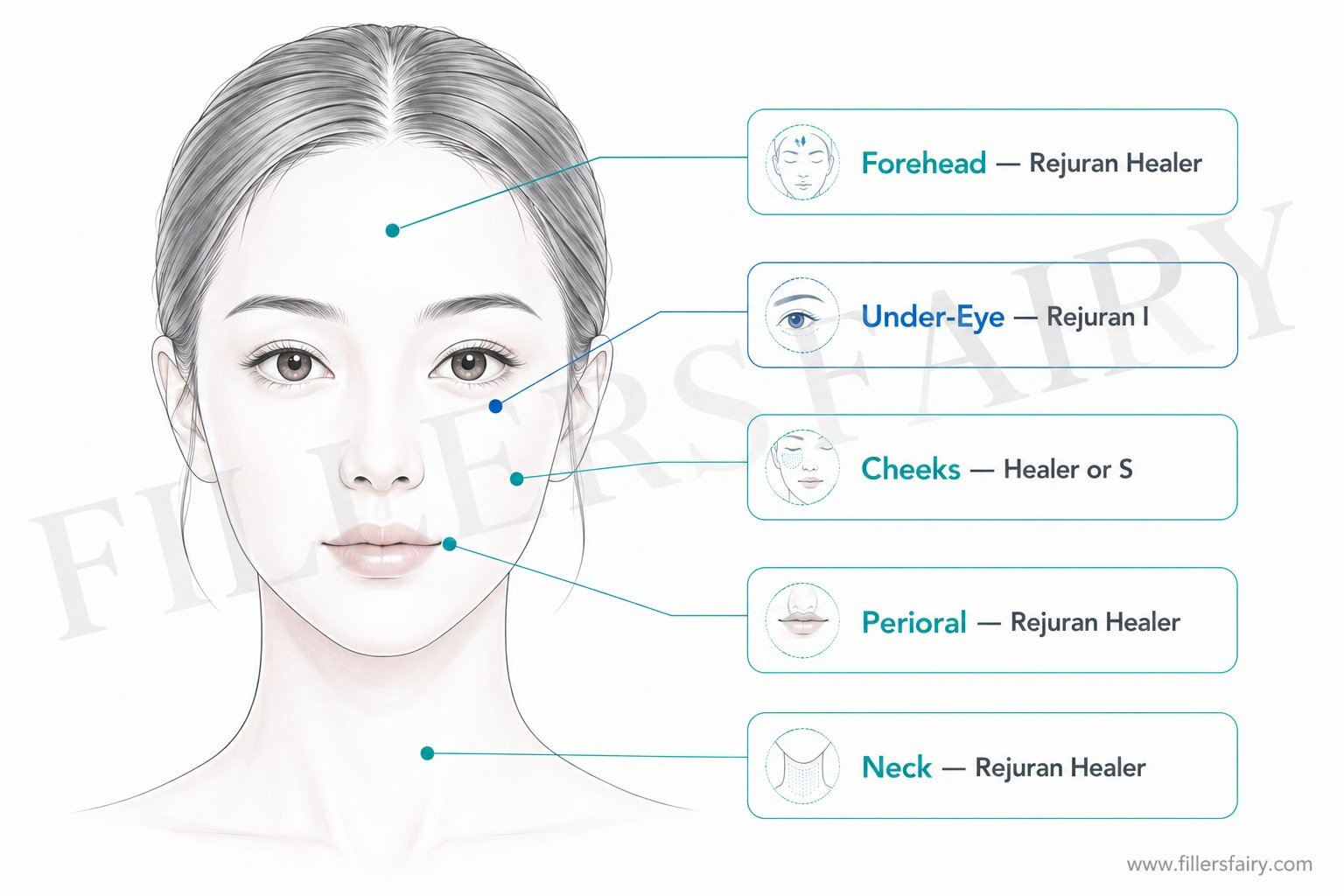
Full face — Rejuran Healer for broad rejuvenation across forehead, cheeks, chin, and jawline. The most common use case.
Under-eye area — Rejuran I for periorbital thinning, crepey lines, and mild dark circles. Requires precise superficial injection technique.
Acne scar sites — Rejuran S for focal scar remodeling, often combined with subcision or fractional laser in multi-modality protocols.
Neck — Rejuran Healer for horizontal lines and crepey neck skin. Off-face application is growing as a treatment category.
Hands and décolletage — Emerging uses for skin quality improvement in photo-aged areas.
Is Rejuran Right for Your Patients?
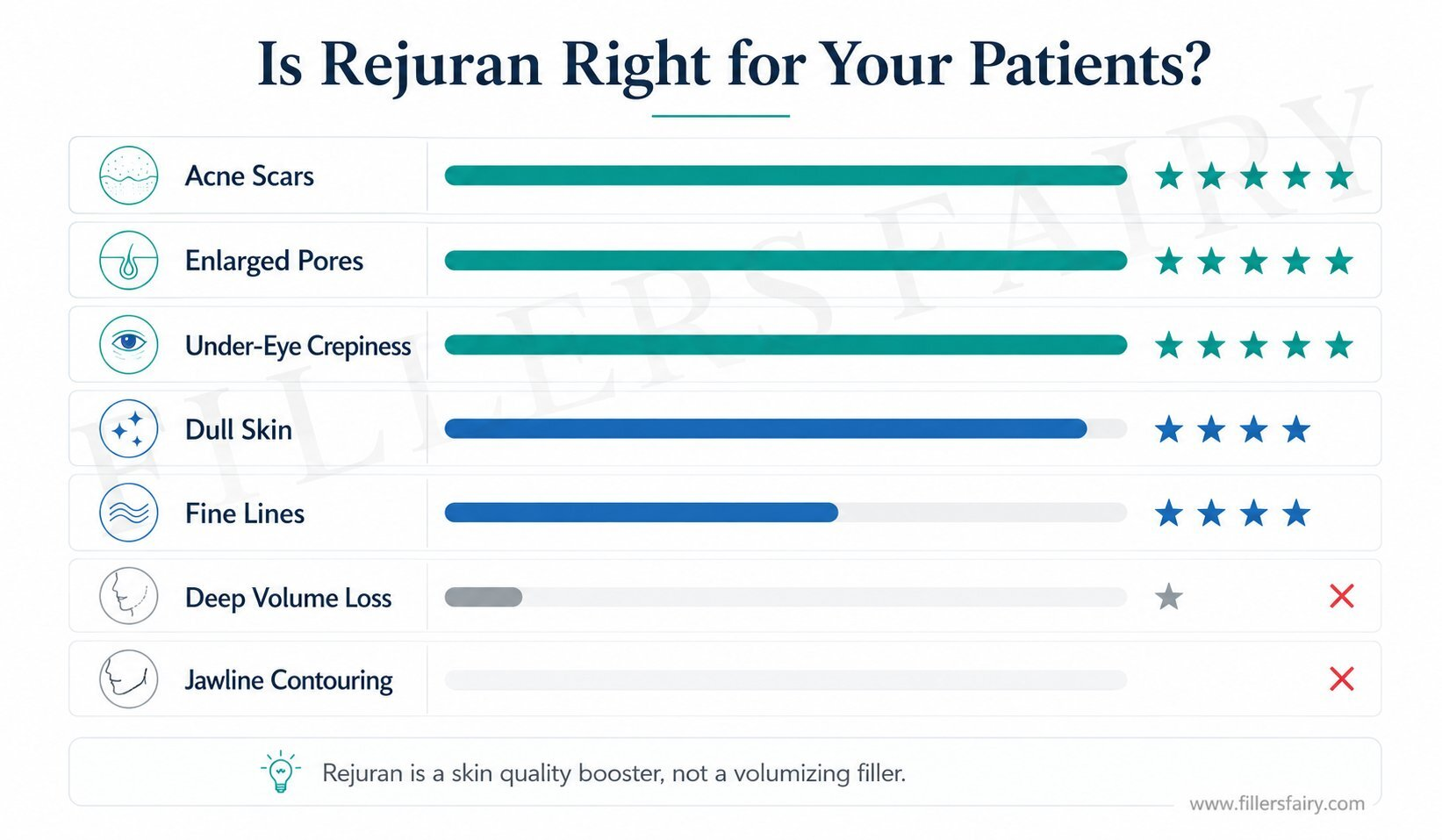
Rejuran is a skin quality booster, not a volumizing filler. This means it excels at certain concerns and is not designed for others.
| Patient Concern | Fit | Notes |
|---|---|---|
| Acne scars, uneven texture | ⭐⭐⭐⭐⭐ | Rejuran S specifically formulated for scar remodeling |
| Enlarged pores | ⭐⭐⭐⭐⭐ | Collagen stimulation tightens pore structure |
| Under-eye crepiness | ⭐⭐⭐⭐⭐ | Rejuran I designed for periorbital area |
| Dull, tired skin | ⭐⭐⭐⭐ | PN repair improves radiance; add HA booster for immediate glow |
| Fine lines | ⭐⭐⭐⭐ | Effective for superficial lines; deep wrinkles need fillers |
| Deep volume loss | ⭐ | Not designed for volume — use dermal fillers |
| Jawline contouring | ❌ | Not applicable — Rejuran does not add structural volume |
When discussing Rejuran with patients, the key message is: it makes skin healthier and more resilient, but it does not reshape facial contours. Patients expecting filler-like volume changes will be disappointed; patients seeking skin quality improvement will be excellent candidates.
What to Expect: Procedure, Recovery, Results
Before Treatment
No special preparation required beyond standard injectable pre-care. Most practitioners advise discontinuing blood-thinning supplements (fish oil, vitamin E, NSAIDs) 5–7 days prior to reduce bruising risk.
During Treatment
Treatment takes 15–30 minutes per session. Topical anesthetic is applied 20–30 minutes before injection. Rejuran is delivered via serial micro-injections (nappage technique) or linear threading at mid-dermal depth. Patients typically describe mild discomfort comparable to mesotherapy.
Recovery Timeline
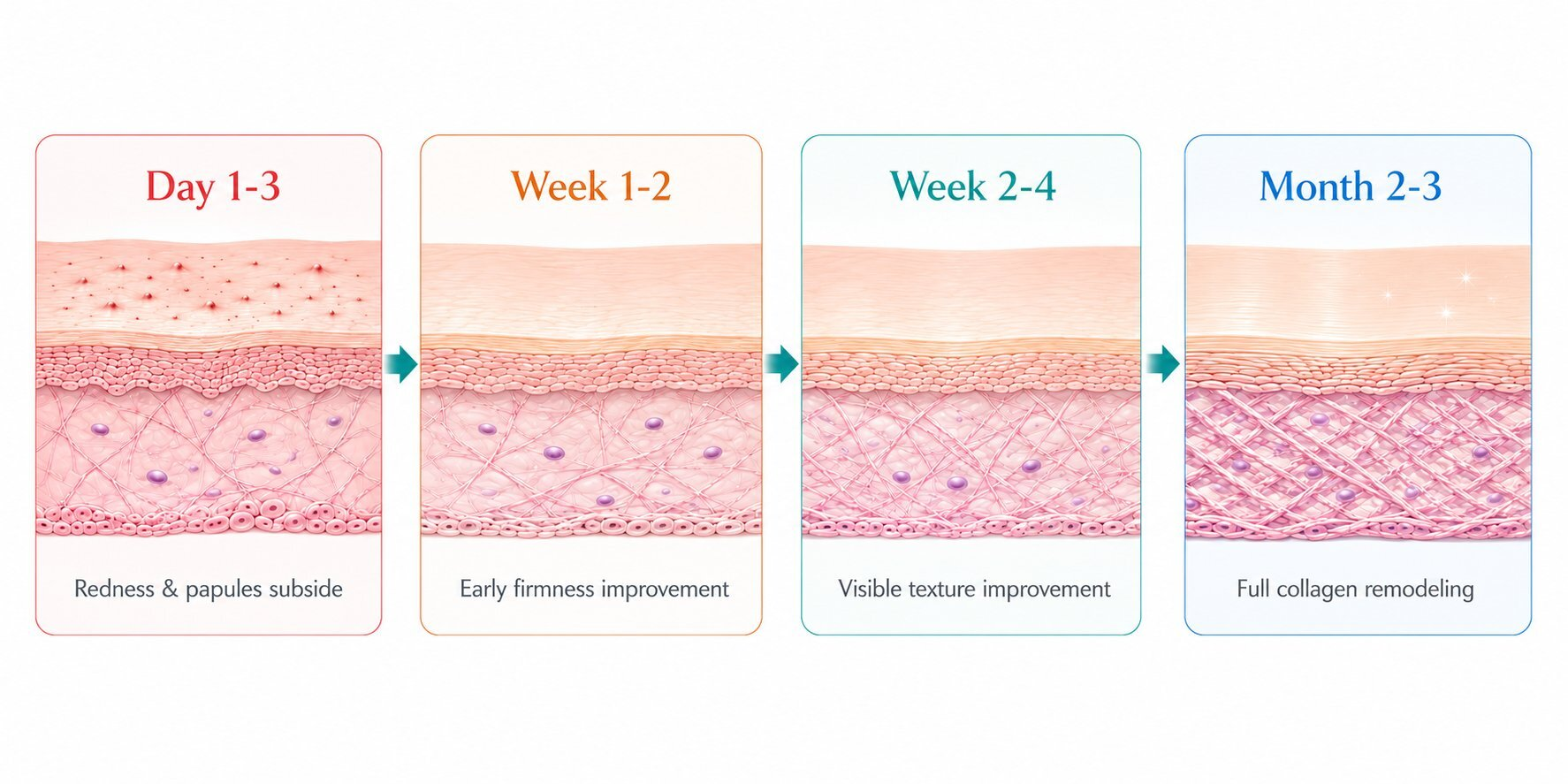
| Phase | What to Expect |
|---|---|
| Day 1–3 | Redness and papules subside. No makeup for 12–24 hours. |
| Week 1–2 | Skin may feel firmer and smoother as early collagen stimulation begins. |
| Week 2–4 | Visible improvement in texture, hydration, and pore appearance. |
| Month 2–3 | Full results as collagen remodeling matures. |
Results build cumulatively across the treatment series. A single session produces mild improvement; the full 3–4 session protocol delivers the complete effect. For detailed aftercare protocols, see our Rejuran aftercare guide: 7 dos and don’ts.
Side Effects and Safety
Rejuran has a well-established safety profile supported by extensive clinical use across Asia and an expanding global market.
Common (expected and transient)
- Injection-site redness — resolves 24–48 hours
- Small papules/bumps at injection points — resolves 24–72 hours
- Mild bruising — resolves 5–7 days
- Temporary swelling in treated areas
Uncommon
- Prolonged papules lasting >72 hours (more common with deeper injection or higher volume per point)
- Hypersensitivity reaction (rare; salmon allergy should be screened pre-treatment)
Contraindications
- Known allergy to salmon or fish-derived products
- Active skin infection at the treatment site
- Pregnancy and breastfeeding (precautionary — insufficient data)
- Autoimmune conditions affecting the skin (relative contraindication — assess case by case)
Rejuran does not produce the vascular complications associated with HA fillers (no risk of vascular occlusion) because it is not a volumizing agent and is injected at a superficial depth.
Frequently Asked Questions
What is the difference between Rejuran and dermal fillers?
Rejuran improves skin quality (texture, elasticity, hydration) without adding volume. Fillers add structural volume to reshape facial contours. They use different formulations, injection depths, and serve different clinical purposes. Many practitioners use both in staged protocols.
How long do Rejuran results last?
Results typically last 6–12 months with a full treatment course (3–4 sessions). Maintenance treatments every 3–6 months help sustain improvements. Duration varies by individual skin condition, age, and lifestyle factors.
Can patients with fish allergies receive Rejuran?
Rejuran is derived from salmon DNA. While the purification process removes most allergenic proteins, patients with confirmed salmon or fish allergies should not receive Rejuran. Alternative PN products sourced from non-fish origins are emerging but not yet widely available.
Is there downtime after Rejuran?
Minimal. Most patients return to normal activities the same day. Papules and redness at injection sites typically resolve within 24–72 hours. No makeup for the first 12–24 hours is standard advice.
How does Rejuran compare to other PN skin boosters?
Rejuran was the first-to-market PN booster and has the deepest clinical evidence base. Curenex combines PDRN with HA for dual action. Vitaran offers variants at different price points. For a full technology comparison, see our Korean Skin Boosters Guide.
Which Rejuran variant should I stock first?
Start with Rejuran Healer — it covers the broadest range of patient presentations (full-face rejuvenation) and has the highest demand. Add Rejuran I when periorbital treatments become a significant portion of your case mix.
Related Guides on FillersFairy
- Korean Skin Boosters Guide (2026) — the complete technology overview
- Rejuran Aftercare: 7 Dos and Don’ts
- Curenex Skin Booster: Ingredients, Effect, and Usage
- Is Hyaron a Filler or Skin Booster?
- ASCE+ SRLV Ingredients
- Juvelook Side Effects: 5 Possible Risks
Ready to order? Browse our Rejuran product collection for all variants, specifications, and wholesale pricing.
Browse our Rejuran product collection for specifications, variant details, and wholesale pricing.
Compare with our Curenex Glow guide to see how PDRN cocktails differ from pure PN products.
Also see: Rejuran before and after results — and Rejuran for acne scars.