How Muchcaine works
Lidocaine is absorbed into the superficial skin and reversibly blocks sodium channels on local nerve endings, preventing pain signals from forming. The effect is local and temporary — normal sensation returns as the lidocaine clears from the tissue.
Muchcaine specifications
Category
Topical Anesthetic Numbing Cream
Country of origin
Republic of Korea
Material
Lidocaine 10.56%
Form
Topical cream (ready-to-use)
Composition
Lidocaine 10.56% (topical), with benzalkonium chloride as a formulation preservative
Pack
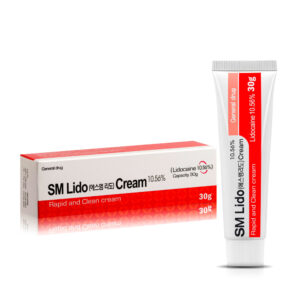
1 tube × 30 g
Storage
Keep sealed and store between 1–30 °C. Keep out of reach of children.
Shelf life
36 months from date of manufacture (unopened)
After opening
Ready-to-use — apply to intact skin before the procedure; remove before treatment per standard practice.
Supplied to
Licensed healthcare professionals only
SKU
FF-NUMB-MUCHCAINE-30
Muchcaine common uses
The areas below are commonly treated with this category of product by practitioners. Suitability, technique, and dosing for any given area are determined by the treating practitioner based on individual patient anatomy and clinical judgment.
Pre-injection numbing (fillers, biostimulators, mesotherapy)
Laser treatments and laser hair removal
Microneedling and skin-needling procedures
Tattooing and permanent makeup
Waxing and other minor cosmetic procedures
Small-area dermatological procedures
Contraindications
Known hypersensitivity to lidocaine or other amide-type local anesthetics
Application on broken, inflamed, or infected skin
Application over large body-surface areas (risk of systemic absorption)
Use near the eyes, mouth, or other mucous membranes
Caution in patients with hepatic impairment or those taking class I antiarrhythmic drugs
Not for unsupervised self-application
Muchcaine — frequently asked questions
What is Muchcaine Cream 10.56% 30g?
Muchcaine Cream 10.56% is a Korean topical anesthetic numbing cream containing 10.56% lidocaine. The 30 g tube is a compact format used to temporarily numb intact skin before minor cosmetic and dermatological procedures.
Where is Muchcaine made?
Muchcaine is manufactured under GMP conditions in South Korea.
What is the active ingredient?
The active ingredient is lidocaine at 10.56%, an amide-type local anesthetic. Benzalkonium chloride is included as a formulation preservative. This is a single-agent lidocaine cream, not a lidocaine–prilocaine combination.
How long does it take to work?
The numbing effect typically begins around 15–20 minutes after application, though this varies with skin type, sensitivity, thickness, and the procedure. For some procedures application time may be longer.
How is it applied?
Muchcaine is applied to intact skin before the procedure and removed before treatment per standard practice. Application time and quantity are determined by the practitioner; large-area application should be avoided to limit systemic absorption.
Is the 30g size different from the 500g?
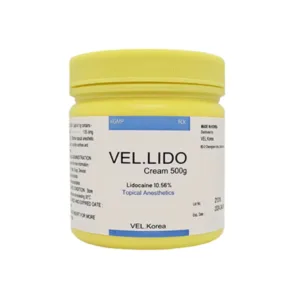
The composition is the same; the 30 g tube is a compact size suited to smaller treatment areas and single-session use, while the 500 g container is a clinic-volume format for high-throughput settings.
Is Muchcaine safe?
Used appropriately on intact skin in limited quantities, topical lidocaine is widely used in aesthetic practice. To limit the risk of systemic absorption, it should not be applied over large areas, on broken or inflamed skin, or near mucous membranes, and should be used under professional guidance.
Who should not use Muchcaine?
It should not be used by anyone with known hypersensitivity to lidocaine or other amide-type local anesthetics, on broken or infected skin, or near the eyes and mouth. Caution applies in patients with hepatic impairment or those taking certain antiarrhythmic drugs.
How should Muchcaine be stored?
Keep the tube sealed and store between 1–30 °C, out of reach of children. Shelf life is 36 months from the date of manufacture.





Reviews
There are no reviews yet.