Reviewed against publicly available manufacturer information.
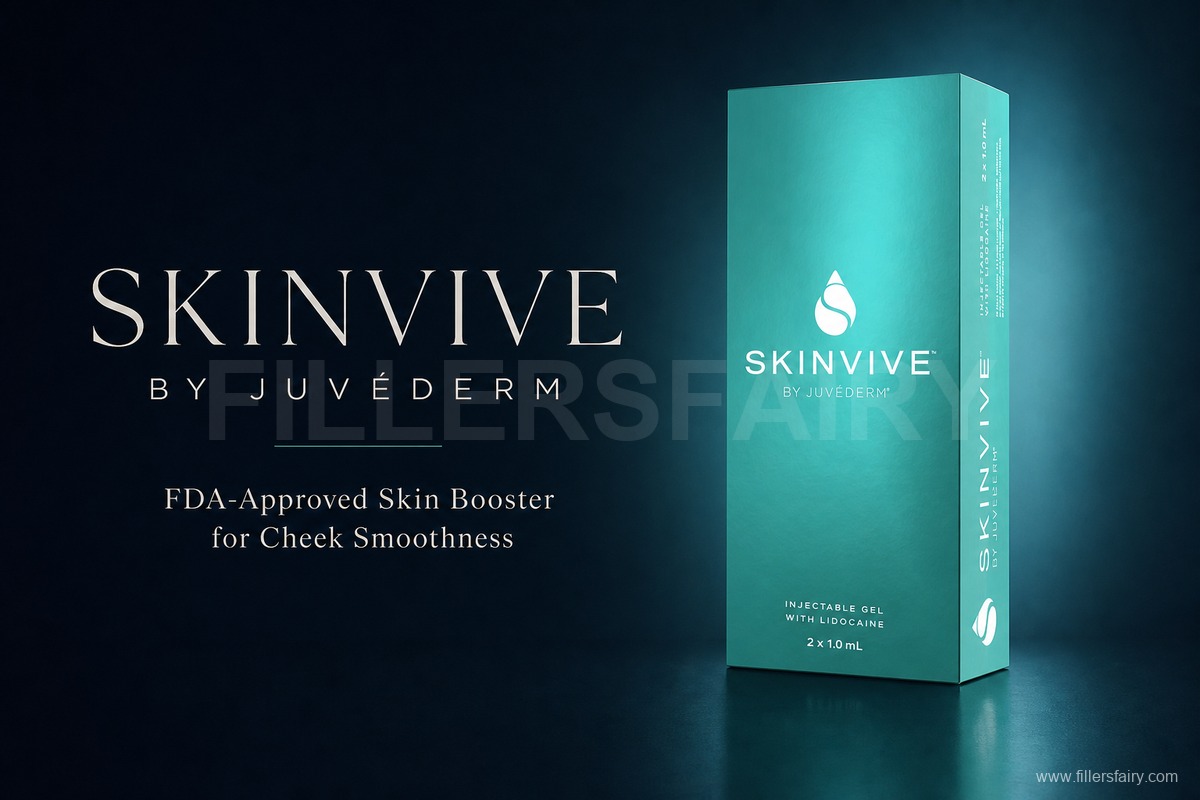
Not every injectable is designed to change the shape of the face. A growing category of “skin quality” or “skin booster” injectables focuses instead on hydration, smoothness, and radiance. SKINVIVE by Juvéderm sits in this category, and it holds a distinction that sets it apart in the US market: it is the first hyaluronic acid microdroplet injectable to earn an FDA indication specifically for improving cheek skin smoothness.
This guide explains what SKINVIVE is, how it differs from conventional dermal fillers, what results it is designed to deliver, and how practitioners typically approach treatment planning.
What Is SKINVIVE by Juvéderm?
SKINVIVE by Juvéderm is manufactured by Allergan Aesthetics, an AbbVie company, as part of the Juvéderm portfolio. It received US FDA approval in May 2023 (P110033/S059) and is indicated for intradermal injection to improve the skin smoothness of the cheeks in people 21 years of age and older.
Composition:
- Hyaluronic acid at a concentration of 12 mg/mL, crosslinked with BDDE (1,4-butanediol diglycidyl ether)
- 0.3% lidocaine to reduce discomfort during injection
- Supplied in a physiologic buffer
The product sold through FillersFairy is SKINVIVE by Juvéderm Injectable Gel with Lidocaine, supplied as 2 x 1.0 mL syringes.
How Does SKINVIVE Work?
SKINVIVE is administered as small intradermal microdroplets placed within the skin of the cheeks, rather than deeper injections used to build structure. The hyaluronic acid is highly hydrophilic — it attracts and holds water — so the intended mechanism is to raise skin hydration from within.
By increasing the water content of the treated skin, SKINVIVE is designed to improve surface smoothness and create a hydrated, luminous appearance often described as “glow.” Because the effect is driven by hydration rather than structural support, the result is a change in skin quality rather than facial shape.
How Is SKINVIVE Different From Traditional Dermal Fillers?
This is the most common point of confusion. Traditional Juvéderm fillers — such as Voluma or Volux — use firmer, more highly crosslinked hyaluronic acid engineered to add volume and provide lift to specific areas like the cheeks, chin, or jawline. They are injected more deeply and are designed to hold their shape.
| Aspect | SKINVIVE (skin booster) | Volumizing filler (e.g. Voluma) |
|---|---|---|
| Primary goal | Skin smoothness & hydration | Volume & structural lift |
| Injection depth | Intradermal microdroplets | Deeper (subcutaneous/supraperiosteal) |
| HA firmness | Lower crosslink, designed to spread | Higher crosslink, holds shape |
| Visible effect | Glow, smoother texture | Contour change |
In short: SKINVIVE is positioned to change how the skin looks and feels, not the shape of the face. Many clinics offer it as a complement to, rather than a replacement for, volumizing treatments.
What Results Can SKINVIVE Provide?
According to the manufacturer, a single treatment can improve cheek skin smoothness with results maintained for up to 6 months with optimal treatment. Patients commonly describe the outcome as smoother, more hydrated, and more radiant skin.
Because the effect develops as the hydrated skin responds, the appearance is intended to be natural rather than a dramatic change. As the hyaluronic acid is gradually metabolized, maintenance treatments are used to sustain the effect over time.
Who Is SKINVIVE Suited For?
SKINVIVE is designed for adults aged 21 and older who are seeking an improvement in cheek skin smoothness and overall radiance rather than added volume. It may particularly suit patients whose main concern is dull, dehydrated, or rough-textured cheek skin, and those seeking a subtle “glow” outcome rather than a change in facial contour.
Why Clinics Add SKINVIVE to a Skin Quality Menu
For clinics, SKINVIVE occupies a different position from traditional dermal fillers — which makes it a useful addition to a treatment menu rather than a replacement for existing products. Because it targets skin quality instead of volume, it opens a distinct conversation with patients who are not looking for reshaping.
Clinics may position SKINVIVE for patients who:
- ✓ want improved skin texture and radiance without facial reshaping
- ✓ are not ready for, or not suited to, volumizing fillers
- ✓ want a premium, hydration-focused injectable option
- ✓ combine skin-quality treatments with their existing filler or biostimulator procedures
This positioning lets a clinic broaden its injectable menu across two different patient intents — reshaping and skin quality — and offer a recognized, FDA-approved brand name in the skin-booster category. Practitioners typically introduce it alongside consultations for fillers or biostimulators, where the skin-quality angle is a natural add-on rather than a competing choice.
Safety Considerations
As with any injectable, SKINVIVE should be administered by a trained, qualified practitioner. The manufacturer lists important contraindications: it should not be used in people with a history of multiple severe allergies or severe allergic reactions (anaphylaxis), those allergic to lidocaine or to the Gram-positive bacterial proteins used in the product, or those who have had previous allergic reactions to hyaluronic acid fillers.
Temporary injection-site responses such as redness, swelling, tenderness, or bruising can occur and typically resolve on their own. A thorough consultation and medical history review help ensure the treatment is appropriate for each patient. Practitioners should always follow the official directions for use.
Frequently Asked Questions
How long does SKINVIVE last?
The manufacturer reports that results can be maintained for up to 6 months with optimal treatment. Because SKINVIVE works through hydration and the hyaluronic acid is gradually metabolized, the effect fades over time, and maintenance treatments are used to sustain smoothness and glow. Individual duration varies with skin type, lifestyle, and treatment technique.
Is SKINVIVE a filler?
SKINVIVE uses hyaluronic acid like a filler, but it is positioned as a skin booster rather than a volumizer. It is injected as intradermal microdroplets to improve skin smoothness and hydration, not to add volume or change facial contour. Traditional Juvéderm fillers such as Voluma are designed for structural volume and are injected more deeply.
Can SKINVIVE replace dermal fillers?
No. SKINVIVE and dermal fillers do different jobs. SKINVIVE is designed to improve skin quality — smoothness and hydration — while dermal fillers such as Juvéderm Voluma or Volux restore volume and provide structural lift. A patient seeking cheek projection or contour needs a volumizing filler; a patient seeking smoother, more hydrated skin is a candidate for SKINVIVE. In many treatment plans the two are used to address different goals rather than one replacing the other.
What is the difference between SKINVIVE and Profhilo?
Both SKINVIVE and Profhilo are hyaluronic acid injectables positioned for skin quality rather than volume, and both aim to improve hydration and radiance. The key differences are in their formulation and approved indications: SKINVIVE is a BDDE-crosslinked HA at 12 mg/mL with lidocaine, FDA-approved specifically for cheek skin smoothness, while Profhilo is a non-crosslinked, thermally stabilized high- and low-molecular-weight HA marketed for bio-remodeling. The choice often comes down to a practitioner’s protocol, product availability, and the specific patient goal. A dedicated SKINVIVE vs Profhilo comparison is a useful next step for clinics weighing the two.
Is SKINVIVE FDA approved?
Yes. SKINVIVE by Juvéderm received US FDA approval in May 2023 and is the first and only hyaluronic acid microdroplet injectable indicated to improve the skin smoothness of the cheeks in people aged 21 and older. It is manufactured by Allergan Aesthetics, an AbbVie company.
How is SKINVIVE injected, and does it hurt?
SKINVIVE is injected as small intradermal microdroplets across the treatment area. It contains 0.3% lidocaine, an anesthetic included to reduce discomfort during injection. As with any injectable, some patients experience mild, temporary sensations at the injection sites. A qualified practitioner determines the appropriate technique and number of injection points.
Can SKINVIVE be combined with other treatments in a clinic setting?
SKINVIVE is often positioned to complement other treatments because it targets skin quality rather than volume. Practitioners may incorporate it into a broader treatment plan alongside volumizing fillers, biostimulators, or other skin-quality options, sequenced according to each patient’s goals and the manufacturer’s instructions for use. Treatment planning should always be individualized and follow official product guidance.