Korean Skin Boosters Guide (2026)
A technology-first reference for aesthetic practitioners — covering PN, PDRN, exosome, hyaluronic acid, and multi-technology skin booster formulations from South Korea.
—
Quick Answer
What are Korean skin boosters? Korean skin boosters are injectable formulations delivered into the superficial-to-mid dermis to improve skin hydration, texture, elasticity, and radiance — without adding facial volume. Unlike dermal fillers that reshape contours, skin boosters target the skin’s extracellular matrix at a cellular level. South Korea produces the widest range of skin booster technologies globally, including polynucleotide (PN/PDRN), exosome, hyaluronic acid (HA), and peptide-based formulations. Most are MFDS-approved and manufactured under GMP-certified conditions.
—
What Makes Skin Boosters Different from Fillers?
The distinction matters for protocol design. Dermal fillers use heavily crosslinked hyaluronic acid or biostimulatory materials to add structural volume — lifting cheeks, defining jawlines, plumping lips. Skin boosters use non-crosslinked or lightly crosslinked formulations designed to spread across broad treatment areas and integrate with the skin’s own biology.
A filler reshapes. A booster repairs and conditions.
This means different injection depths (superficial/mid-dermis vs deep dermis/subdermis), different distribution patterns (diffuse vs focal), and different treatment goals (quality vs volume). Many advanced clinics now layer both in staged protocols — fillers for structural correction, boosters for overall skin quality — but the products are not interchangeable.
For a practical example of how one HA product straddles this line, see our breakdown: Is Hyaron a filler or a skin booster?
—
The Four Core Technologies
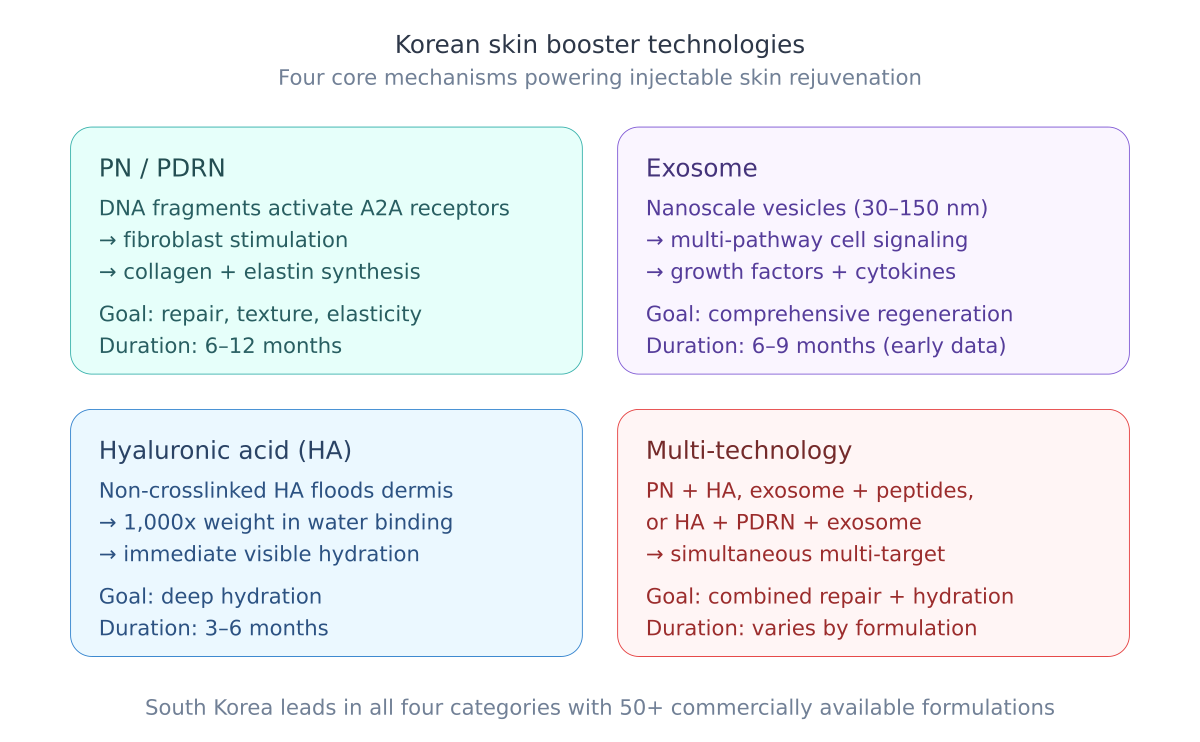
Korean skin boosters can be grouped by their primary active mechanism. Understanding these four categories is the foundation for everything else in this guide.
1. Polynucleotides (PN / PDRN)
PN and PDRN are DNA fragments — typically derived from salmon or other marine sources — that activate adenosine A2A receptors in the dermis. This triggers a cascade: reduced inflammation, increased fibroblast proliferation, accelerated collagen and elastin synthesis, and improved microcirculation.
The distinction between PN and PDRN is molecular weight. PDRN (polydeoxyribonucleotide) consists of smaller fragments (50–1,500 kDa) that target receptor activation specifically. PN (polynucleotide) includes longer chains (>1,500 kDa) that provide both receptor activation and a physical scaffolding effect in the dermis.
In practice, both are used for skin texture improvement, scar remodeling, elasticity restoration, and overall rejuvenation. PN/PDRN products are the fastest-growing segment in Korean aesthetics.
2. Exosomes
Exosomes are nanoscale extracellular vesicles (30–150 nm) secreted by cells. They carry growth factors, cytokines, mRNA, microRNA, and signaling proteins — essentially a delivery package of regenerative instructions that communicate directly with target cells.
When injected into the dermis, exosome-based boosters don’t just supply raw materials (like HA) or trigger a single receptor pathway (like PN). They deliver a complex set of coordinated signals that can modulate inflammation, stimulate stem cell activity, and promote tissue remodeling across multiple pathways simultaneously.
Exosome skin boosters are the newest category and clinical data is still accumulating, but early results and rapid market adoption suggest they represent a meaningful step beyond single-mechanism products.
3. Hyaluronic Acid (HA)
HA-based skin boosters use non-crosslinked or minimally crosslinked hyaluronic acid to saturate the dermis with moisture. Each HA molecule binds up to 1,000 times its weight in water, creating immediate and visible hydration.
Unlike HA fillers (which use heavily crosslinked HA designed to resist degradation and maintain shape), skin booster HA is engineered to spread evenly, integrate with the skin’s own moisture matrix, and degrade naturally over weeks to months.
HA boosters are the most established category — originating with European products like Restylane Skinboosters — but Korean manufacturers have expanded the field with differentiated formulations that combine HA with vitamins, amino acids, peptides, or other active ingredients.
4. Multi-Technology Formulations
Many Korean manufacturers now combine two or more technologies in a single injectable. PN + HA, exosome + peptides, HA + PDRN + exosome concentrate — these multi-technology products aim to address multiple skin concerns simultaneously rather than requiring separate sessions for each technology.
This combinatorial approach is a distinctly Korean innovation and reflects the market’s emphasis on protocol efficiency — fewer sessions, broader effects, faster visible results.
—
Technology Comparison
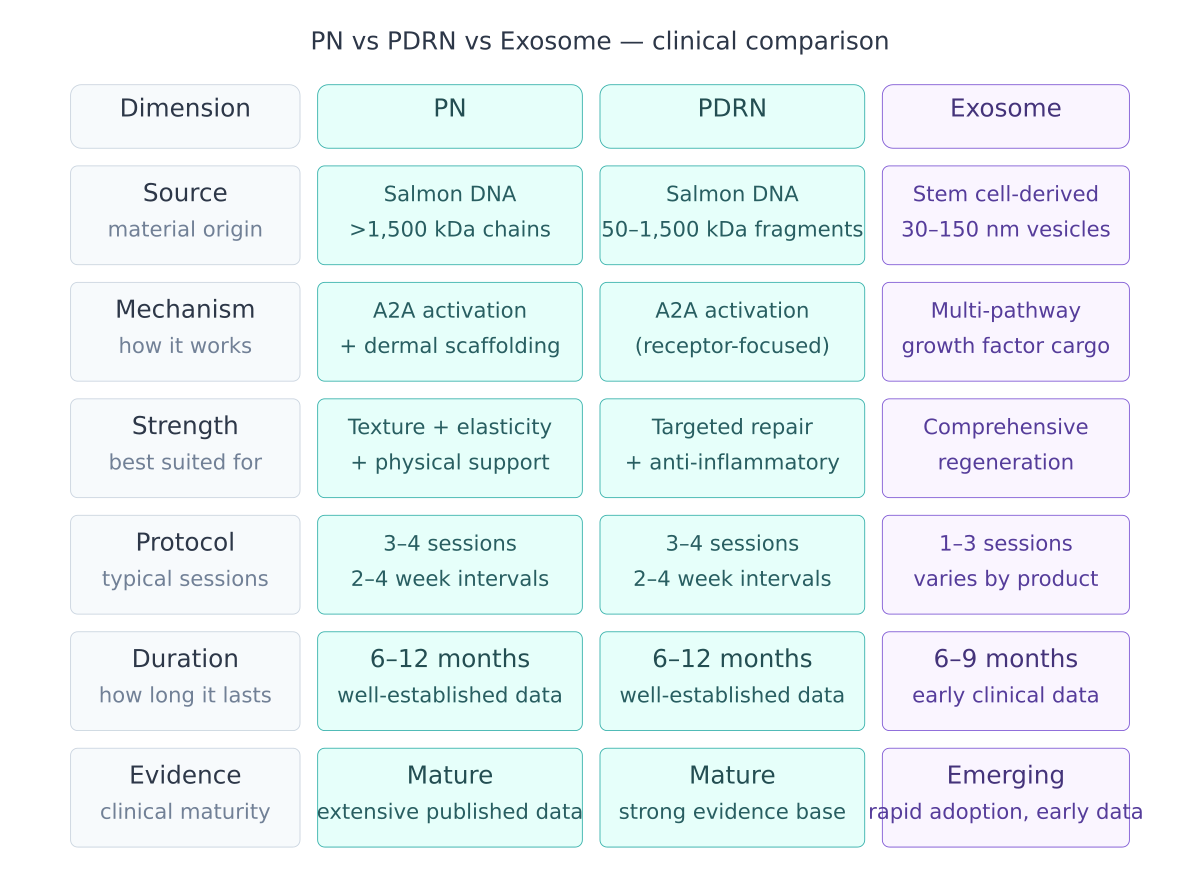
| PN / PDRN | Exosome | HA | Multi-Tech | |
|---|---|---|---|---|
| Primary mechanism | A2A receptor activation, fibroblast stimulation | Multi-pathway cell signaling via vesicle cargo | Hygroscopic moisture binding | Combined (varies by formulation) |
| Primary goal | Repair, texture, elasticity | Comprehensive regeneration | Deep hydration | Multiple simultaneous targets |
| Onset | Gradual (2–4 weeks) | Gradual (1–3 weeks) | Immediate | Varies |
| Duration | 6–12 months | 6–9 months (early data) | 3–6 months | Varies |
| Typical protocol | 3–4 sessions, 2–4 week intervals | 1–3 sessions | 3–5 sessions, 2–4 week intervals | Product-dependent |
| Injection depth | Mid-dermis | Superficial–mid dermis | Superficial dermis | Varies |
—
Technology Selection by Patient Concern
Not every technology fits every patient. This framework maps common clinical presentations to the technology category most supported by current evidence and clinical practice.
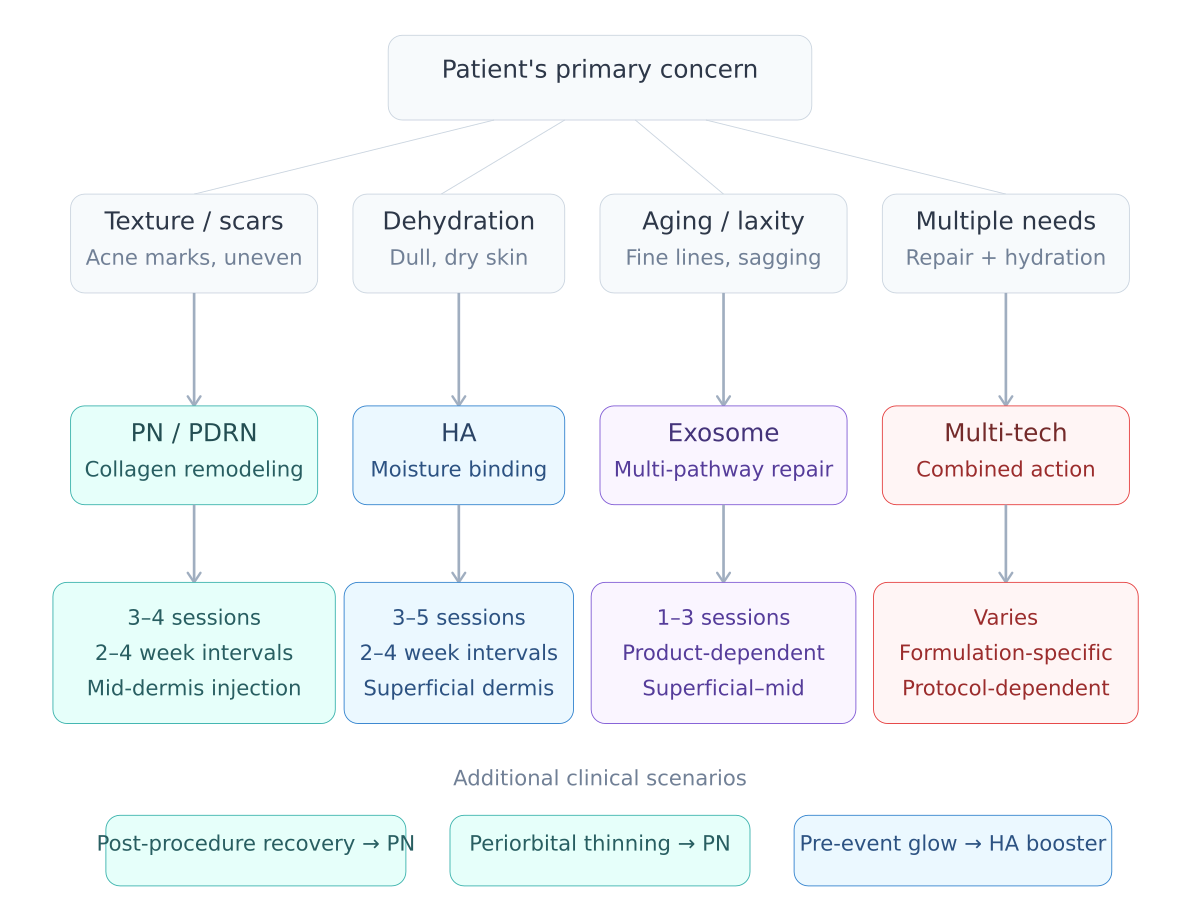
| Patient concern | First-line technology | Rationale |
|---|---|---|
| Acne scars, uneven texture | PN / PDRN | Fibroblast activation drives collagen remodeling at scar sites |
| Dehydrated, dull skin | HA | Immediate hygroscopic hydration; visible same-day improvement |
| Overall skin aging, laxity | Exosome | Multi-pathway signaling addresses complex aging mechanisms |
| Fine lines + dryness (combined) | PN + HA (multi-tech) | Simultaneous repair and hydration |
| Post-procedure recovery | PN / PDRN | Anti-inflammatory + repair properties support healing |
| Periorbital thinning | PN (low-viscosity) | Gentle repair without volume addition in delicate tissue |
This is a technology-level framework, not a product recommendation. For product-specific comparisons between individual Korean skin boosters, detailed head-to-head analyses are covered in separate guides.
—
The Korean Skin Booster Landscape
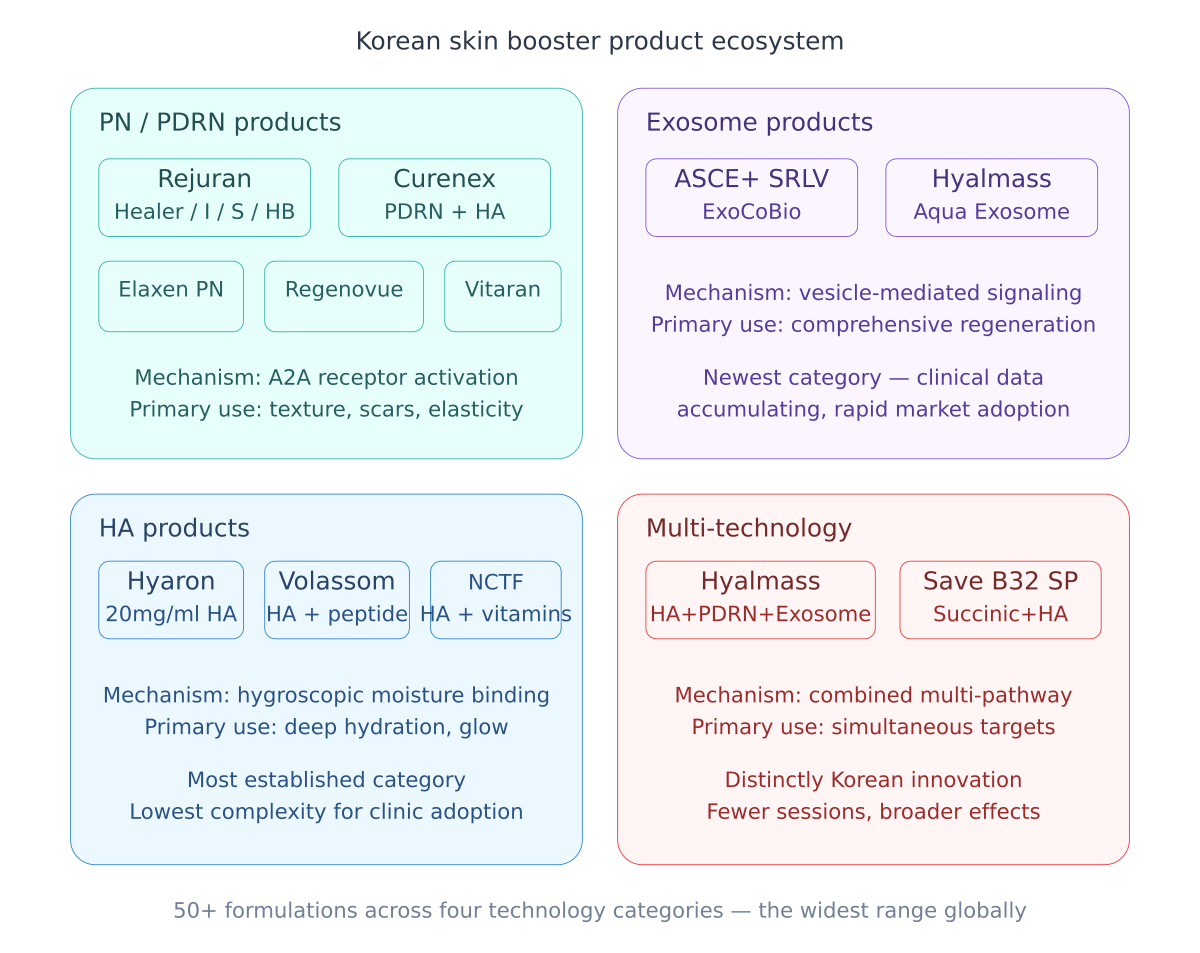
South Korea’s skin booster market is the deepest in the world. Here is how major products map across the four technology categories.
PN / PDRN Products
Rejuran — The most globally recognized PN booster, by Pharma Research Products. The Rejuran family includes four variants: Healer (full-face rejuvenation), I (periorbital), S (scar remodeling), and HB (PN + HA hybrid). Typically delivered in a 3–4 session protocol spaced 2–4 weeks apart. For post-treatment protocols, see our Rejuran aftercare guide.
Curenex — PDRN-based booster by GANA R&D, combining polynucleotides with hyaluronic acid for dual repair-and-hydration action. A growing choice among clinics seeking PDRN efficacy in a single-session workflow. Full ingredient and mechanism breakdown in our Curenex deep dive.
Elaxen PN — A PN formulation by Pharma Research with a 2.5ml delivery volume for broader facial coverage per session. See the Elaxen PN product details.
Regenovue PN — By NeoGenesis, combines PN with a proprietary stabilization technology. Our Regenovue PN usage guide covers injection techniques and dosing.
Vitaran — Available in several variants including Vitaran I for periorbital use. A viable alternative for clinics seeking PN technology at different price points. Vitaran product specifications.
Exosome Products
ASCE+ SRLV — By ExoCoBio, one of the most established exosome boosters on the market. Combines proprietary exosome concentrate with growth factors and peptides. Delivered via mesotherapy or microneedling. ASCE+ product page and ingredient breakdown.
Hyalmass Aqua Exosome — Combines exosome technology with HA for simultaneous regeneration and hydration. Hyalmass Aqua Exosome details.
HA Products
Hyaron — By DongKook Pharmaceutical, containing 20mg/ml non-crosslinked sodium hyaluronate. One of the most straightforward HA boosters — focused purely on deep hydration without added biologics. Widely used as an entry-level booster due to its safety profile and predictable results. Detailed analysis: Hyaron: filler or booster? and Hyaron injection areas and glow effect.
Volassom — Combines HA with a peptide complex. Our Volassom technique guide covers the three most common injection methods.
NCTF / Cytocare — HA-based mesotherapy solutions enriched with vitamins, amino acids, minerals, and coenzymes. Originally French formulations, widely integrated into Korean-protocol combination treatments. For the ingredient list, documented 5 mg/mL HA concentration and pack-format evidence boundary, read the NCTF 135HA ingredients guide.
Multi-Technology Products
Hyalmass Tri-Phase — Combines ultra-high concentration HA (up to 50mg/ml), PDRN, and 15% exosome concentrate. One of the most complex skin booster formulations currently available.
Save B32 SP — Uses succinic acid combined with high/low molecular weight HA complex, taking a different approach: stimulating the skin’s own HA production rather than supplementing it externally. Save B32 SP details.
—
Selecting Skin Boosters for Your Practice
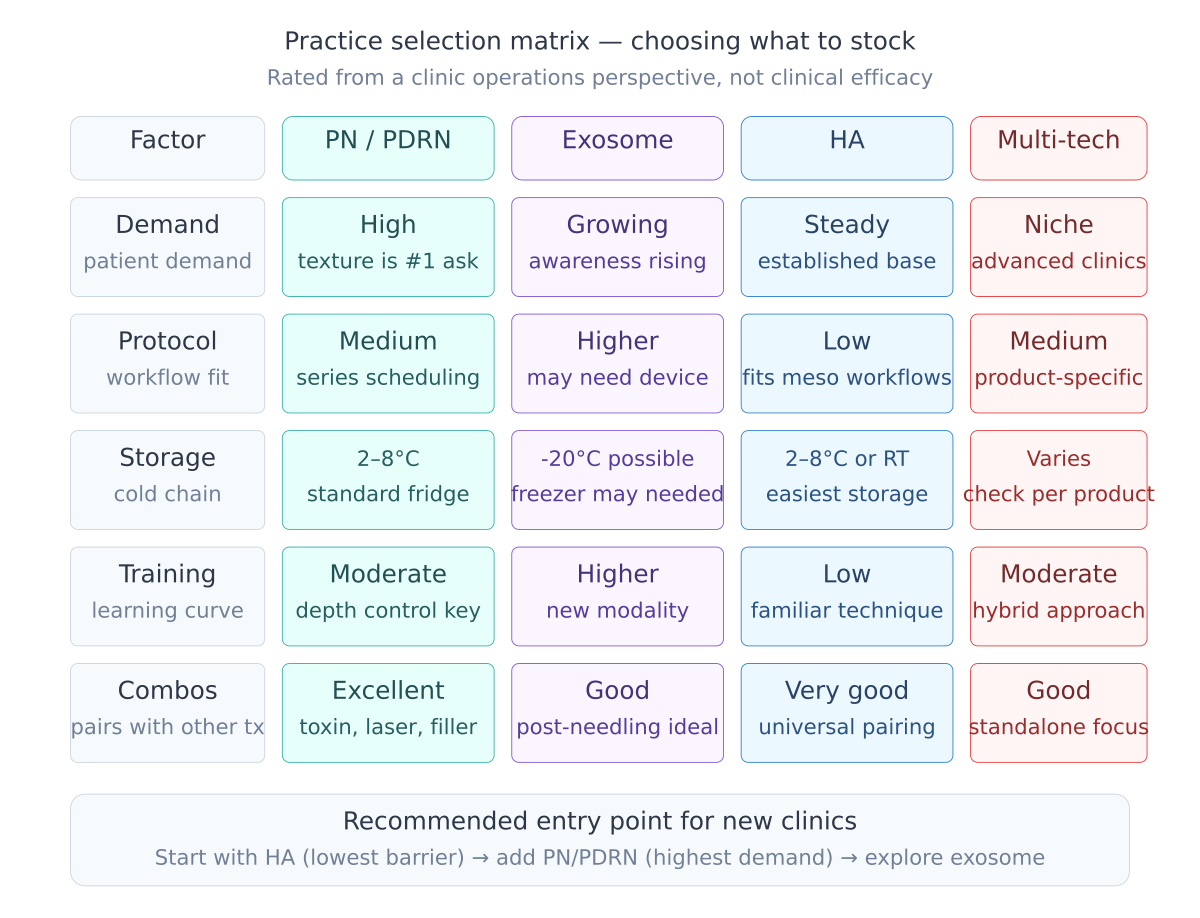
This is where theory meets clinic operations. Choosing which skin boosters to stock is not just about clinical efficacy — it involves workflow fit, logistics, economics, and long-term practice positioning. Here is a structured framework for making that decision.
Clinical Demand Mapping
Start with your patient mix. If 60% of consultations involve skin quality concerns (texture, dullness, mild scarring, periorbital aging), PN/PDRN products will see the highest utilization. If your practice is hydration-focused (pre-event prep, seasonal dryness, post-procedure recovery), HA boosters will move faster. Exosome products are gaining traction in practices that already offer regenerative treatments (PRP, growth factor therapies) and want to expand that offering.
Map your top 5 patient concerns by frequency. That mapping tells you which technology category to stock first, which to add second, and which can wait.
Protocol Integration
Not all boosters fit all workflows equally. HA boosters like Hyaron integrate into existing mesotherapy routines with minimal learning curve — if your team already runs meso protocols, adding Hyaron is a one-day training exercise. PN products like Rejuran require a dedicated multi-session treatment plan (typically 3–4 sessions) and patient commitment to the full course, which means your booking and follow-up systems need to support series-based scheduling. Exosome products may involve microneedling delivery rather than pure injection, which requires different equipment and treatment room setup.
Before stocking a new booster category, walk through a full mock patient journey: booking, consent, treatment room setup, injection/delivery, aftercare handout, follow-up booking, re-order trigger. If any step creates friction with your current workflow, that is the real cost of adoption — not the product price.
Storage and Cold Chain
Korean skin boosters vary significantly in storage requirements. Most PN and HA products require 2–8°C refrigeration. Some exosome products require frozen storage (-20°C) until reconstitution. Shelf life ranges from 12 to 36 months depending on formulation.
For practices without dedicated pharmaceutical refrigeration, this is a real constraint. Calculate your realistic monthly consumption before committing to bulk orders of cold-chain products — overstocking a 12-month shelf-life product that needs constant refrigeration is a common and costly mistake.
Minimum Order Quantities and Economics
Wholesale pricing for Korean skin boosters is typically tiered: the more you order, the lower the unit cost. But the economic calculation is not just per-unit cost — it is per-unit cost adjusted for realistic consumption rate, storage overhead, and expiration risk.
A lower per-unit price on a 50-vial order means nothing if 15 vials expire before use. For new product lines, start with the minimum order that unlocks reasonable pricing, track your actual consumption rate for 60–90 days, then scale.
Training and Team Readiness
Switching or adding a new skin booster technology is also a training investment. PN injection technique differs from HA meso technique — specifically in depth control, distribution pattern, and volume per injection point. Exosome delivery via microneedling is an entirely different modality.
Factor in: one training session for the lead injector, one observed session, then supervised independent sessions before full rollout. For multi-injector practices, multiply accordingly. The best product in the world underperforms if the delivery technique is not dialed in.
Combination Potential
The most sophisticated practices layer skin boosters with other treatments in staged protocols. Common pairings include PN boosters 2 weeks after botulinum toxin, HA boosters as a prep stage before laser resurfacing, or exosome treatments post-microneedling for accelerated healing.
When selecting boosters, consider which combinations your practice already offers or plans to offer. A booster that pairs well with your existing service menu has a lower effective adoption cost than one that requires building an entirely new treatment pathway around it.
—
Frequently Asked Questions
What is the difference between a skin booster and a dermal filler?
Skin boosters improve skin quality (hydration, texture, elasticity) without adding volume. Fillers add structural volume to reshape contours. They use different formulations, injection depths, and distribution patterns.
How long do Korean skin booster results last?
PN/PDRN boosters typically show effects for 6–12 months with maintenance sessions. HA boosters last 3–6 months. Exosome boosters are newer — early data suggests 6–9 months. Individual variation is significant.
Can skin boosters be combined with other treatments?
Yes. Skin boosters are routinely layered with botulinum toxin, dermal fillers, laser treatments, and microneedling. Most practitioners space booster sessions at least 2 weeks from filler or toxin treatments to avoid interaction.
What areas can be treated with skin boosters?
Full face (under-eye, forehead, cheeks, perioral), neck, décolletage, and hands. Some products are specifically formulated for delicate areas — for example, low-viscosity PN variants designed for periorbital use.
What is the difference between PN and PDRN?
Both are polynucleotide-based. PDRN consists of smaller DNA fragments (50–1,500 kDa) that primarily target A2A receptor activation. PN includes longer chains (>1,500 kDa) that provide receptor activation plus a physical scaffolding effect in the dermis. In clinical practice, both address skin texture, repair, and elasticity.
Are Korean skin boosters MFDS-approved?
Products from established Korean manufacturers are produced under MFDS (Ministry of Food and Drug Safety) oversight in GMP-certified facilities. Regulatory status for export markets varies by jurisdiction — practitioners should verify import compliance for their specific country.
How do I choose between PN, exosome, and HA boosters?
Match the technology to the patient’s primary concern. PN/PDRN for texture and repair. HA for pure hydration. Exosome for comprehensive regeneration. Multi-tech formulations for patients presenting multiple concerns. Our technology selection table above provides a structured framework.
—
Related Guides on FillersFairy
This hub connects to our growing library of individual product guides and clinical resources:
– Rejuran Aftercare: 7 Dos and Don’ts
– Curenex Skin Booster: Ingredients, Effect, and Usage
– Is Hyaron a Filler or Skin Booster?
– Hyaron: Sodium Hyaluronate Glow Effect and Injection Areas
– Volassom Technique: 3 Common Methods Explained
– Juvelook Side Effects: 5 Possible Risks
– Etrebelle 200mg vs Sculptra: 4 Differences
– The 10 Most Popular Body Filler Injection Sites in Korea
– Top 10 Injectable Skin Boosters (2025)
Detailed single-product guides (What Is Rejuran, What Is Juvelook, What Is ASCE+ Exosome, and others) are in development and will be linked here as they publish.
—
This guide is maintained and updated as new products and clinical data enter the Korean skin booster market. Ready to stock? Browse our full skin booster collection for specifications and wholesale pricing.
Read our complete Curenex Glow guide for a detailed breakdown of this PDRN multi-peptide booster.