Rentox: Does the Albumin-Free Formula Change the Equation for Korean BTX-A Clinics?
Quick Answer
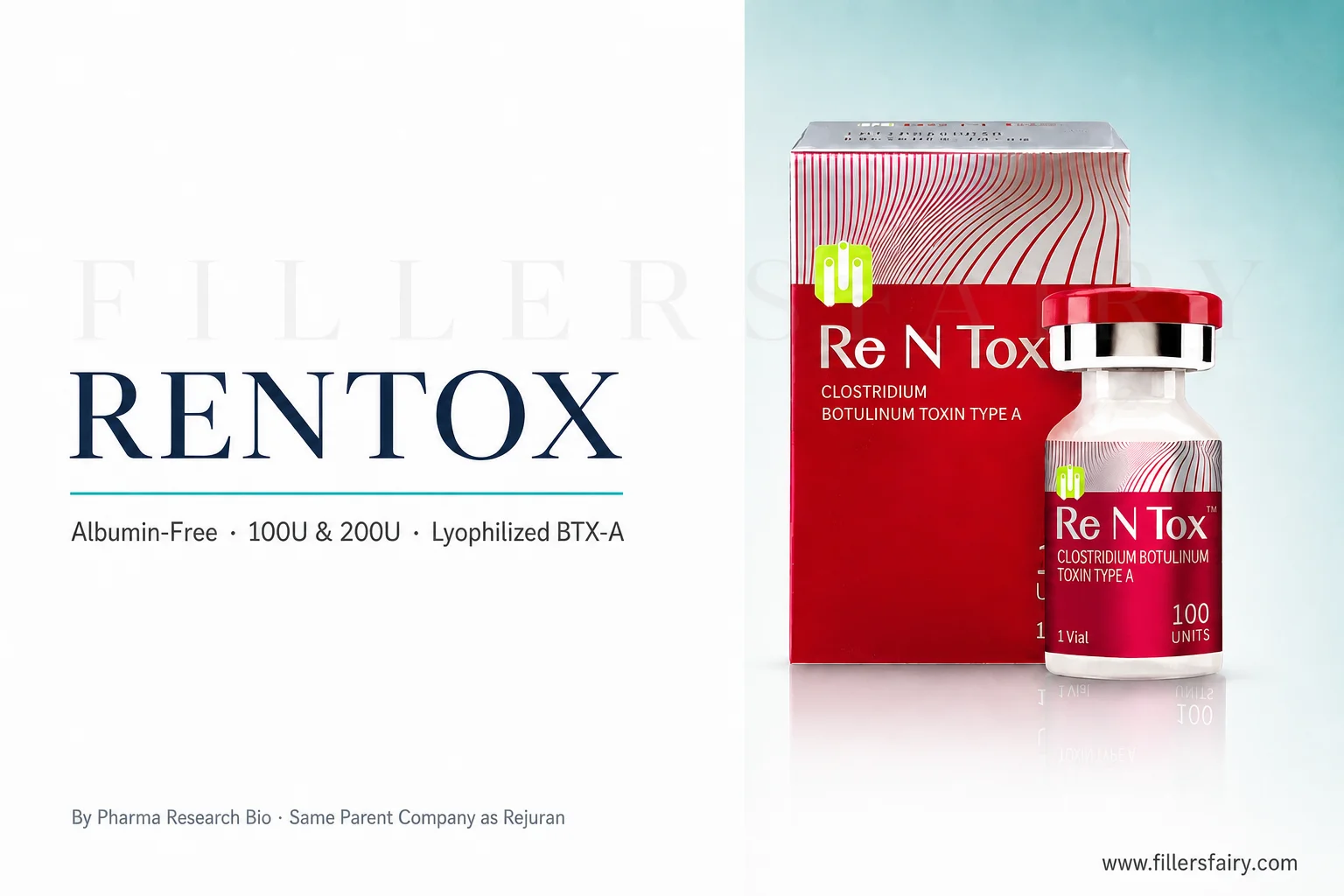
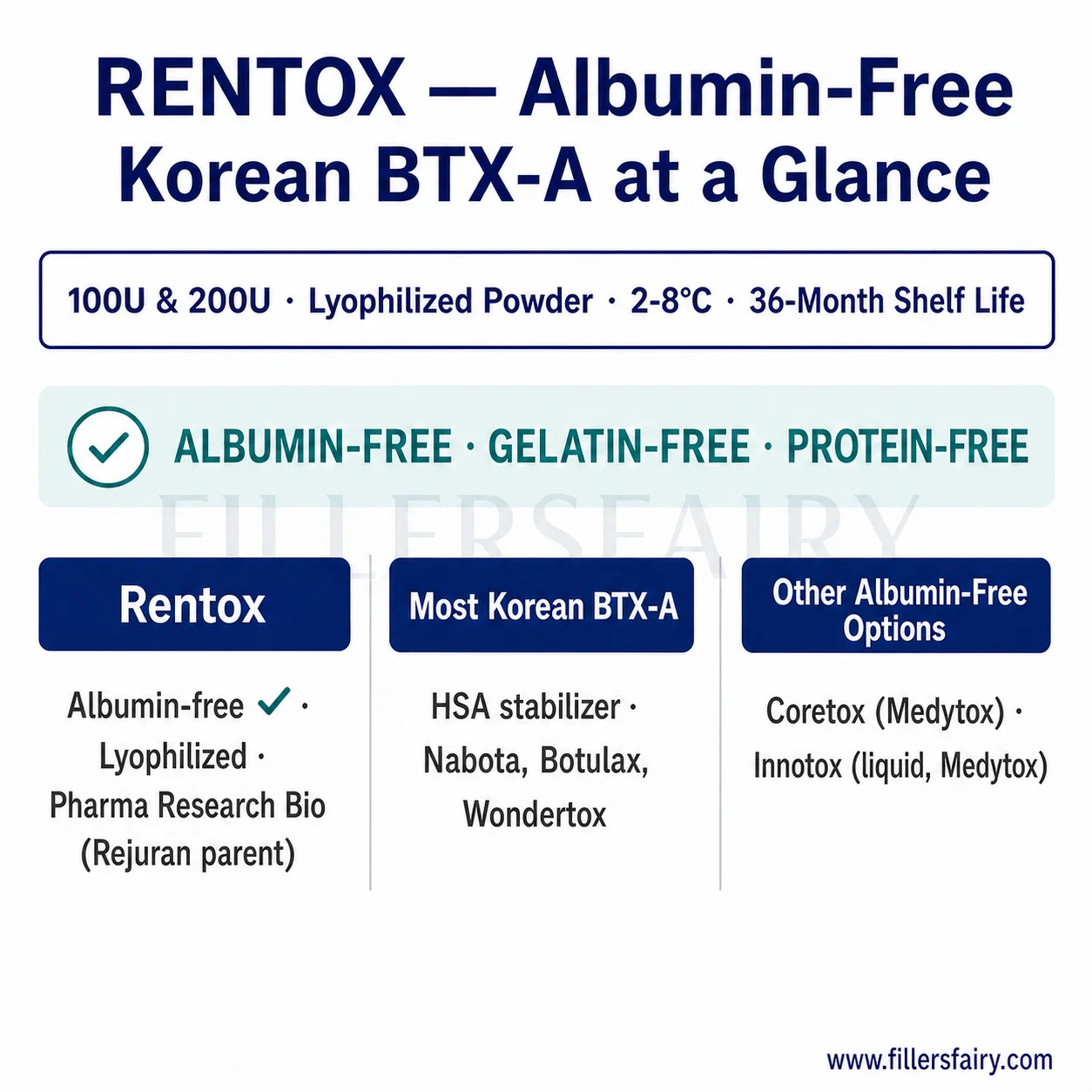
Rentox is an albumin-free, gelatin-free, protein-free botulinum toxin type A manufactured by Pharma Research Bio Co., Ltd. — a subsidiary of Pharma Research Products (KOSDAQ: 214450), the same parent company behind Rejuran. Available in 100U and 200U lyophilized vials, Rentox positions itself as a cleaner-formula alternative in the Korean BTX-A category: no human-derived stabilizers, no animal-derived excipients. For clinics already familiar with the Pharma Research ecosystem through Rejuran, Rentox extends that supplier relationship into the neurotoxin category.
The Positioning: Why “Albumin-Free” Matters to Certain Practices
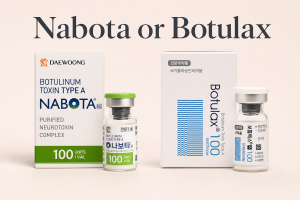
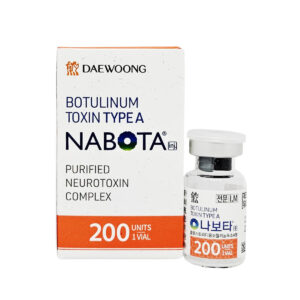
Most Korean botulinum toxin products — Nabota, Botulax, Wondertox — use human serum albumin (HSA) as a stabilizer. HSA is a well-established excipient with decades of use in injectable pharmaceuticals. It is not inherently problematic. But it is a human-derived protein, and for some clinics and patients, that raises specific considerations.
The primary concern around HSA in botulinum toxin is immunogenicity — specifically, whether repeated exposure to a human-derived stabilizer protein could contribute to the formation of neutralizing antibodies that reduce the product’s effectiveness over time. This is a topic of ongoing discussion in the BTX literature, not a settled conclusion. The clinical significance of neutralizing antibodies in aesthetic-dose botulinum toxin remains debated.
Rentox removes HSA from the equation entirely. Its formulation uses no albumin, no gelatin, and no complexing proteins. For clinics that want to offer patients a botulinum toxin without human-derived excipients — whether for clinical reasoning, patient preference, or menu differentiation — Rentox provides that option within the Korean BTX-A category.
This positioning is comparable to how Coretox (Medytox) markets itself as “free of complexing proteins.” The angle is the same: a cleaner excipient profile as a point of differentiation in a crowded product category.
Who Makes Rentox — and Why the Parent Company Matters
Rentox is manufactured by Pharma Research Bio Co., Ltd. (PR Bio), a dedicated biologics subsidiary of Pharma Research Products Company (KOSDAQ: 214450), based in South Korea.
The parent company connection is commercially relevant: Pharma Research Products is the same company that developed and manufactures Rejuran — the reference product in the PN (polynucleotide) skin booster category. This means clinics already sourcing Rejuran from the Pharma Research ecosystem can add Rentox to their neurotoxin menu under a familiar supplier umbrella.
For wholesale buyers evaluating supply chain relationships, this matters. A single parent company covering skin boosters (Rejuran) and neurotoxin (Rentox) creates consolidation opportunities in procurement, training, and supplier management.
Product Specifications
| Spec | Detail |
|---|---|
| Active ingredient | Clostridium botulinum toxin type A |
| Format | Lyophilized (freeze-dried) powder — white to off-white |
| Vial sizes | 100 Units and 200 Units |
| Excipient profile | Albumin-free, gelatin-free, protein-free |
| Reconstitution | 0.9% sterile preservative-free saline |
| Post-reconstitution use | Use promptly; follow supplied product instructions for maximum hold time |
| Storage | 2–8°C refrigerated, do not freeze |
| Shelf life | 36 months from manufacture date |
| Manufacturer | Pharma Research Bio Co., Ltd. (South Korea) |
| Parent company | Pharma Research Products (KOSDAQ: 214450) — also manufactures Rejuran |
| Origin | South Korea |
How Rentox Works
Rentox operates through the same mechanism as all botulinum toxin type A products. The active ingredient blocks acetylcholine release at the neuromuscular junction by cleaving SNAP-25 proteins. The targeted muscle receives no contraction signal and relaxes, which softens the dynamic wrinkles created by repeated muscle movement.
The clinical effect typically becomes noticeable within 2–3 days, which is commonly reported as slightly faster onset compared to some competitors — though onset timing varies by patient, treatment area, dilution, and injection technique. The manufacturer positions Rentox’s duration at 6–8 months, though it is worth noting that duration across botulinum toxin brands is broadly comparable per published literature, with individual patient metabolism being the primary variable.
Treatment areas include the standard BTX-A aesthetic indications: forehead lines, glabellar lines (frown lines), and crow’s feet. Rentox is also indicated for therapeutic applications including blepharospasm, hemifacial spasm, and cervical dystonia.
Reconstitution and Use
Rentox is supplied as a lyophilized powder that requires reconstitution with 0.9% sterile preservative-free saline before injection. The reconstituted solution should appear clear and colorless — if particulate matter or discoloration is visible, do not use the vial.
Specific dilution volumes, injection techniques, and dosing per treatment area follow the product’s supplied instructions and the practitioner’s clinical judgment. The reconstituted product should be used promptly; refer to the product insert for maximum hold time and storage conditions post-reconstitution.
Standard BTX-A handling precautions apply: do not shake the vial during reconstitution (gentle swirling), store reconstituted product at 2–8°C if not used immediately, and do not refreeze.
Where Rentox Sits in the Korean BTX-A Landscape
Korea produces more botulinum toxin brands than any other country except the United States. For clinics navigating this landscape, the relevant differentiators between products are format, excipient profile, manufacturer ecosystem, and pricing — not mechanism, since all BTX-A products share the same fundamental pharmacology.
| Feature | Rentox | Typical Korean BTX-A competitors |
|---|---|---|
| Format | Lyophilized powder (reconstitute) | Most are lyophilized or vacuum-dried; Innotox is liquid (no reconstitution) |
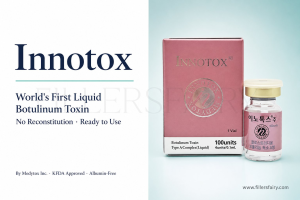
| Albumin | Albumin-free | Most contain HSA as stabilizer (Nabota, Botulax, Wondertox). Exceptions: Innotox and Coretox are also albumin-free |
| Complexing proteins | Protein-free formulation | Varies — Coretox is also free of complexing proteins |
| Vial sizes | 100U + 200U | Most offer 100U + 200U; Botulax also has 300U |
| Manufacturer ecosystem | Pharma Research (also Rejuran) | Varies — Hugel (Botulax + Letybo), Daewoong (Nabota + Jeuveau), Medytox (Innotox + Coretox + Meditoxin) |
| Storage | 2–8°C, 36 months | Generally 2–8°C across the category |
Rentox’s clearest differentiators are the albumin-free excipient profile and the parent-company connection to Rejuran. For clinics that already stock Rejuran as their PN skin booster, adding Rentox creates a two-product relationship with a single manufacturer ecosystem — simplifying procurement and potentially enabling bundled pricing discussions.
Clinic Stocking Considerations
The albumin-free angle as a menu differentiator. In markets where patients are increasingly informed and ask about product ingredients, offering an albumin-free botulinum toxin option gives the clinic a distinct conversation point. Whether the clinical significance of albumin-free formulation is material remains an open question in the literature — but patient perception and preference are real commercial factors.
Dual vial formats. The 100U vial suits standard single-area facial treatments. The 200U vial suits multi-zone sessions (forehead + glabella + crow’s feet in one appointment) or high-volume practices processing multiple patients per day. Having both sizes reduces per-unit waste.
Cold chain requirement. Rentox stores at 2–8°C — same as virtually all lyophilized BTX-A products. Clinics with existing neurotoxin refrigerator space can integrate Rentox without additional cold-chain infrastructure.
Rejuran cross-sell opportunity. For practices already offering Rejuran treatments, Rentox creates a natural cross-sell: skin quality improvement (Rejuran PN) plus dynamic wrinkle management (Rentox BTX-A) under one manufacturer umbrella. This can simplify the patient conversation and the supply chain simultaneously.
36-month shelf life. The long shelf life reduces expiration pressure, which matters particularly for lower-volume practices or clinics trialing Rentox alongside an existing neurotoxin brand.
Related Guides
- Buy Rentox 200U — Albumin-Free Korean BTX-A
- Rentox Product Range
- Innotox vs Nabota: Cost and Results Comparison
Frequently Asked Questions
Does Rentox work the same way as Botox?
Yes — both are botulinum toxin type A products that relax muscles by blocking nerve signals. The treatment areas, onset pattern, and general duration are comparable across BTX-A brands. Rentox’s difference is its formulation: it contains no albumin, gelatin, or complexing proteins, while most other BTX-A products use human serum albumin as a stabilizer.
How quickly does Rentox start working?
Practitioners and patients commonly report initial effects within 2–3 days, with full smoothing developing over 10–14 days. Onset timing varies by individual — factors include the treatment area, muscle mass, dilution used, and the patient’s own physiology.
How long does Rentox last?
The manufacturer positions Rentox’s duration at 6–8 months. In practice, duration varies significantly by patient — metabolism, treatment area, dose, and whether the patient has had prior botulinum toxin treatments all influence how long the effect persists. This variability applies across all BTX-A brands, not just Rentox.
Is the albumin-free formulation clinically meaningful?
The immunological significance of removing HSA from botulinum toxin formulations is a topic of ongoing discussion. The theoretical concern is that repeated exposure to human-derived stabilizer proteins may contribute to neutralizing antibody formation, potentially reducing treatment effectiveness over time. Whether this translates to clinically meaningful differences in aesthetic-dose applications remains debated. What is clear is that some practitioners and patients prefer formulations without human-derived excipients — and Rentox provides that option.
How does Rentox compare to Nabota for clinic stocking?
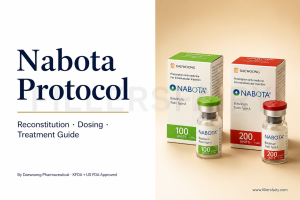
Both are Korean BTX-A products with 100U and 200U options. Nabota (Daewoong) uses HSA as a stabilizer, has a US-market equivalent (Jeuveau), and uses vacuum-drying. Rentox (Pharma Research Bio) is albumin-free, uses lyophilization (freeze-drying), and comes from the same parent company as Rejuran. The choice depends on whether your practice values the albumin-free positioning, the Rejuran supplier relationship, or the broader market registration that Nabota/Jeuveau provides. Both have established clinical track records in Korea.
Product specifications cross-referenced across manufacturer press releases and six independent distributors. Duration and onset data reflect manufacturer positioning and commonly reported practitioner experience — individual results vary. Product selection and injection protocol should follow the supplied product instructions and the practitioner’s clinical judgment.