What Is Curenex Glow? PDRN Multi-Peptide Skin Booster Guide (2026)
A practitioner’s reference to Curenex Glow — the multi-component PDRN skin booster from K Derma that combines tissue repair, collagen stimulation, brightening, and hydration in a single cocktail formulation.
Quick Answer
What is Curenex Glow? Curenex Glow Rejuvenating Solution is a multi-component skin booster manufactured by K Derma Co., Ltd. (South Korea). Each box contains 5 vials × 5 mL. The formulation combines PDRN (polydeoxyribonucleotide, 0.2% concentration, derived from salmon DNA) with approximately 15 multi-peptides, non-crosslinked sodium hyaluronate, glutathione, hydrolyzed collagen, and adenosine. Unlike single-ingredient boosters, Curenex Glow delivers a cocktail approach — targeting tissue repair (PDRN), collagen synthesis (peptides), hydration (HA), and antioxidant brightening (glutathione) simultaneously. Can be applied topically via conical applicator or delivered professionally via mesotherapy, MTS, or microneedling.
Why Clinics Choose Curenex Glow
Curenex Glow occupies a distinctive position in the skin booster market: it is a multi-component cocktail, not a single-active-ingredient product. Where Rejuran is pure PN and Hyaron is pure HA, Curenex Glow combines multiple active categories in one formulation.
- All-in-one cocktail protocol — PDRN for cell repair, 15 peptides for collagen and brightening, HA for hydration, glutathione for antioxidant protection. One product addresses multiple skin concerns simultaneously, simplifying treatment menus.
- Multiple delivery options — topical application with included conical applicator, mesotherapy injection, MTS, or microneedling. This flexibility fits clinics with injection-only workflows and clinics that prefer device-based delivery.
- PDRN tissue repair — salmon-derived PDRN (MW 50–1,500 kDa) activates A2A adenosine receptors and promotes fibroblast proliferation, supporting cellular repair alongside the cosmetic benefits.
- Peptide-driven brightening — the multi-peptide complex includes melanin-inhibiting peptides (galloyl pentapeptide-33) alongside collagen-stimulating ones (palmitoyl tripeptide-5, copper tripeptide-1), making Curenex Glow suitable for patients with hyperpigmentation and uneven tone.
- 5 mL vial volume — generous per-vial volume supports full-face treatments without vial wastage.
- Room-temperature storage — store away from direct sunlight, no refrigeration required.
For a broader view of how PDRN cocktail technology fits alongside PN, exosome, HA-only, and PDLLA boosters, see our Korean Skin Boosters Guide. For a detailed ingredient and usage reference, see our existing Curenex ingredients and usage guide.
How Curenex Glow Works
In Simple Terms
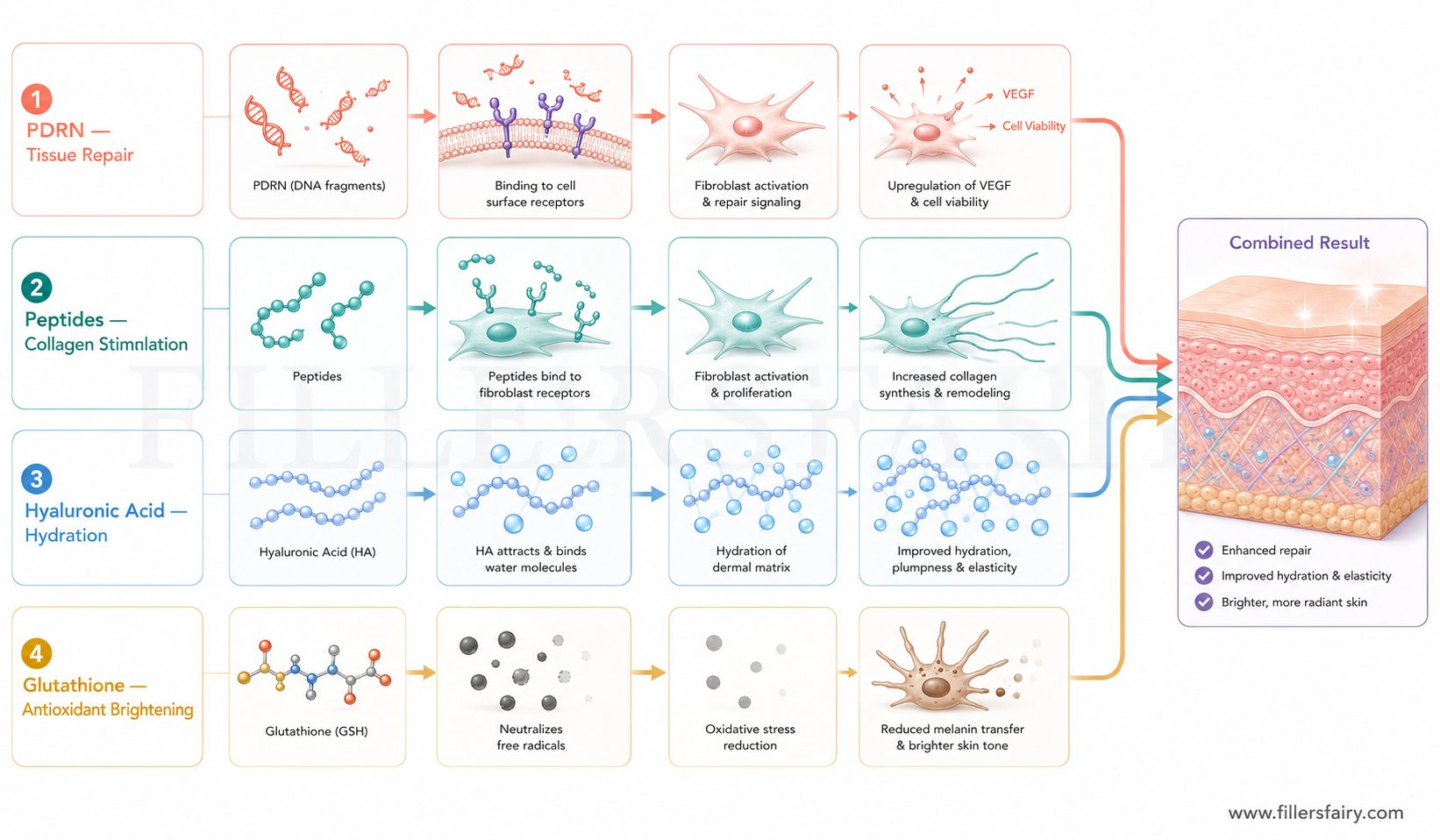
Curenex Glow works on four tracks simultaneously. PDRN fragments activate cell repair signaling. Peptides stimulate fibroblasts to build new collagen and elastin. Hyaluronic acid binds water for immediate hydration. Glutathione neutralizes free radicals and inhibits melanin production for brighter skin tone. The result is a compound effect that no single-ingredient booster delivers alone.
Technical Details — Full Mechanism ▸
Track 1 — PDRN (tissue repair): Polydeoxyribonucleotide fragments (50–1,500 kDa, derived from salmon sperm DNA, >95% homology with human DNA base sequences) bind A2A adenosine receptors on fibroblasts. This activates the salvage pathway for nucleotide synthesis, increasing cell viability and promoting VEGF expression. PDRN also provides nucleotide building blocks that damaged cells incorporate directly into DNA repair. At 0.2% concentration per 5 mL vial, the formulation delivers a clinically meaningful PDRN dose per session.
Track 2 — Multi-peptide complex (collagen + brightening): Approximately 15 peptides with distinct functions. Collagen-stimulating: palmitoyl tripeptide-5 and copper tripeptide-1 signal fibroblasts to increase Type I/III collagen deposition. Growth-factor-mimetic: SH-oligopeptide-9 and RH-polypeptide-1 support cellular proliferation. Melanin-inhibiting: galloyl pentapeptide-33 reduces tyrosinase activity for tone correction. Neuropeptide: acetyl hexapeptide-8 contributes to fine line relaxation. Laminin-stimulating: decapeptide-4 strengthens the dermal-epidermal junction.
Track 3 — Sodium hyaluronate (hydration): Non-crosslinked HA provides immediate moisture binding, functioning identically to standalone HA boosters like Hyaron but at a supporting concentration within the cocktail formulation.
Track 4 — Glutathione (antioxidant + brightening): A tripeptide antioxidant that scavenges reactive oxygen species and shifts melanogenesis toward pheomelanin (lighter pigment) production. Guards against oxidative damage to newly stimulated fibroblasts and supports the brightening effect of the melanin-inhibiting peptides.
Supporting ingredients: Adenosine provides anti-inflammatory support. Hydrolyzed collagen supplies amino acid building blocks. Glycerin and dextrin serve as humectant and stabilizer respectively. The formulation is pH-adjusted to approximately 7.2 to maintain peptide stability.
Formulation Breakdown

| Category | Key Components | Function |
|---|---|---|
| PDRN | Sodium DNA (salmon-derived, 0.2%) | A2A receptor activation, cell viability, tissue repair, VEGF expression |
| Collagen peptides | Palmitoyl tripeptide-5, Copper tripeptide-1, Octapeptide-7 | Fibroblast activation, Type I/III collagen deposition |
| Growth factor peptides | SH-oligopeptide-9, RH-polypeptide-1, RH-polypeptide-3, Oligopeptide-1 | Cell proliferation, wound healing signaling |
| Melanin-regulating peptides | Galloyl pentapeptide-33, RH-polypeptide-22 | Tyrosinase inhibition, tone correction |
| Neuropeptide regulators | Acetyl hexapeptide-8, SH-pentapeptide-19 | Fine line relaxation |
| Hyaluronic Acid | Sodium hyaluronate (non-crosslinked) | Immediate hydration, moisture retention |
| Antioxidant | Glutathione | ROS scavenging, melanogenesis modulation |
| Structural protein | Hydrolyzed collagen | Amino acid supply for collagen synthesis |
| Supporting | Adenosine, Glycerin, Dextrin | Anti-inflammatory, humectant, stabilizer |
This multi-ingredient approach is Curenex Glow’s defining characteristic. Single-ingredient boosters like Rejuran (pure PN) or Hyaron (pure HA) deliver depth in one mechanism. Curenex Glow trades that depth for breadth — addressing multiple skin concerns in a single session.
PDRN vs PN — How Curenex Glow Differs from Rejuran
Both Curenex Glow and Rejuran are derived from salmon DNA. The critical difference is molecular weight and formulation scope:
| Parameter | Curenex Glow (PDRN cocktail) | Rejuran (pure PN) |
|---|---|---|
| Active DNA ingredient | PDRN (50–1,500 kDa) | PN (>1,500 kDa) |
| Formulation type | Multi-component cocktail (PDRN + ~15 peptides + HA + glutathione) | Single active ingredient (PN only) |
| Primary mechanism | Cell repair + collagen + hydration + brightening (4-track) | Tissue regeneration via A2A receptor (focused) |
| Delivery methods | Topical applicator, mesotherapy, MTS, microneedling | Injection only (prefilled syringe) |
| Packaging | 5 × 5 mL vials | Prefilled syringes (varies by variant) |
| Manufacturer | K Derma Co., Ltd. | Pharmaresearch Products Co., Ltd. |
| Best suited for | Multi-concern treatment (dullness + texture + tone) | Focused tissue repair (scars, texture, elasticity) |
Neither approach is inherently superior. PN products like Rejuran offer deeper single-mechanism tissue repair. PDRN cocktails like Curenex Glow offer broader multi-target treatment in fewer sessions. The choice depends on the patient’s primary concern and the clinic’s protocol philosophy.
Delivery Methods
Curenex Glow supports multiple delivery approaches — a key advantage for protocol flexibility:
| Method | Device | Best For | Notes |
|---|---|---|---|
| Topical application | Included conical applicator | In-clinic or at-home maintenance | Apply solution to face, massage for absorption. Lowest penetration depth but zero downtime. |
| Microneedling / MTS | Microneedling pen or stamp | Full-face coverage, combination protocols | Apply Curenex Glow topically, then needle to create micro-channels. Multi-pass technique (horizontal, vertical, diagonal) for comprehensive coverage. |
| Manual mesotherapy | 34G needle | Precise targeting, experienced injectors | 0.01 mL per point, ~1 cm spacing. Most controlled distribution. |
| Mesotherapy gun | Automated multi-needle (e.g. Hydra Stamp) | Speed, consistent depth, large areas | Faster than manual. Requires calibration for depth and volume. |
Treatment Areas
| Area | Volume | Preferred Method | Notes |
|---|---|---|---|
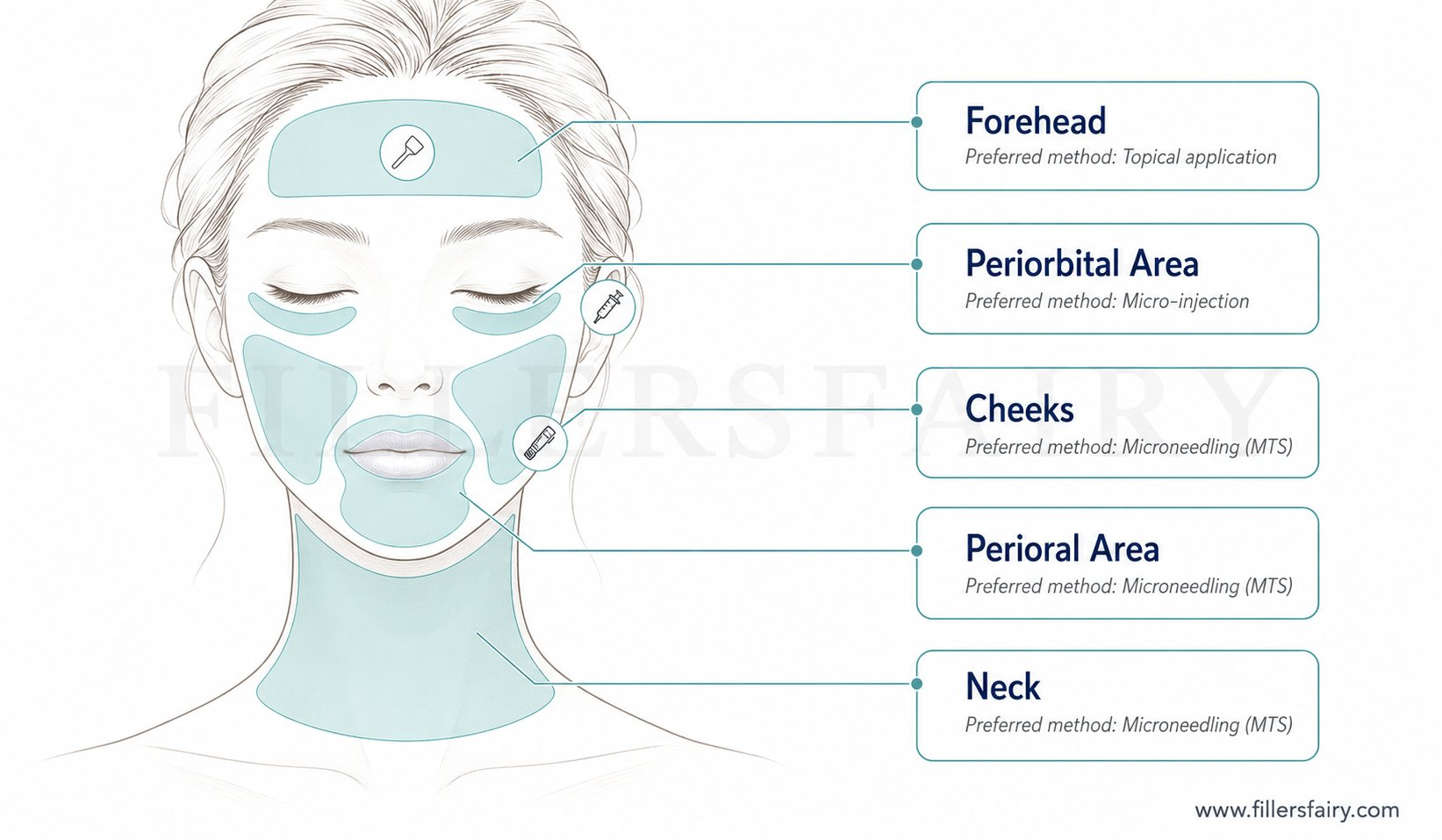
| Full face | 5–10 mL (1–2 vials) | MTS or topical + MTS | Most common. Overall rejuvenation + brightening. |
| Periorbital | 1–2 mL | Manual mesotherapy (34G) | PDRN supports microvascular repair in this high-demand area. Dark circles and fine lines. |
| Cheeks & midface | 3–5 mL | Meso gun or MTS | Large area — automated delivery improves efficiency. |
| Neck | 5 mL | MTS | Tech neck lines and crepey skin respond well to the multi-peptide formulation. |
| Acne scars | 3–5 mL (targeted) | Manual injection + MTS | PDRN tissue repair capacity makes Curenex Glow suitable for post-acne rehabilitation. |
Is Curenex Glow Right for Your Patients?
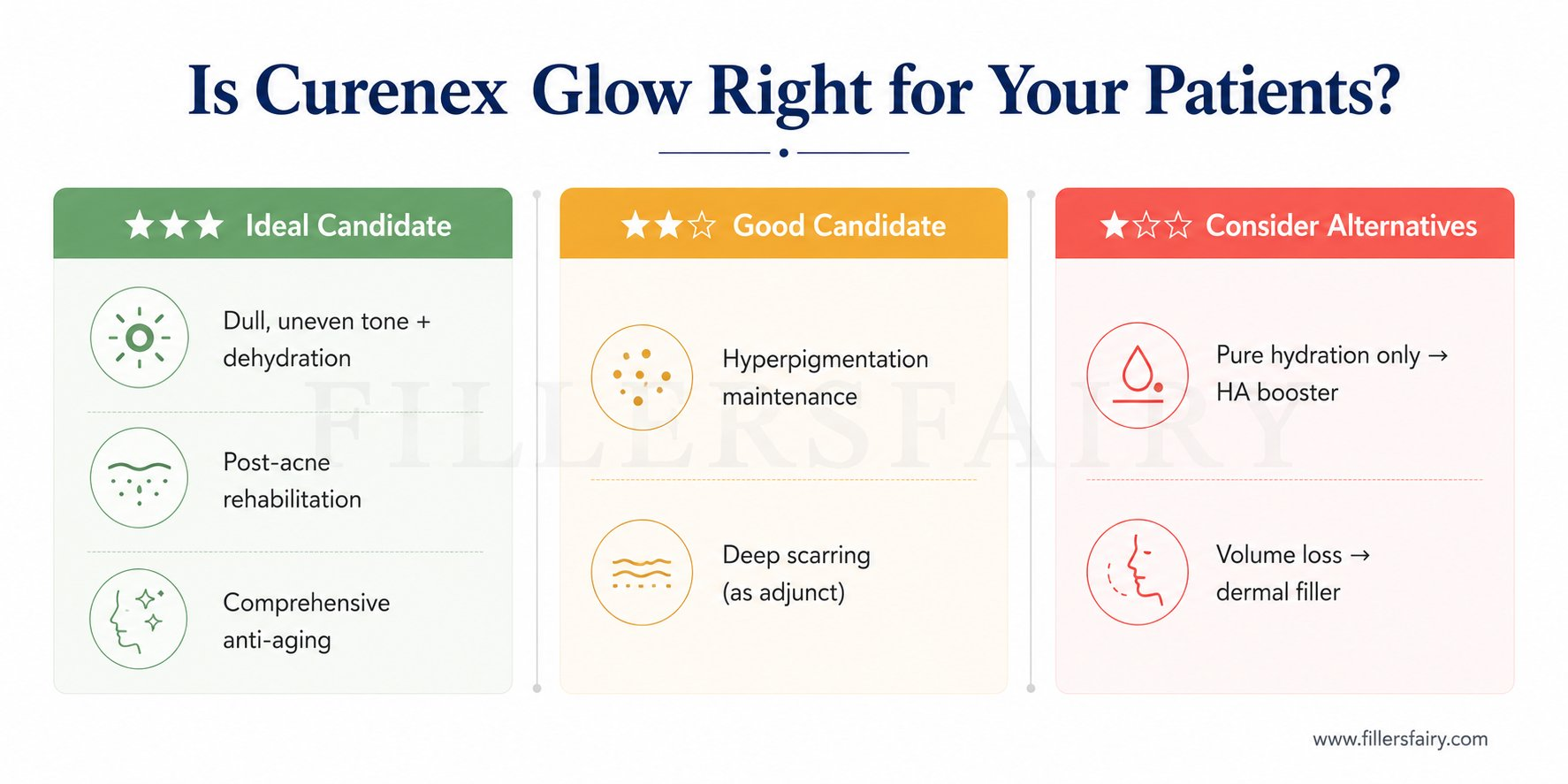
| Patient Profile | Fit | Reasoning |
|---|---|---|
| Dull, uneven skin tone + dehydration | ★★★ Ideal | Core sweet spot. PDRN repairs, peptides brighten, HA hydrates — all three addressed simultaneously. |
| Post-acne skin rehabilitation | ★★★ Ideal | PDRN tissue repair + collagen-stimulating peptides support scar remodeling and skin quality restoration. |
| Aging skin wanting comprehensive rejuvenation | ★★★ Ideal | Multi-track formulation addresses wrinkles (peptides), elasticity loss (collagen), and age spots (glutathione + melanin peptides). |
| Hyperpigmentation maintenance | ★★☆ Good | Glutathione + melanin-inhibiting peptides support tone correction as adjunct therapy. |
| Pure hydration only | ★☆☆ Consider alternatives | A pure HA booster like Hyaron is more cost-effective for hydration-only needs. |
| Deep scarring | ★★☆ Good (adjunct) | Deep scarring typically needs dedicated PN treatment (Rejuran S) or energy-based devices. Curenex Glow works well as maintenance. |
| Volume loss | ☆☆☆ Not appropriate | Not a filler. Volume needs require crosslinked HA or biostimulatory fillers. |
Procedure, Recovery, Results
Treatment Protocol
| Parameter | Detail |
|---|---|
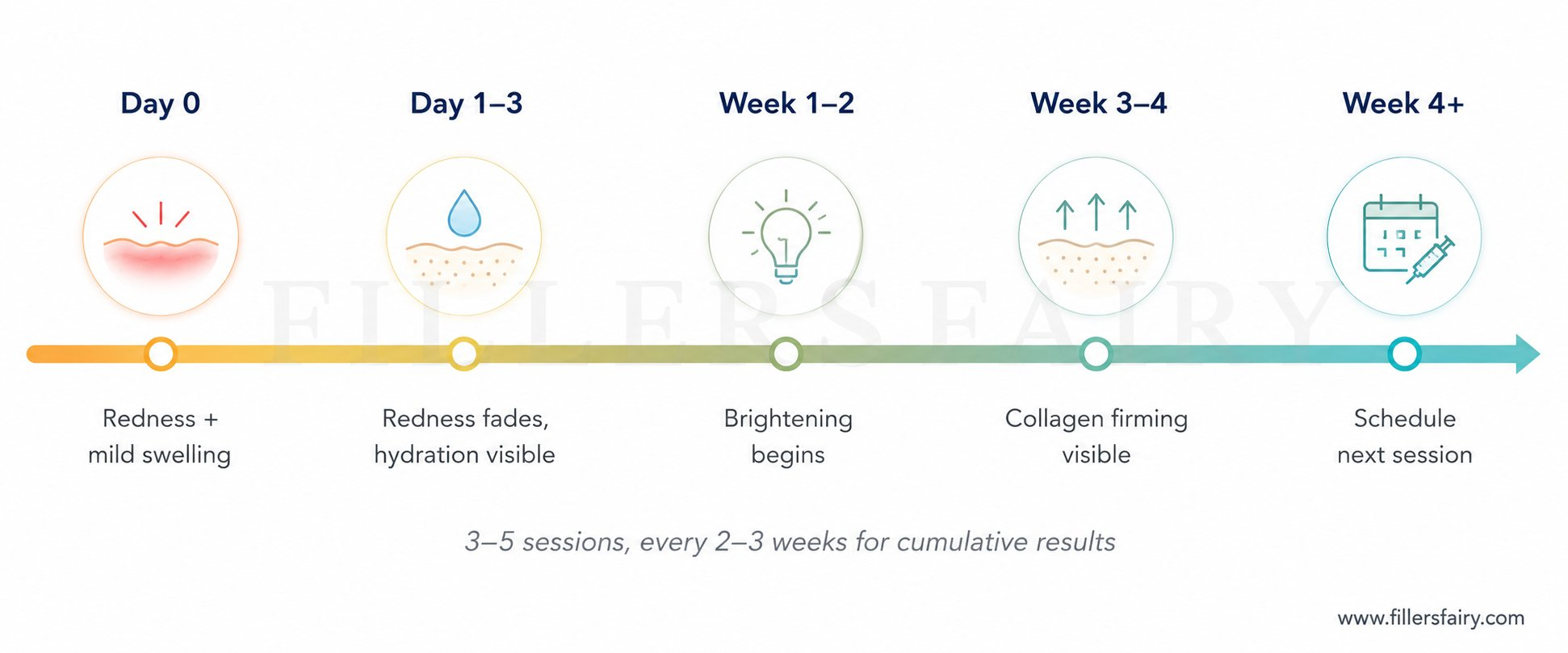
| Sessions per course | 3–5 sessions |
| Session interval | Every 2–3 weeks |
| Volume per session | 5–10 mL (1–2 vials) for full face |
| Session duration | ~30 minutes (face) |
| Maintenance | Top-up sessions every 1–2 months after initial course |
Recovery Timeline
Day 0: Redness and mild swelling, especially with MTS/microneedling delivery. No makeup for 12–24 hours. Avoid direct sun.
Day 1–3: Redness subsides. Immediate hydration improvement from HA. Minor dryness or flaking possible after MTS (normal repair response).
Day 7–14: Skin tone begins improving — glutathione and melanin-inhibiting peptides show initial brightening. Texture becomes smoother as PDRN repair progresses.
Week 3–4: Collagen-stimulating peptides produce visible firming. Optimal window for next session.
Results
Curenex Glow results are cumulative and multi-dimensional. Hydration improves within days (HA). Brightening develops over 1–2 weeks (glutathione + peptides). Firmness and texture refinement emerge over 3–6 weeks (PDRN + collagen peptides). Patients who complete a full 3–5 session course report the most significant overall improvement.
Side Effects and Safety
Common (Self-Resolving)
- Redness — more pronounced with MTS than topical application. Resolves within 12–48 hours.
- Mild swelling — especially periorbital. Resolves within 24–48 hours.
- Mild dryness or flaking — after MTS delivery. Part of renewal process, resolves within 2–5 days.
Uncommon
- Bruising — technique-dependent, less common with MTS than injection.
- Temporary tingling — multi-peptide formulation may cause mild tingling in sensitive-skin patients.
Safety Notes
Curenex Glow uses salmon-derived PDRN. Patients with known fish allergies should be screened, although purified PDRN has extremely low allergenic potential. Non-crosslinked, non-gel formulation — no vascular occlusion risk, no nodule risk.
Contraindications
- Known allergy to salmon or fish-derived products
- Active skin infection or inflammation at treatment site
- Active herpes simplex (risk of reactivation with needling)
- Pregnancy and breastfeeding (standard precaution)
- Patients on isotretinoin (wait 6 months post-discontinuation before MTS)
Frequently Asked Questions
What is the difference between Curenex Glow and Rejuran?
Curenex Glow uses PDRN (a smaller DNA fragment, 50–1,500 kDa) in a multi-component cocktail with ~15 peptides, HA, and glutathione. Rejuran uses PN (a larger polynucleotide, >1,500 kDa) as a single active ingredient. Curenex Glow treats multiple concerns simultaneously. Rejuran focuses deeply on tissue regeneration. They can be used in complementary protocols.
Can Curenex Glow be combined with other skin boosters?
Yes. Curenex Glow pairs well with Hyaron for enhanced hydration, or can be alternated with Rejuran sessions for patients wanting both cocktail breadth and PN depth. Space combination treatments at least 2 weeks apart.
Is microneedling or topical application better for Curenex Glow?
MTS/microneedling delivers deeper penetration and more pronounced results. Topical application with the included conical applicator is gentler with zero downtime — suitable for maintenance between professional sessions or for patients who prefer non-invasive delivery.
How many Curenex Glow sessions are needed?
A typical course is 3–5 sessions spaced 2–3 weeks apart. Brightening effects begin after 1–2 sessions. Collagen improvement is most apparent after session 3. Maintenance sessions every 1–2 months extend results.
Does Curenex Glow help with acne scars?
Curenex Glow’s PDRN and collagen-stimulating peptides support post-acne rehabilitation — improving texture, tone, and overall skin quality. For deep atrophic scarring, dedicated treatments (Rejuran S, fractional laser, subcision) are more effective. Curenex Glow works well as maintenance between intensive scar sessions.
Does Curenex Glow need refrigeration?
No. Store away from direct sunlight at room temperature. No cold-chain requirement — a logistical advantage over some PN/PDRN products.
This article is part of FillersFairy’s Korean skin booster encyclopedia. Browse our skin booster collection for specifications, variant details, and wholesale pricing.